Real World Asset Tokenization on Blockchain: A Practical Guide

Introduction

Real world asset tokenization has emerged as one of the most transformative innovations in the world of finance and asset management. By utilizing blockchain technology, physical assets like real estate, precious metals, artworks, and even intellectual property can be converted into digital tokens, making them more liquid, tradable, and accessible to a global market. In this practical guide, we’ll explore how tokenization on blockchain works, the benefits it brings to businesses and investors, and the industries it’s poised to disrupt. Tokenization on blockchain ensures security, transparency, and efficiency for real-world assets. With blockchain technology, transactions are recorded on an immutable ledger, allowing for trustless trading of assets without intermediaries. The concept also allows for fractional ownership, enabling smaller investors to access and trade high-value assets. If you’re considering real world asset tokenization, this guide provides a comprehensive understanding of the process and its real-world applications, along with practical steps for getting started.

What is Real World Asset Tokenization?

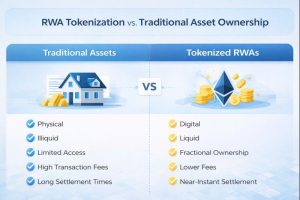
Real world asset tokenization is the process of representing the ownership of tangible or intangible assets with digital tokens on a blockchain. This process involves creating a digital equivalent of an asset, which is then backed by the real-world value of that asset. The tokenized version of the asset can be bought, sold, and traded just like cryptocurrency tokens in crypto asset tokenization.

For example, tokenized real estate allows investors to own fractional shares in a property rather than purchasing the entire asset. Similarly, artwork can be tokenized to allow multiple investors to own pieces of high-value art, or even precious metals like gold and silver can be divided into tokens representing small portions of the asset.

This new model eliminates the need for traditional intermediaries like brokers and agents, streamlining the process and reducing transaction costs. Furthermore, the blockchain ensures that ownership and transactions are recorded securely, providing transparency and trust.
Real World Asset Tokenization

How Does Real World Asset Tokenization Work?

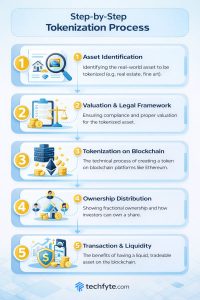
Real world asset tokenization transforms tangible or intangible assets into digital representations on a blockchain. This process enables fractional ownership, where an asset is divided into smaller, tradable digital tokens that can be easily bought, sold, or exchanged. Tokenization works through blockchain technology, which ensures transparency, security, and immutability of the asset’s ownership record. By creating a digital version of the asset, tokenization makes it easier to transfer ownership and track transactions, reducing the need for intermediaries like brokers or banks. This section will delve deeper into the step-by-step process of tokenizing real-world assets, from valuation and legal frameworks to token creation and ownership transfer.

1. Tokenizing Physical Assets

Tokenizing a physical asset involves a series of steps that integrate blockchain technology with the physical asset’s ownership structure. Here’s how it works:

  • Step 1: Valuation & Legal Framework
    The first step is determining the value of the asset. For real estate, this might involve a formal property appraisal, while for artwork, it could be an authenticated appraisal. Legal documents must also be drawn up to define the ownership rights and responsibilities of the token holder.
  • Step 2: Digital Token Creation
    Once the legal and valuation steps are completed, the physical asset is digitally represented on the blockchain. Tokens are created using a blockchain platform like Ethereum or Solana, and these tokens are assigned a value based on the asset’s total value. Each token represents a fraction of the asset.
  • Step 3: Fractional Ownership
    By tokenizing the asset, it can be divided into smaller shares, allowing investors to buy fractions of the asset. This fractionalization makes high-value assets accessible to more people, allowing smaller investors to participate.
  • Step 4: Trading and Ownership Transfer
    The tokens representing the asset can be traded or sold on secondary markets. Blockchain’s decentralized ledger tracks every transaction and ensures transparency, allowing for secure ownership transfer without the need for traditional intermediaries.
RWA regulations

Benefits of Real World Asset Tokenization

The benefits of real world asset tokenization extend far beyond increased liquidity. Tokenization allows for fractional ownership, meaning that high-value assets, such as real estate or fine art, can be broken down into smaller, more affordable units, allowing a broader range of investors to participate. This not only democratizes access to traditionally illiquid markets but also enhances liquidity by enabling the trading of asset fractions on secondary markets. Additionally, tokenization improves transparency and security, with blockchain providing an immutable ledger for all transactions, ensuring trust and accountability in the process. This section explores the key advantages of tokenizing real-world assets and how they contribute to a more inclusive, accessible investment environment.

1. Increased Liquidity

Tokenization makes traditionally illiquid assets more liquid by enabling fractional ownership and offering the possibility of trading assets on secondary markets. Investors can now trade portions of their assets easily, opening up liquidity in markets like real estate, which previously required large capital investments.

2. Lower Barriers to Entry

Traditionally, investing in high-value assets like real estate or artwork required significant capital. Tokenization lowers the entry barrier by enabling fractional investments. Investors can now buy smaller portions of these assets, democratizing access to markets that were once limited to wealthy institutional investors.

3. Improved Transparency & Security

Blockchain provides a transparent, immutable record of ownership and transactions. Each time an asset is transferred or sold, it is recorded on the blockchain, allowing for complete traceability of ownership history. Additionally, blockchain’s cryptographic features ensure the security of assets and prevent fraud or tampering.
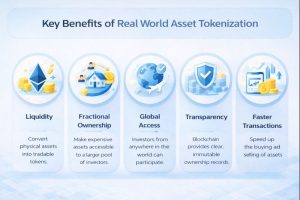
Benefits for Real World Asset Tokenization


Real World Asset Tokenization Use Cases

Real world asset tokenization has a wide range of applications across various industries, from real estate and art to commodities and intellectual property. In sectors like real estate tokenization, investors can own fractions of properties, providing a new avenue for small-scale investors to participate in lucrative markets. The art world is similarly being revolutionized by tokenization, where digital tokens represent ownership shares of high-value artworks, making them more accessible. Beyond these, commodity tokenization allows investors to buy fractions of physical assets such as gold, oil, and agricultural products. This section covers the diverse use cases of tokenization, demonstrating how different industries are leveraging blockchain technology to increase accessibility and liquidity for traditionally illiquid assets.

1. Real Estate Tokenization

One of the most popular use cases for real world asset tokenization is in real estate. Tokenizing real estate allows investors to buy fractional shares of properties, making it easier for smaller investors to enter the market. Additionally, real estate tokenization can reduce the complexity and cost of transactions, streamline the process of property management, and offer enhanced liquidity by enabling property shares to be traded on secondary markets.

2. Art Tokenization

Artworks have long been seen as valuable assets, but high-value art is not accessible to the average investor. Art tokenization allows investors to purchase fractional ownership in artwork, offering exposure to the art market without the need to buy entire pieces. Blockchain ensures the authenticity and provenance of the art, which is critical for high-value pieces.

3. Commodity Tokenization

Commodity markets, such as gold, silver, and oil, are traditionally dominated by large institutions. Tokenizing these commodities allows individual investors to buy fractional shares, making it easier for smaller investors to gain exposure to these markets. Tokenization also helps improve liquidity in commodity trading by enabling the trading of commodity tokens on global markets.

4. Intellectual Property Tokenization

Intellectual property (IP) rights, such as patents and trademarks, can be tokenized to enable the fractional ownership and trading of IP assets. Tokenizing IP allows creators and companies to sell shares in their intellectual property to raise capital or earn royalties from the tokenized assets.

How to Get Started with Real World Asset Tokenization

If you’re considering real world asset tokenization, getting started requires a solid understanding of both the technical and legal aspects of the process. The first step is selecting the appropriate blockchain platform that supports token creation and smart contract deployment. From there, businesses must develop a legal framework for token ownership and establish the valuation of the underlying asset. It’s also crucial to design and implement smart contracts that define ownership rights and govern the transfer process. Finally, working with blockchain development experts ensures that the tokenization process is secure, compliant with RWA regulations, and scalable. This section outlines the steps involved in getting started with asset tokenization and how businesses can implement blockchain solutions to tokenize their assets successfully.

1. Choose the Right Blockchain Platform

The first step in the tokenization process is choosing a blockchain platform that supports the creation and management of digital tokens. Popular platforms for tokenization include Ethereum, Solana, and Polygon. These platforms offer robust infrastructure for developing decentralized applications (dApps) and creating tokenized assets.

2. Legal and Regulatory Considerations

Tokenizing real-world assets involves navigating complex legal and regulatory frameworks. Different jurisdictions have specific rules around asset tokenization, particularly in terms of securities regulations. It’s important to work with legal experts to ensure compliance with local laws, including KYC/AML requirements and securities regulations.

3. Smart Contracts & Token Standards

After selecting a blockchain platform, the next step is to develop smart contracts that govern the terms of asset ownership, transfers, and payouts. Common token standards like ERC-20 for fungible tokens or ERC-721 for NFT asset tokenization are used to define the properties and functions of the tokens.

Start Your Real World Asset Tokenization Project with Techfyte

Contact Techfyte today and take the first step toward tokenizing your real-world assets.

FAQ: Real World Asset Tokenization 

Q1: What are the benefits of tokenizing real-world assets?

Tokenizing real-world assets offers numerous advantages, with the most significant being increased liquidity. Traditionally, assets like real estate, art, and commodities are illiquid and difficult to trade. By tokenizing these assets, they can be divided into fractional ownership, allowing small-scale investors to participate in markets that were once restricted to large institutional players. Additionally, tokenization offers improved transparency as blockchain provides a public and immutable record of every transaction. Security is also enhanced, as blockchain’s cryptographic nature prevents tampering, fraud, and unauthorized changes.

Q2: How does blockchain enhance the process of asset tokenization?

Blockchain is the backbone of real world asset tokenization. It provides a decentralized, secure ledger that records every transaction and asset transfer. Each transaction is cryptographically verified, ensuring that the data is tamper-proof and transparent. Smart contracts, which are self-executing contracts with predefined rules, help automate the tokenization process. These contracts execute actions such as transferring tokens or releasing payments once conditions are met, reducing the need for intermediaries and enhancing efficiency.

Q3: What types of assets can be tokenized?

A wide range of real-world assets can be tokenized, providing businesses and individuals with new investment opportunities. Commonly tokenized assets include real estate, where properties can be divided into fractional shares; artworks, allowing investors to own fractions of valuable art; precious metals such as gold and silver; commodities like oil or agricultural products; intellectual property like patents, trademarks, and royalties; and even financial instruments such as stocks and bonds.

Q4: How does fractional ownership work in asset tokenization?

Fractional ownership is a core concept of asset tokenization. Instead of requiring investors to purchase an entire asset (which can be costly), tokenization divides the asset into smaller, tradable tokens that represent a fraction of the total value. For example, in real estate tokenization, a single property worth $1 million could be divided into 1,000 tokens, each representing $1,000 in ownership. This allows multiple investors to purchase smaller portions of the asset, providing access to high-value markets that were previously only available to wealthy individuals or large corporations.

Q5: What is the role of smart contracts in real world asset tokenization?

Smart contracts are essential in the process of tokenizing real-world assets. These self-executing contracts are written in code and automatically enforce the terms of an agreement when predefined conditions are met. In asset tokenization, smart contracts manage the rules of token ownership, transfers, and payouts, ensuring that the process is automated and transparent. For instance, when an investor buys a token representing a share of a real estate property, the smart contract automatically updates the ownership ledger on the blockchain.

Q6: How is the value of a tokenized asset determined?

The value of a tokenized asset is primarily based on the market value of the underlying real-world asset. For instance, the value of a token representing real estate is determined by the current market value of the property, which can be appraised by a professional. In the case of artwork tokenization, the asset’s value is often determined by auction prices or expert appraisals. Once the asset’s value is established, it is divided into fractional tokens, each representing a proportion of the total value.

Q7: What are the regulatory challenges in asset tokenization?

Asset tokenization is still an evolving field, and navigating regulatory challenges is one of the main hurdles in the process. Different countries have varying laws around securities and asset ownership, and tokenized assets may be considered securities in some jurisdictions, which means they need to comply with regulations such as KYC (Know Your Customer) and AML (Anti-Money Laundering). Moreover, the legal framework surrounding tokenized assets is not fully standardized globally, which can create uncertainty for investors and businesses.

Q8: How do tokenized assets impact traditional financial markets?

Tokenized assets have the potential to disrupt traditional financial markets by offering greater liquidity and accessibility. The ability to fractionalize high-value assets makes it possible for small investors to participate in markets that were previously limited to institutional investors. Furthermore, tokenized assets can be traded on global markets, enabling cross-border investment opportunities. Tokenization also opens the door for 24/7 trading of real-world assets, providing greater flexibility than traditional markets that operate on fixed hours.

Q9: What is the cost of tokenizing real-world assets?

The cost of tokenizing real-world assets varies depending on the asset type, complexity of the legal framework, and the blockchain platform used. For example, real estate tokenization typically costs between $10,000 to $100,000 depending on the value of the property and the legal processes involved. Additional costs include smart contract development, legal consultations, blockchain infrastructure setup, and compliance checks.

Q10: How does blockchain make tokenized assets more secure?

Blockchain enhances the security of tokenized assets by providing a decentralized, transparent, and immutable ledger. Each transaction or change in ownership is recorded on the blockchain, creating an auditable and verifiable history that cannot be altered or tampered with. Blockchain also ensures that token ownership is tracked in real-time, and smart contracts govern transactions, eliminating the need for intermediaries.

Concluding Note

Real world asset tokenization is unlocking new opportunities for investors and businesses alike, providing liquidity, transparency, and accessibility to high-value assets. With blockchain technology as the foundation, tokenization is reshaping industries like real estate, art, commodities, and intellectual property. The technology behind tokenization—primarily blockchain—ensures that every transaction is verifiable, transparent, and secure. Blockchain allows for decentralized ownership, eliminating the need for intermediaries like brokers and banks, which ultimately reduces costs and improves efficiency. It also enhances the transparency of asset transfers, ensuring that all transactions are auditable and that asset ownership is clear and tamper-proof. At Techfyte, we specialize in blockchain development and asset tokenization solutions, helping businesses tokenize their real-world assets securely and efficiently. Whether you’re in real estate, commodities, or any other industry, we can help you leverage blockchain to open up new opportunities. 
How Solana DeFi Development Works: Step-by-Step Guide for 2026

Introduction

The global DeFi revolution continues to evolve at unprecedented speed, and in 2026, Solana DeFi Development is taking center stage. Known for lightning-fast transactions, low fees, scalable architecture, and a robust developer ecosystem, Solana has become one of the top choices for building decentralized finance applications. Whether you’re a startup, fintech enterprise, or an organization exploring blockchain innovation, understanding how Solana DeFi works is critical for building the next-generation of decentralized applications. In this guide, we break down how it works, explore core components such as smart contracts and on-chain programs, and walk you step-by-step through the development workflow.

Why Solana for DeFi in 2026?

Solana stands out among modern blockchains because of its unique high-performance architecture. Unlike Ethereum, where network congestion often increases transaction costs, Solana delivers:

  • 65,000 transactions per second (TPS)
  • Near-zero fees (fractions of a cent)
  • Sub-second block confirmation
  • High scalability for enterprise-grade DeFi apps
  • Parallel transaction execution using Sealevel

For businesses that want reliable, scalable, and cost-efficient decentralized solutions, Solana presents a major competitive edge. 

Build Your Solana DeFi Platform Today

👉 Book a strategy call now

How Solana DeFi Development Works: A Step-by-Step Breakdown

Below is a complete overview of the Solana DeFi development lifecycle, from planning to deployment.

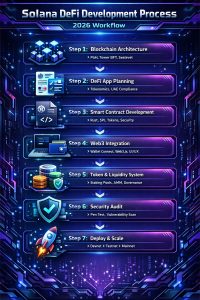
Solana development process

Step 1: Understanding Solana Blockchain Architecture

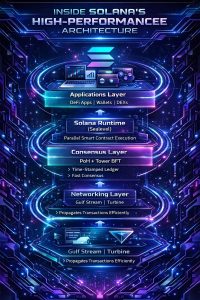
Before creating Solana DeFi apps and DeFi development services in UAE, developers must understand the underlying Solana Blockchain architecture that powers its speed and scalability. The core components include:

Proof-of-History (PoH)

Solana’s innovation—Proof-of-History—creates a cryptographic time-keeping system that sequences transactions before they enter the blockchain. This reduces node processing time and increases throughput.

Tower BFT

Solana uses an optimized version of PBFT (Practical Byzantine Fault Tolerance), which relies on PoH timestamps instead of communication-heavy consensus cycles.

Gulf Stream

A mempool-less transaction forwarding technique improves responsiveness and scalability.

Sealevel Parallel Runtime

Unlike Ethereum, which processes smart contracts one by one, Solana’s Sealevel executes thousands of smart contract instructions simultaneously — ideal for high-frequency DeFi operations like swaps, lending, staking, and liquidity farming.

Step 2: Designing the Solana DeFi Application

During this stage, businesses define:

  • Core DeFi functionality
  • Target user base
  • Tokenomics structure
  • Smart contract logic
  • Liquidity mechanisms
  • Compliance requirements in the UAE

Common types of Solana DeFi apps include:

  • Decentralized Exchanges (DEXs)

AMM-based trading with low fees and high-speed liquidity swaps.

  • Lending & Borrowing Platforms

Collateralized loans, staking pools, and yield farming ecosystems.

  • Synthetic Assets & Stablecoins

Tokenized fiat, commodities, or financial instruments.

  • Automated Yield Optimization Tools

Bots and smart contracts that auto-rebalance user portfolios.

Step 3: Building Solana Smart Contracts (Programs)

Solana DeFi apps rely on smart contracts, but unlike Ethereum’s Solidity, Solana smart contracts (called Programs) are developed using Rust, C, or C++.

Why Rust for Solana DeFi Development?

  • Memory safety
  • High performance
  • Zero-cost abstractions
  • Ideal for finance-grade applications

Developers use the Solana Program Library (SPL) to integrate ready-made modules like:

  • Token creation
  • Wallet interaction
  • Liquidity pools
  • Decentralized governance
  • Staking and rewards

This speeds up development and ensures high security and interoperability. Also, to keep in mind are the wallet standards that define how these apply in general usage.

Launch a Future-Ready Solana DeFi App

🚀 Request a free project estimate

Step 4: Integrating Web3 Frontend Components

Once Solana smart contracts are ready, developers integrate them with a user-friendly UI.

The common tools that help in Web3 development services include:

  • Solana Web3.js — to interact with on-chain programs
  • Phantom, Solflare, Ledger wallets — for authentication
  • React or Next.js — for building responsive interfaces

Key integrations include:

  • Wallet connection
  • Transaction history
  • Real-time token balances
  • Smart contract instructions

This layer determines how users interact with your DeFi platform and DeFi data, making UI/UX crucial for adoption.

Step 5: Token Development & Liquidity Mechanics

Most Solana DeFi app development UAE require custom tokens — usually SPL tokens, comparable to ERC-20 tokens on Ethereum.

Token Features

  • Minting/burning
  • Staking rewards
  • Governance voting
  • Collateralization

Liquidity Management

Liquidity pools enable swaps and yield distribution. Solana’s low fees make it easier to attract liquidity providers.

Step 6: Security Audits and Penetration Testing

Security is the most critical aspect of DeFi development.

Audits include:

  • Smart contract vulnerability testing
  • Flash loan attack prevention
  • Liquidity pool attack simulations
  • Transaction replay protection
  • Access control validation

Given the UAE’s regulatory focus, especially in Dubai’s Virtual Asset Regulatory Authority (VARA), compliance and user protection are essential.

Step 7: Deployment & Scaling

Deployment involves:

  • Uploading Solana programs to the mainnet
  • Testing on Devnet and Testnet
  • Setting compute budgets
  • Configuring RPC (Remote Procedure Call) nodes
  • Enabling continuous monitoring dashboards

High-usage DeFi platforms in 2026 often require customized RPC nodes for performance optimization.

Solana DeFi Development Use Cases for UAE & Dubai in 2026

Blockchain adoption in Dubai and the UAE is growing through government initiatives and pro-innovation regulations. Solana blockchain is becoming a top choice for:

DeFi Payment Systems

Fast, low-cost payments for businesses and remittances.

Tokenized Real Estate Investments

Fractional property ownership and automated rental income distribution.

Islamic DeFi (Sharia-Compliant Products)

Halal yield-generating instruments built with transparency and automated governance.

Supply Chain Financing

Smart contract-enabled invoice factoring and vendor payments.

Techfyte can support all of the above through enterprise blockchain development services.

Scale Your Financial Innovation with Solana

🔧 Get a consultation with our blockchain specialists

FAQ: Solana DeFi Development

1. What makes Solana ideal for DeFi development?

Solana is ideal for DeFi development because it offers ultra-fast transactions, extremely low fees, and a highly scalable architecture. Its Proof-of-History consensus mechanism and Sealevel parallel runtime allow thousands of smart contract operations to run simultaneously, making it perfect for high-frequency trading, lending, staking, and liquidity platforms. Developers also benefit from Solana’s mature toolset, active ecosystem, and enterprise-friendly performance.

solana architecture

2. How much does Solana DeFi development cost in UAE?

Solana DeFi development costs in the UAE typically range from AED 35,000 to AED 300,000+ depending on the project’s complexity, features, smart contract security needs, integrations, and UI/UX requirements. Basic DeFi apps cost less, while DEX platforms, lending protocols, and liquidity engines require advanced development and auditing, increasing overall cost.

3. How long does it take to develop a Solana DeFi app?

The development time for a Solana DeFi app usually takes 8 to 24 weeks. Smaller applications with basic tokenomics and simple smart contracts can be delivered in 2–3 months, while complex DeFi platforms—such as DEXs, multi-chain bridges, lending platforms, or automated yield engines—require more time for development, testing, audits, and security optimization.

4. What tools are used for Solana smart contracts?

Solana smart contracts (Programs) are primarily built using Rust, along with essential tools such as:

  • Solana CLI for local development and deployment
  • Solana Web3.js for frontend integration
  • Anchor Framework for structuring and testing programs
  • SPL libraries for token management, staking, and liquidity modules
  • Solana Program Library (SPL) for reusable DeFi components

These tools streamline development, testing, and integration for DeFi applications.

5. Is Solana suitable for enterprise-grade DeFi applications?

Yes. Solana’s high throughput, low-latency infrastructure, expandable architecture, and predictable transaction costs make it highly suitable for enterprise-grade DeFi apps. Its scalability supports millions of daily transactions, while strong security and parallel execution allow financial institutions, fintechs, and UAE-based enterprises to launch full-scale decentralized platforms with confidence.

For an in-depth technical breakdown of Solana’s architecture, you can also refer to our sister company’s high-performance Solana DeFi architecture guide.

Concluding Note

Solana’s high-speed architecture, low fees, scalable infrastructure, and robust developer ecosystem make it one of the most powerful platforms for DeFi development Dubai in 2026. Whether you want to build a DEX, a crypto lending platform, liquidity pools, tokenized financial products, or enterprise-grade DeFi applications, Solana offers unmatched performance and reliability. Businesses in the UAE, especially in Dubai’s rapidly growing fintech sector, can gain a strategic advantage by embracing Solana-powered decentralized finance solutions. For accurate Solana blockchain consultation, reach out to us.

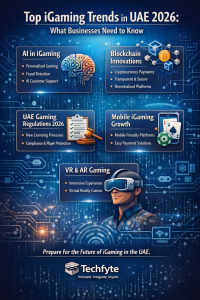
Top iGaming Trends in 2026: What UAE Businesses Need to Know

Introduction

As the iGaming industry in the UAE continues to grow rapidly, businesses are constantly looking for new opportunities to stay ahead of the curve. With advancements in technology, changing regulations, and the increasing popularity of online gaming, it’s essential for businesses in the UAE to understand the key iGaming trends shaping the market in 2026. One crucial aspect is gaming platform engineering, which plays a vital role in supporting the next generation of iGaming solutions.This blog will explore the UAE’s most significant iGaming market trends in 2026 and provide insights on how businesses can leverage these trends for success.

While traditional gambling activities are still largely illegal under UAE law, emerging frameworks by the GCGRA are introducing a regulated environment for licensed iGaming and sports wagering, signaling a structured shift in gambling regulations in the UAE

The Future of iGaming in the UAE: Top Trends to Watch in 2026

The UAE has become one of the most exciting markets for iGaming, offering a range of opportunities for both local and international businesses. As we head into 2026, several iGaming trends are expected to dominate the UAE online gaming industry. These trends will not only influence the way consumers engage with gaming platforms but also impact how businesses operate within the market.

1. The Rise of AI in iGaming Platform

AI has been making significant strides in a variety of industries, and iGaming is no exception. In 2026, we expect AI in iGaming to play an even more prominent role in shaping the user experience, increasing operational efficiency, and driving personalized gaming experiences.

Personalized Gaming Experience

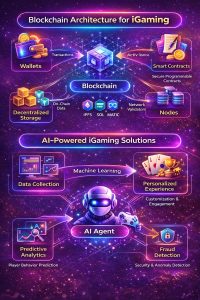
AI-powered algorithms will be used to personalize gaming experiences by analyzing user behavior and preferences. This will allow gaming platforms to recommend games tailored to individual players, providing them with a more engaging and customized experience. AI will also help in predicting player behavior, allowing platforms to make real-time adjustments to enhance player satisfaction.

Enhanced Security and Fraud Prevention

AI technology will be utilized to strengthen security measures within the iGaming industry. By using AI-driven tools, operators can monitor suspicious activity, detect fraud, and prevent cheating in real-time. This will help ensure that players enjoy a secure gaming environment, which is essential for maintaining trust and credibility within the UAE iGaming market.

AI-Powered Customer Support

AI-driven chatbots and virtual assistants will continue to improve customer service in the iGaming industry. These AI tools can offer 24/7 support, answering frequently asked questions and resolving issues more efficiently. In the UAE iGaming market, businesses can benefit from integrating AI-driven customer support tools to improve player retention and satisfaction.

Unlock the Future of iGaming with Techfyte – Get Started Today!

Schedule Consultation

2. Blockchain iGaming Innovations in the UAE

Blockchain technology has the potential to revolutionize the iGaming industry by providing transparent, secure, and decentralized solutions. In 2026, blockchain will play a crucial role in transforming the way online gaming platforms operate in the UAE.

Transparency and Fairness

Blockchain technology can help ensure that all transactions within the iGaming space are transparent and tamper-proof. Players can verify that games are fair and that the outcomes are not manipulated. This level of transparency will build trust among players, making the UAE iGaming market more appealing to both local and international audiences.

Cryptocurrency Payments

Cryptocurrency adoption in the UAE gaming industry is expected to grow as more businesses look for alternative payment methods. Blockchain technology will enable secure and fast transactions using cryptocurrencies, allowing players to deposit and withdraw funds with ease. The rise of blockchain and cryptocurrency payments in the UAE will open up new avenues for businesses to attract global players.

Decentralized Platforms

Decentralized gaming platforms powered by blockchain technology will offer players more control over their gaming experience. By removing intermediaries, these platforms will allow for lower fees, increased privacy, and more direct interactions between players and operators. Blockchain will make the UAE iGaming market more competitive by providing players with innovative, decentralized gaming options.

blockchain architechure for iGaming

3. The Impact of UAE Gaming Regulations in 2026

The regulatory landscape for iGaming in the UAE is evolving, and businesses must stay updated on the latest regulations to ensure compliance and capitalize on new opportunities. In 2026, the UAE’s gaming regulations will continue to shape the industry’s growth.

Regulatory Changes and Licensing

The UAE government has been working on creating a more favorable regulatory environment for the iGaming industry. In 2026, we expect to see clearer and more structured licensing processes for iGaming businesses operating in the country. These regulations will focus on player protection, fair play, and ensuring that operators adhere to the highest standards of security and compliance.

The Role of UAE Gaming Licensing

UAE gaming licensing will be crucial for businesses looking to operate legally within the market. As the government introduces new laws and regulations, securing a gaming license will be more important than ever. Businesses must stay informed about the latest licensing requirements and adapt their operations accordingly.

Opportunities Amidst Regulation

While regulations are becoming stricter, they also open up new opportunities for businesses to operate in a regulated and secure environment. By obtaining the necessary licenses and adhering to regulatory guidelines, businesses can gain the trust of players and establish a solid foundation for long-term success in the UAE iGaming market.

Transform Your iGaming Business Today

Contact Us for Tailored Solutions

4. The Growth of Mobile iGaming in the UAE

Mobile gaming continues to grow globally, and the UAE is no exception. With more players accessing gaming platforms through their mobile devices, businesses must optimize their offerings for mobile users.

Mobile-Friendly Platforms

In 2026, mobile iGaming platforms will become even more prevalent in the UAE. Businesses will need to focus on optimizing their websites and gaming apps for mobile devices, ensuring that players can access their favorite games with ease, no matter where they are.

Mobile Payment Solutions

The demand for mobile payment options will rise in 2026 as more players choose to make deposits and withdrawals via their smartphones. Businesses in the UAE iGaming industry must integrate mobile-friendly payment solutions that allow for fast and secure transactions.

 iGaming Solution

5. The Emergence of Virtual and Augmented Reality (VR/AR) in iGaming

Virtual and augmented reality technologies are set to revolutionize the iGaming experience in 2026. These technologies will offer players more immersive and engaging gaming experiences.

Immersive Gaming Environments

VR and AR will allow iGaming platforms to create fully immersive environments where players can interact with the game world in new and exciting ways. Players will be able to experience a more lifelike and interactive environment, making online gaming more engaging than ever before.

Virtual Reality Casinos

VR casinos will provide players with a truly immersive casino experience, allowing them to interact with live dealers, other players, and the game environment in real-time. The UAE iGaming market will see a rise in VR-based gaming platforms as businesses seek to offer players a more futuristic gaming experience.

Ready to Lead the UAE iGaming Market?

Let’s Talk!

FAQ Section

Q1: What are the iGaming trends in the UAE for 2026?

  • The top iGaming trends in the UAE for 2026 include the rise of AI in gaming, blockchain innovations, mobile gaming growth, and the integration of virtual and augmented reality (VR/AR) technologies.

Q2: How does AI impact the UAE iGaming market?

  • AI enhances the user experience in iGaming by personalizing game recommendations, improving security, and providing AI-powered customer support tools for better player engagement.

Q3: What role does blockchain play in iGaming in the UAE?

  • Blockchain ensures transparency, fairness, and security in iGaming transactions, while cryptocurrency payments and decentralized platforms offer players more control and privacy.

Q4: How are UAE gaming regulations affecting iGaming businesses?

  • The UAE government’s gaming regulations in 2026 are focusing on player protection and fair play, with clear licensing processes for businesses to ensure compliance and trust.

Q5: What are the mobile iGaming opportunities in the UAE?

  • Mobile gaming platforms and mobile payment solutions are set to grow in the UAE, offering players a convenient and seamless gaming experience on their smartphones.

How Techfyte Can Help Your iGaming Business in the UAE

At Techfyte, we understand the dynamic nature of the UAE iGaming market and the importance of staying ahead of emerging trends. Whether you need assistance with integrating AI into your platform, navigating UAE gaming regulations, custom software development services or developing a mobile-friendly iGaming experience, Techfyte can help.

Contact us today to learn how we can help your iGaming business thrive in the UAE market.

Concluding Note

As we look ahead, the UAE’s iGaming market trends in 2026 offers a wealth of opportunities for businesses willing to embrace technological innovations and adapt to the evolving regulatory landscape. For businesses in the UAE, staying informed about these trends and actively integrating them into their operations is key to staying competitive and relevant. The UAE iGaming market is set to grow rapidly in the coming years, and those who are quick to adopt new technologies and comply with updated regulations will be well-positioned to lead the charge. Whether it’s enhancing the gaming experience through AI, securing transactions with blockchain, or tapping into the growing mobile and VR markets, the future of iGaming in the UAE is bright.

AI & Web3 Engineering in Dubai: How Techfyte Builds Future-Ready Solutions

Introduction

Dubai has emerged as one of the world’s most forward-thinking technology hubs, driving innovation across artificial intelligence, blockchain, and Web3 ecosystems. With strong government backing, advanced digital infrastructure, and progressive regulatory frameworks, businesses in Dubai are rapidly adopting AI & Web3 engineering to build scalable, intelligent, and decentralized digital products. As organizations look to modernize operations and create competitive digital platforms, the convergence of AI and Web3 is becoming a defining force. Techfyte helps businesses leverage this convergence by delivering future-ready AI-powered and Web3-enabled solutions tailored for real-world business use cases.

Why AI & Web3 Engineering Matters for Modern Businesses

AI & Web3 engineering is no longer experimental—it is a strategic requirement for businesses aiming to stay competitive in a data-driven and decentralized economy. Artificial intelligence enables automation, personalization, and predictive intelligence, while Web3 introduces trustless systems, transparency, and decentralized ownership. Together, they empower businesses to build platforms that are intelligent, secure, and resilient.

Organizations that invest in AI & Web3 engineering services gain the ability to optimize decision-making, reduce operational friction, and unlock new digital business models that were previously impossible with traditional architectures.

AI & Web3 Engineering in Dubai: A Thriving Innovation Ecosystem

Dubai’s technology ecosystem provides a fertile environment for AI and Web3 innovation. Government initiatives such as national AI strategies, blockchain adoption programs, and digital asset regulations have created a business-friendly climate for emerging technologies. This has positioned Dubai as a preferred destination for AI & Web3 engineering companies serving global markets.

For businesses operating in or expanding to the Middle East, Dubai offers access to advanced infrastructure, global talent, and regulatory clarity—making it an ideal base for building and scaling AI-powered and Web3-driven solutions.

👉 Get expert consultation on AI & Web3 engineering

How Techfyte Delivers AI & Web3 Engineering Solutions

Techfyte follows a structured and outcome-driven engineering approach that aligns advanced technologies with real business objectives. Rather than building technology for its own sake, Techfyte focuses on practical AI and Web3 applications that deliver measurable impact.

Each project is executed with a clear focus on scalability, security, compliance, and long-term maintainability—ensuring that solutions remain future-ready as technology and business needs evolve.

Strategy-First Product Engineering

Every successful AI & Web3 initiative begins with strategy. Techfyte works closely with clients to understand business goals, target users, data readiness, and regulatory constraints before defining the technical architecture. This strategy-first approach ensures that AI models and Web3 components are designed to support real operational and revenue goals.

By aligning product strategy with AI & Web3 engineering best practices, Techfyte reduces risk and accelerates time-to-market.

AI Engineering Capabilities at Techfyte

Techfyte delivers AI engineering services that transform raw data into actionable intelligence. From machine learning models to generative AI systems, the team builds intelligent applications that enhance automation, personalization, and decision-making.

Core AI capabilities include:

  • Machine learning model development
  • Natural language processing (NLP)
  • Computer vision solutions
  • Conversational AI and chatbots
  • Predictive analytics and AI-driven automation

These AI solutions are designed to integrate seamlessly with existing enterprise systems.

Web3 & Blockchain Engineering Expertise

Techfyte’s Web3 engineering practice focuses on building decentralized platforms that prioritize security, transparency, and scalability. By leveraging blockchain technology and smart contracts, Techfyte enables trustless systems that reduce intermediaries and operational overhead.

Web3 services include:

  • Smart contract development and auditing
  • Decentralized application (dApp) development
  • Tokenization platforms
  • NFT and digital asset solutions
  • DeFi protocol engineering

These capabilities position Techfyte as a trusted Web3 engineering partner in Dubai.

👉 Build scalable, secure, and future-ready solutions

Technology Stack Used by Techfyte

A modern and flexible technology stack is critical for building scalable AI & Web3 solutions. Techfyte leverages industry-proven technologies that support performance, security, and long-term growth.

AI & Data Technologies

Techfyte uses Python-based AI frameworks, machine learning pipelines, and generative AI models to build intelligent systems that adapt and learn from data.

Web3 & Blockchain Technologies

The Web3 stack includes Ethereum-compatible blockchains, Solidity and Rust for smart contracts, and decentralized storage solutions for data integrity.

Cloud & Backend Infrastructure

Cloud-native architectures using AWS, Azure, and Google Cloud ensure reliability, scalability, and secure API integrations.

Use Cases of AI & Web3 Engineering

AI & Web3 engineering unlocks new opportunities across industries by combining intelligence with decentralization.

Fintech & Digital Assets

AI-driven fraud detection, decentralized finance platforms, and tokenized financial instruments enable secure and automated financial ecosystems.

Healthcare & Data Platforms

AI diagnostics combined with blockchain-based data sharing ensures accuracy, privacy, and compliance in healthcare systems.

Real Estate & Asset Tokenization

Web3 enables tokenization of real-world assets, while AI supports valuation, analytics, and investor insights.

Enterprise Automation

AI-powered automation paired with blockchain audit trails improves operational efficiency and accountability.

👉 Transform your ideas into real-world digital products

Why Businesses Choose Techfyte for AI & Web3 Engineering

Businesses partner with Techfyte because it delivers production-ready AI & Web3 solutions, not just prototypes. The company’s ability to bridge innovation with execution ensures that technology investments generate long-term value.

Key reasons businesses choose Techfyte include:

  • Deep expertise in AI and Web3 engineering
  • Business-aligned solution design
  • Secure, scalable architectures
  • Transparent development processes
  • Long-term support and optimization

FAQs – AI & Web3 Engineering in Dubai

What is AI & Web3 engineering?

AI & Web3 engineering combines artificial intelligence with decentralized technologies to build intelligent, secure, and trustless digital platforms.

Why is Dubai a hub for AI & Web3 development?

Dubai offers strong government support, progressive regulations, and advanced digital infrastructure for AI and Web3 innovation.

How can businesses benefit from AI & Web3 solutions?

Businesses gain automation, transparency, enhanced security, data-driven insights, and new digital business models.

Does Techfyte provide end-to-end AI & Web3 development?

Yes, Techfyte offers full-cycle services from strategy and Web3 development to deployment and long-term support.

Are AI & Web3 solutions scalable?

When engineered correctly, AI & Web3 solutions are highly scalable and adaptable to evolving business needs.

Concluding Note

AI & Web3 engineering represents the next phase of digital transformation, enabling businesses to build platforms that are intelligent, decentralized, and resilient. In a competitive and rapidly evolving market like Dubai, success depends on choosing the right technology partner—one that understands both innovation and execution. Techfyte combines deep AI expertise, advanced Web3 engineering, and a business-first mindset to deliver future-ready solutions that scale with growth. Whether you’re launching a new digital platform or modernizing existing systems, Techfyte ensures your AI & Web3 investments translate into real, long-term business value.