Introduction
Real world asset tokenization has emerged as one of the most transformative innovations in the world of finance and asset management. By utilizing blockchain technology, physical assets like real estate, precious metals, artworks, and even intellectual property can be converted into digital tokens, making them more liquid, tradable, and accessible to a global market. In this practical guide, we’ll explore how tokenization on blockchain works, the benefits it brings to businesses and investors, and the industries it’s poised to disrupt. Tokenization on blockchain ensures security, transparency, and efficiency for real-world assets. With blockchain technology, transactions are recorded on an immutable ledger, allowing for trustless trading of assets without intermediaries. The concept also allows for fractional ownership, enabling smaller investors to access and trade high-value assets. If you’re considering real world asset tokenization, this guide provides a comprehensive understanding of the process and its real-world applications, along with practical steps for getting started.
What is Real World Asset Tokenization?
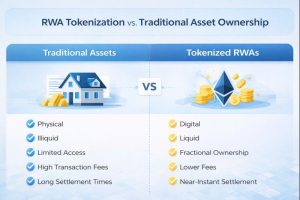
Real world asset tokenization is the process of representing the ownership of tangible or intangible assets with digital tokens on a blockchain. This process involves creating a digital equivalent of an asset, which is then backed by the real-world value of that asset. The tokenized version of the asset can be bought, sold, and traded just like cryptocurrency tokens in crypto asset tokenization.
For example, tokenized real estate allows investors to own fractional shares in a property rather than purchasing the entire asset. Similarly, artwork can be tokenized to allow multiple investors to own pieces of high-value art, or even precious metals like gold and silver can be divided into tokens representing small portions of the asset.
This new model eliminates the need for traditional intermediaries like brokers and agents, streamlining the process and reducing transaction costs. Furthermore, the blockchain ensures that ownership and transactions are recorded securely, providing transparency and trust.
Looking to tokenize your real-world assets?
Contact Techfyte today for a consultation and take the first step toward tokenizing your assets.
How Does Real World Asset Tokenization Work?
Real world asset tokenization transforms tangible or intangible assets into digital representations on a blockchain. This process enables fractional ownership, where an asset is divided into smaller, tradable digital tokens that can be easily bought, sold, or exchanged. Tokenization works through blockchain technology, which ensures transparency, security, and immutability of the asset’s ownership record. By creating a digital version of the asset, tokenization makes it easier to transfer ownership and track transactions, reducing the need for intermediaries like brokers or banks. This section will delve deeper into the step-by-step process of tokenizing real-world assets, from valuation and legal frameworks to token creation and ownership transfer.
1. Tokenizing Physical Assets
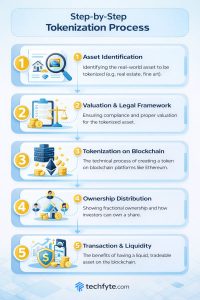
Tokenizing a physical asset involves a series of steps that integrate blockchain technology with the physical asset’s ownership structure. Here’s how it works:
- Step 1: Valuation & Legal Framework
The first step is determining the value of the asset. For real estate, this might involve a formal property appraisal, while for artwork, it could be an authenticated appraisal. Legal documents must also be drawn up to define the ownership rights and responsibilities of the token holder. - Step 2: Digital Token Creation
Once the legal and valuation steps are completed, the physical asset is digitally represented on the blockchain. Tokens are created using a blockchain platform like Ethereum or Solana, and these tokens are assigned a value based on the asset’s total value. Each token represents a fraction of the asset. - Step 3: Fractional Ownership
By tokenizing the asset, it can be divided into smaller shares, allowing investors to buy fractions of the asset. This fractionalization makes high-value assets accessible to more people, allowing smaller investors to participate. - Step 4: Trading and Ownership Transfer
The tokens representing the asset can be traded or sold on secondary markets. Blockchain’s decentralized ledger tracks every transaction and ensures transparency, allowing for secure ownership transfer without the need for traditional intermediaries.
Benefits of Real World Asset Tokenization
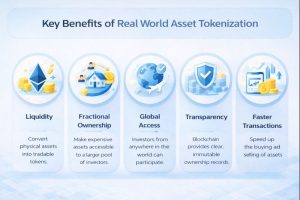
The benefits of real world asset tokenization extend far beyond increased liquidity. Tokenization allows for fractional ownership, meaning that high-value assets, such as real estate or fine art, can be broken down into smaller, more affordable units, allowing a broader range of investors to participate. This not only democratizes access to traditionally illiquid markets but also enhances liquidity by enabling the trading of asset fractions on secondary markets. Additionally, tokenization improves transparency and security, with blockchain providing an immutable ledger for all transactions, ensuring trust and accountability in the process. This section explores the key advantages of tokenizing real-world assets and how they contribute to a more inclusive, accessible investment environment.
1. Increased Liquidity
Tokenization makes traditionally illiquid assets more liquid by enabling fractional ownership and offering the possibility of trading assets on secondary markets. Investors can now trade portions of their assets easily, opening up liquidity in markets like real estate, which previously required large capital investments.
2. Lower Barriers to Entry
Traditionally, investing in high-value assets like real estate or artwork required significant capital. Tokenization lowers the entry barrier by enabling fractional investments. Investors can now buy smaller portions of these assets, democratizing access to markets that were once limited to wealthy institutional investors.
3. Improved Transparency & Security
Blockchain provides a transparent, immutable record of ownership and transactions. Each time an asset is transferred or sold, it is recorded on the blockchain, allowing for complete traceability of ownership history. Additionally, blockchain’s cryptographic features ensure the security of assets and prevent fraud or tampering.
Get a Custom Blockchain Tokenization Solution
Request a free consultation and let’s explore how blockchain tokenization can benefit your business.
Real World Asset Tokenization Use Cases
Real world asset tokenization has a wide range of applications across various industries, from real estate and art to commodities and intellectual property. In sectors like real estate tokenization, investors can own fractions of properties, providing a new avenue for small-scale investors to participate in lucrative markets. The art world is similarly being revolutionized by tokenization, where digital tokens represent ownership shares of high-value artworks, making them more accessible. Beyond these, commodity tokenization allows investors to buy fractions of physical assets such as gold, oil, and agricultural products. This section covers the diverse use cases of tokenization, demonstrating how different industries are leveraging blockchain technology to increase accessibility and liquidity for traditionally illiquid assets.
1. Real Estate Tokenization
One of the most popular use cases for real world asset tokenization is in real estate. Tokenizing real estate allows investors to buy fractional shares of properties, making it easier for smaller investors to enter the market. Additionally, real estate tokenization can reduce the complexity and cost of transactions, streamline the process of property management, and offer enhanced liquidity by enabling property shares to be traded on secondary markets.
2. Art Tokenization
Artworks have long been seen as valuable assets, but high-value art is not accessible to the average investor. Art tokenization allows investors to purchase fractional ownership in artwork, offering exposure to the art market without the need to buy entire pieces. Blockchain ensures the authenticity and provenance of the art, which is critical for high-value pieces.
3. Commodity Tokenization
Commodity markets, such as gold, silver, and oil, are traditionally dominated by large institutions. Tokenizing these commodities allows individual investors to buy fractional shares, making it easier for smaller investors to gain exposure to these markets. Tokenization also helps improve liquidity in commodity trading by enabling the trading of commodity tokens on global markets.
4. Intellectual Property Tokenization
Intellectual property (IP) rights, such as patents and trademarks, can be tokenized to enable the fractional ownership and trading of IP assets. Tokenizing IP allows creators and companies to sell shares in their intellectual property to raise capital or earn royalties from the tokenized assets.
How to Get Started with Real World Asset Tokenization
If you’re considering real world asset tokenization, getting started requires a solid understanding of both the technical and legal aspects of the process. The first step is selecting the appropriate blockchain platform that supports token creation and smart contract deployment. From there, businesses must develop a legal framework for token ownership and establish the valuation of the underlying asset. It’s also crucial to design and implement smart contracts that define ownership rights and govern the transfer process. Finally, working with blockchain development experts ensures that the tokenization process is secure, compliant with RWA regulations, and scalable. This section outlines the steps involved in getting started with asset tokenization and how businesses can implement blockchain solutions to tokenize their assets successfully.
1. Choose the Right Blockchain Platform
The first step in the tokenization process is choosing a blockchain platform that supports the creation and management of digital tokens. Popular platforms for tokenization include Ethereum, Solana, and Polygon. These platforms offer robust infrastructure for developing decentralized applications (dApps) and creating tokenized assets.
2. Legal and Regulatory Considerations
Tokenizing real-world assets involves navigating complex legal and regulatory frameworks. Different jurisdictions have specific rules around asset tokenization, particularly in terms of securities regulations. It’s important to work with legal experts to ensure compliance with local laws, including KYC/AML requirements and securities regulations.
3. Smart Contracts & Token Standards
After selecting a blockchain platform, the next step is to develop smart contracts that govern the terms of asset ownership, transfers, and payouts. Common token standards like ERC-20 for fungible tokens or ERC-721 for NFT asset tokenization are used to define the properties and functions of the tokens.
Start Your Real World Asset Tokenization Project with Techfyte
Contact Techfyte today and take the first step toward tokenizing your real-world assets.
FAQ: Real World Asset Tokenization
Q1: What are the benefits of tokenizing real-world assets?
Tokenizing real-world assets offers numerous advantages, with the most significant being increased liquidity. Traditionally, assets like real estate, art, and commodities are illiquid and difficult to trade. By tokenizing these assets, they can be divided into fractional ownership, allowing small-scale investors to participate in markets that were once restricted to large institutional players. Additionally, tokenization offers improved transparency as blockchain provides a public and immutable record of every transaction. Security is also enhanced, as blockchain’s cryptographic nature prevents tampering, fraud, and unauthorized changes.
Q2: How does blockchain enhance the process of asset tokenization?
Blockchain is the backbone of real world asset tokenization. It provides a decentralized, secure ledger that records every transaction and asset transfer. Each transaction is cryptographically verified, ensuring that the data is tamper-proof and transparent. Smart contracts, which are self-executing contracts with predefined rules, help automate the tokenization process. These contracts execute actions such as transferring tokens or releasing payments once conditions are met, reducing the need for intermediaries and enhancing efficiency.
Q3: What types of assets can be tokenized?
A wide range of real-world assets can be tokenized, providing businesses and individuals with new investment opportunities. Commonly tokenized assets include real estate, where properties can be divided into fractional shares; artworks, allowing investors to own fractions of valuable art; precious metals such as gold and silver; commodities like oil or agricultural products; intellectual property like patents, trademarks, and royalties; and even financial instruments such as stocks and bonds.
Q4: How does fractional ownership work in asset tokenization?
Fractional ownership is a core concept of asset tokenization. Instead of requiring investors to purchase an entire asset (which can be costly), tokenization divides the asset into smaller, tradable tokens that represent a fraction of the total value. For example, in real estate tokenization, a single property worth $1 million could be divided into 1,000 tokens, each representing $1,000 in ownership. This allows multiple investors to purchase smaller portions of the asset, providing access to high-value markets that were previously only available to wealthy individuals or large corporations.
Q5: What is the role of smart contracts in real world asset tokenization?
Smart contracts are essential in the process of tokenizing real-world assets. These self-executing contracts are written in code and automatically enforce the terms of an agreement when predefined conditions are met. In asset tokenization, smart contracts manage the rules of token ownership, transfers, and payouts, ensuring that the process is automated and transparent. For instance, when an investor buys a token representing a share of a real estate property, the smart contract automatically updates the ownership ledger on the blockchain.
Q6: How is the value of a tokenized asset determined?
The value of a tokenized asset is primarily based on the market value of the underlying real-world asset. For instance, the value of a token representing real estate is determined by the current market value of the property, which can be appraised by a professional. In the case of artwork tokenization, the asset’s value is often determined by auction prices or expert appraisals. Once the asset’s value is established, it is divided into fractional tokens, each representing a proportion of the total value.
Q7: What are the regulatory challenges in asset tokenization?
Asset tokenization is still an evolving field, and navigating regulatory challenges is one of the main hurdles in the process. Different countries have varying laws around securities and asset ownership, and tokenized assets may be considered securities in some jurisdictions, which means they need to comply with regulations such as KYC (Know Your Customer) and AML (Anti-Money Laundering). Moreover, the legal framework surrounding tokenized assets is not fully standardized globally, which can create uncertainty for investors and businesses.
Q8: How do tokenized assets impact traditional financial markets?
Tokenized assets have the potential to disrupt traditional financial markets by offering greater liquidity and accessibility. The ability to fractionalize high-value assets makes it possible for small investors to participate in markets that were previously limited to institutional investors. Furthermore, tokenized assets can be traded on global markets, enabling cross-border investment opportunities. Tokenization also opens the door for 24/7 trading of real-world assets, providing greater flexibility than traditional markets that operate on fixed hours.
Q9: What is the cost of tokenizing real-world assets?
The cost of tokenizing real-world assets varies depending on the asset type, complexity of the legal framework, and the blockchain platform used. For example, real estate tokenization typically costs between $10,000 to $100,000 depending on the value of the property and the legal processes involved. Additional costs include smart contract development, legal consultations, blockchain infrastructure setup, and compliance checks.
Q10: How does blockchain make tokenized assets more secure?
Blockchain enhances the security of tokenized assets by providing a decentralized, transparent, and immutable ledger. Each transaction or change in ownership is recorded on the blockchain, creating an auditable and verifiable history that cannot be altered or tampered with. Blockchain also ensures that token ownership is tracked in real-time, and smart contracts govern transactions, eliminating the need for intermediaries.
Concluding Note
Real world asset tokenization is unlocking new opportunities for investors and businesses alike, providing liquidity, transparency, and accessibility to high-value assets. With blockchain technology as the foundation, tokenization is reshaping industries like real estate, art, commodities, and intellectual property. The technology behind tokenization—primarily blockchain—ensures that every transaction is verifiable, transparent, and secure. Blockchain allows for decentralized ownership, eliminating the need for intermediaries like brokers and banks, which ultimately reduces costs and improves efficiency. It also enhances the transparency of asset transfers, ensuring that all transactions are auditable and that asset ownership is clear and tamper-proof. At Techfyte, we specialize in blockchain development and asset tokenization solutions, helping businesses tokenize their real-world assets securely and efficiently. Whether you’re in real estate, commodities, or any other industry, we can help you leverage blockchain to open up new opportunities.