Predictive Gas Optimization for Smarter On-Chain Execution
We help users and protocols move away from unpredictable gas fees by using AI-driven forecasting that identifies optimal transaction windows, helping reduce unnecessary spending and improve cost efficiency across Ethereum and other blockchain networks.
- AI-powered gas prediction
- Lower Ethereum gas fees through smarter timing
- Optimized execution across volatile networks












What is Predictive Gas Optimization?
Predictive gas optimization is a smarter way to handle gas fees before they spike. Instead of reacting to expensive network conditions, it uses mempool analysis, AI models, and time series forecasting to understand congestion patterns and predict where fees are heading. For Web3 developers and dApp owners, it turns gas fee prediction crypto into something practical you can act on, helping you time or adjust transactions when the network is quieter. This AI-powered gas optimization blockchain approach reduces unnecessary costs, improves execution timing, and makes on-chain operations more efficient without changing your existing infrastructure.
- Detects gas spikes early
- Monitors live mempool activity
- Identifies low fee windows
- Reduces costs without changes
Why Do Businesses Need Predictive Gas Optimization?
DeFi projects, NFT platforms, and Web3 apps often lose users the moment gas fees spike. Transactions get dropped, users hesitate, and many simply don’t come back. Over time, this creates silent churn that’s hard to recover from. A Web3 gas optimization solution helps bring more control into that experience. Instead of reacting to sudden network congestion, teams can optimize gas fees in blockchain environments using predictive signals. It enables real DeFi transaction cost reduction, improves blockchain transaction cost optimization across key flows, and keeps execution smoother during high traffic. The result is fewer failed interactions and a better user experience Web3 products need to retain users in a competitive space.

User Retention Loss
Gas spikes often push users away mid-transaction, creating frustration and reducing trust in DeFi, NFT platforms, and other Web3 applications.

Revenue Leakage Risk
Unpredictable fees lead to failed or delayed transactions, directly impacting protocol revenue, trading volume, and overall ecosystem activity.

Scaling Challenges
High network congestion makes it harder for Web3 apps to maintain consistent performance as user demand grows during peak periods.

Cost Unpredictability Issue
Teams struggle to forecast operational expenses when gas fees fluctuate heavily across Ethereum and other blockchain networks.
Make Gas Costs Predictable, Not Reactive
Optimize Gas Costs for Your ProductReal Benefits of Predictive Gas Optimization
It helps teams reduce unpredictable gas spend, improve execution timing, and avoid failed transactions, creating more stable on-chain behavior, better cost control, and a noticeably smoother experience for Web3 users.

Cut Transaction Waste
Reduce unnecessary spending by avoiding poorly timed executions that get expensive during sudden network congestion across Ethereum and other chains.

Improve Execution Timing
Run transactions at better moments by aligning execution with calmer network conditions instead of reacting after fees already rise.

Increase System Reliability
Keep on-chain actions more consistent by reducing failed or stuck transactions caused by unpredictable gas fluctuations and busy network periods.

Strengthen User Confidence
Help users trust your product more by keeping transaction outcomes stable, predictable, and less affected by sudden cost changes.

Support Higher Volume
Handle growing user activity more smoothly by distributing transactions across better network conditions instead of crowding peak congestion periods.

Reduce Operational Stress
Make gas management easier for teams by removing the need to constantly monitor unpredictable fee movements and network behavior.

Improve Capital Efficiency
Ensure funds are used more effectively by reducing overpayment on gas and avoiding unnecessary transaction cost spikes.

Enhance Product Experience
Create a smoother on-chain experience where users complete actions without frustration caused by sudden delays or unexpected fee jumps.
How Predictive Gas Optimization Works?
It looks at live mempool activity, studies past gas behavior, and uses AI models to predict fee changes, helping transactions execute at better times with lower cost and fewer failures.
Mempool Data Tracking
The system continuously reads live mempool activity to understand pending transactions, congestion levels, and early signals of gas price movement across networks in real time.
AI Prediction Models
Machine learning models analyze historical patterns and live data to forecast near future gas spikes and identify more efficient execution windows for transactions.
Gas Price Forecasting
On-chain data analytics help predict how gas fees will behave over short timeframes, giving systems a clearer view of upcoming cost changes.
Reinforcement Learning Loop
The system improves over time by learning from past transaction outcomes, adjusting strategies to make future gas optimization decisions more accurate and reliable.
Dynamic Fee Adjustment
A dynamic algorithm continuously adjusts gas pricing and timing decisions based on current and predicted network conditions to avoid unnecessary cost spikes.
Smart Transaction Scheduling
Transactions are scheduled based on predicted network conditions, reducing congestion impact and improving efficiency when paired with gas optimized smart contracts at the base level.
Our Predictive Gas Optimization Services
We build practical tools for Web3 teams to better manage gas costs, understand network conditions in real time, and make smarter decisions about when and how transactions should go through.

Cross Chain Routing
We design systems that route transactions across multiple chains dynamically, avoiding congestion & reducing execution costs across ecosystems using cross-chain smart contracts.

Wallet Level Optimization
We build wallet integrations that adjust gas strategies at the user level, improving affordability and experience without requiring manual configuration or technical input.

Gas Strategy APIs
We provide APIs that let dApps plug in predictive gas logic directly, enabling smarter execution decisions inside existing workflows without rebuilding infrastructure.

Cost Benchmark Systems
We create benchmarking tools that compare gas efficiency across networks and execution paths, helping teams choose the most cost effective blockchain routes.

Execution Risk Scoring
We develop scoring systems that evaluate transaction risk before execution, highlighting when gas volatility could impact success or increase failure probability.

Historical Cost Intelligence
We analyze long term transaction behavior to identify cost patterns that help teams plan more predictable and efficient blockchain usage strategies.

Real Time Fee Alerts
We implement alert systems that notify apps and users when gas conditions are shifting, allowing better timing decisions before spikes fully form.

Protocol Level Optimization
We optimize gas behavior directly at protocol interaction layers, reducing inefficiencies in how applications communicate with underlying blockchain infrastructure.

Network Efficiency Insights
We surface clear efficiency insights across networks so teams understand where congestion patterns, cost leaks, and execution delays are impacting overall performance.
On-Chain Gas Optimization Solutions
We help Web3 teams make gas usage more predictable by bringing real network awareness into how transactions are executed. Instead of reacting to fee spikes, systems can behave more intelligently and keep costs under control even when conditions shift.

Predictive fee optimization layer

Live network awareness integration

Smarter transaction cost control

Execution timing improvements

Adaptive gas usage handling
Industry Use Cases for Smarter Gas Management
Explore how different Web3 industries use predictive gas optimization to reduce costs, improve transaction reliability, and create smoother on-chain experiences across DeFi, NFTs, wallets, and cross-chain applications.

DeFi Trading Efficiency
DeFi platforms often deal with sudden fee spikes that eat into margins. We help smooth out execution timing so trades land in better network conditions without disrupting user flow.
- Lower trading costs
- Better execution timing
- Fewer failed swaps
- Improved liquidity flow
NFT Mint Optimization
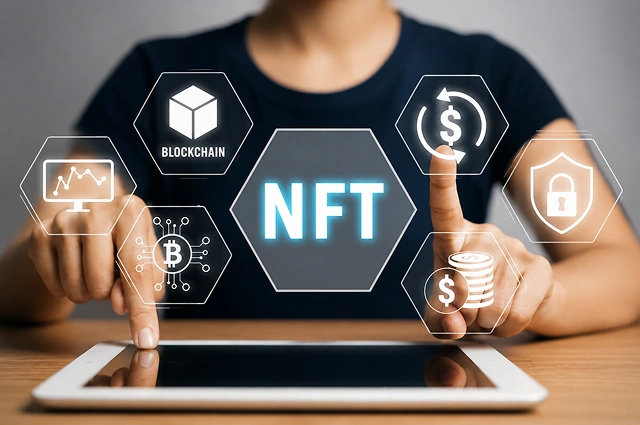
NFT launches can get chaotic when demand hits fast. We help projects reduce failed mints and keep costs more stable by spreading execution more intelligently across network conditions.
- Smoother mint drops
- Fewer mint failures
- Lower gas spikes
- Better user experience
Cross Chain Transfers
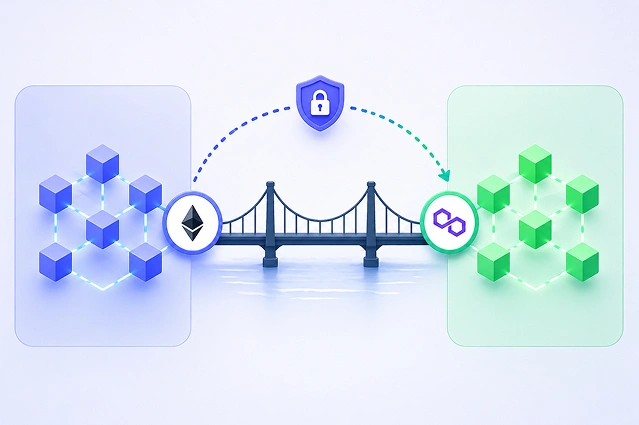
Moving assets across chains often comes with unpredictable costs. We help route transfers in a way that avoids unnecessary fees and improves execution reliability.
- Lower bridge costs
- Smarter routing paths
- Faster confirmations overall
- Reduced congestion impact
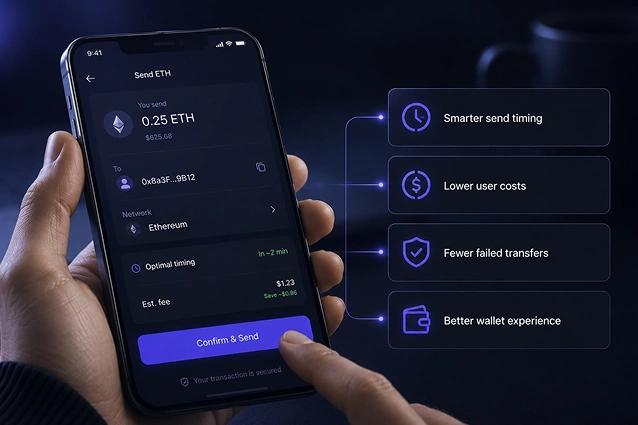
Wallet Transaction Control
Wallet providers can help users avoid bad timing for transactions by adjusting when actions are submitted based on live network conditions and predicted fee shifts.
- Smarter send timing
- Lower user costs
- Fewer failed transfers
- Better wallet experience

Token Launch Events
Token launches often face extreme congestion and unpredictable fees. We help smooth execution timing so participation is more consistent and less expensive for users.
- Controlled launch execution
- Reduced gas spikes
- Fairer participation access
- Improved launch stability
DeFi Trading Efficiency
DeFi platforms often deal with sudden fee spikes that eat into margins. We help smooth out execution timing so trades land in better network conditions without disrupting user flow.
- Lower trading costs
- Better execution timing
- Fewer failed swaps
- Improved liquidity flow
NFT Mint Optimization
NFT launches can get chaotic when demand hits fast. We help projects reduce failed mints and keep costs more stable by spreading execution more intelligently across network conditions.
- Smoother mint drops
- Fewer mint failures
- Lower gas spikes
- Better user experience
Cross Chain Transfers
Moving assets across chains often comes with unpredictable costs. We help route transfers in a way that avoids unnecessary fees and improves execution reliability.
- Lower bridge costs
- Smarter routing paths
- Faster confirmations overall
- Reduced congestion impact
Wallet Transaction Control
Wallet providers can help users avoid bad timing for transactions by adjusting when actions are submitted based on live network conditions and predicted fee shifts.
- Smarter send timing
- Lower user costs
- Fewer failed transfers
- Better wallet experience
Token Launch Events
Token launches often face extreme congestion and unpredictable fees. We help smooth execution timing so participation is more consistent and less expensive for users.
- Controlled launch execution
- Reduced gas spikes
- Fairer participation access
- Improved launch stability
Make Every Use Case Gas Efficient
Optimize Industry Use CasesDevelopment Process for Implementing Gas Optimization
We work closely with your team to understand your dApp, integrate real-time mempool data, apply AI prediction models, and build smarter execution flows that reduce gas costs and improve reliability.

Understanding Your Setup
We begin by looking at how your dApp actually works, where transactions happen, and how gas is being spent. Then we connect live mempool data so we can see real network conditions instead of assumptions.
Building Prediction and Logic Layer
Next, we plug in AI gas fee prediction models and a dynamic gas price adjustment system that helps decide the best time and way to send transactions based on live and historical patterns.


Optimizing Execution Flow
Finally, we bring in blockchain transaction scheduling and smart contract efficiency optimization so your system runs smoother, costs less, and handles network changes without breaking the user experience.
Why Choose Techfyte for Predictive Gas Optimization?
We combine real-time mempool analysis, custom AI models, and smart contract expertise to reduce gas costs, improve execution timing, and build reliable on-chain systems. Learn more at Techfyte.

Real Time Mempool Insight
We look at live mempool activity to understand what the network is actually doing in real time, so your dApp reacts to current conditions instead of outdated signals.

Chain Specific AI Models
Different blockchains behave differently, so we build AI models that are tuned to your specific chain rather than relying on a one-size-fits-all prediction system.

Smart Contract Refinement
We review and refine existing contracts to make them more gas aware and efficient, so execution feels smoother and better aligned with real on-chain behavior.