



Key takeaways:
- The Cosmos SDK is a framework for building application-specific blockchains tailored to your business needs.
- A modular architecture makes the system more efficient and adaptable by allowing developers to include only the parts they require.
- Tendermint BFT consensus ensures network safety, fast finality, and good performance.
- The Cosmos environment has built-in IBC protocol which makes it easy to move and communicate assets between chains.
- Separating the consensus and application layers means devs can add new features without compromising the core security.
- With CosmoWasm support, you can build flexible and secure smart contracts with WebAssembly.
- Cosmos SDK is suitable for high throughput applications and enterprise level use cases. It was built to be very scalable.
- This is a great base for Web3 applications as it works with real-world use cases like DeFi, tokenization, NFTs, and supply chain systems.
Introduction
The Cosmos SDK is an open-source blockchain framework designed to simplify the process of building application-specific blockchains, also known as appchains. It uses the Tendermint consensus for security and the IBC protocol for interoperability, enabling seamless communication between different blockchains within the Cosmos ecosystem. This modular approach allows developers to create highly scalable, secure, and customized blockchain solutions that can communicate across various platforms in the Cosmos network.
Blockchain development services have revolutionized industries globally, but building scalable, interoperable blockchains remains a complex challenge. The Cosmos SDK addresses these hurdles by offering a flexible and modular framework for blockchain development. It allows developers to focus on business logic without the need to worry about underlying infrastructure. Additionally, it ensures that resulting blockchains can interact with others within the Cosmos ecosystem, creating a growing multi-chain world. This capability is crucial for fostering the evolution of Web3 technologies and decentralized applications.
What Is Cosmos SDK
Cosmos SDK is a framework to develop bespoke blockchains for your individual purposes. It’s modular, so developers can pick and choose what they want, like the staking, government and banking modules. These components are based on Tendermint’s Byzantine Fault Tolerant (BFT) consensus to assure security and IBC so that diverse systems can interoperate. This allows developers to easily build their own blockchains that suit their purposes, and communicate with other blockchains in the Cosmos network.
How Cosmos SDK Works
The Cosmos SDK uses a two layer framework. The consensus layer is driven by Tendermint and is responsible for transaction validation and security of the network. In the application layer the developer can specify his own business logic using pre-built or bespoke modules. The IBC protocol lets blockchains talk to each other and send data between them. This allows Cosmos SDK based chains to easily communicate in the larger Cosmos environment.
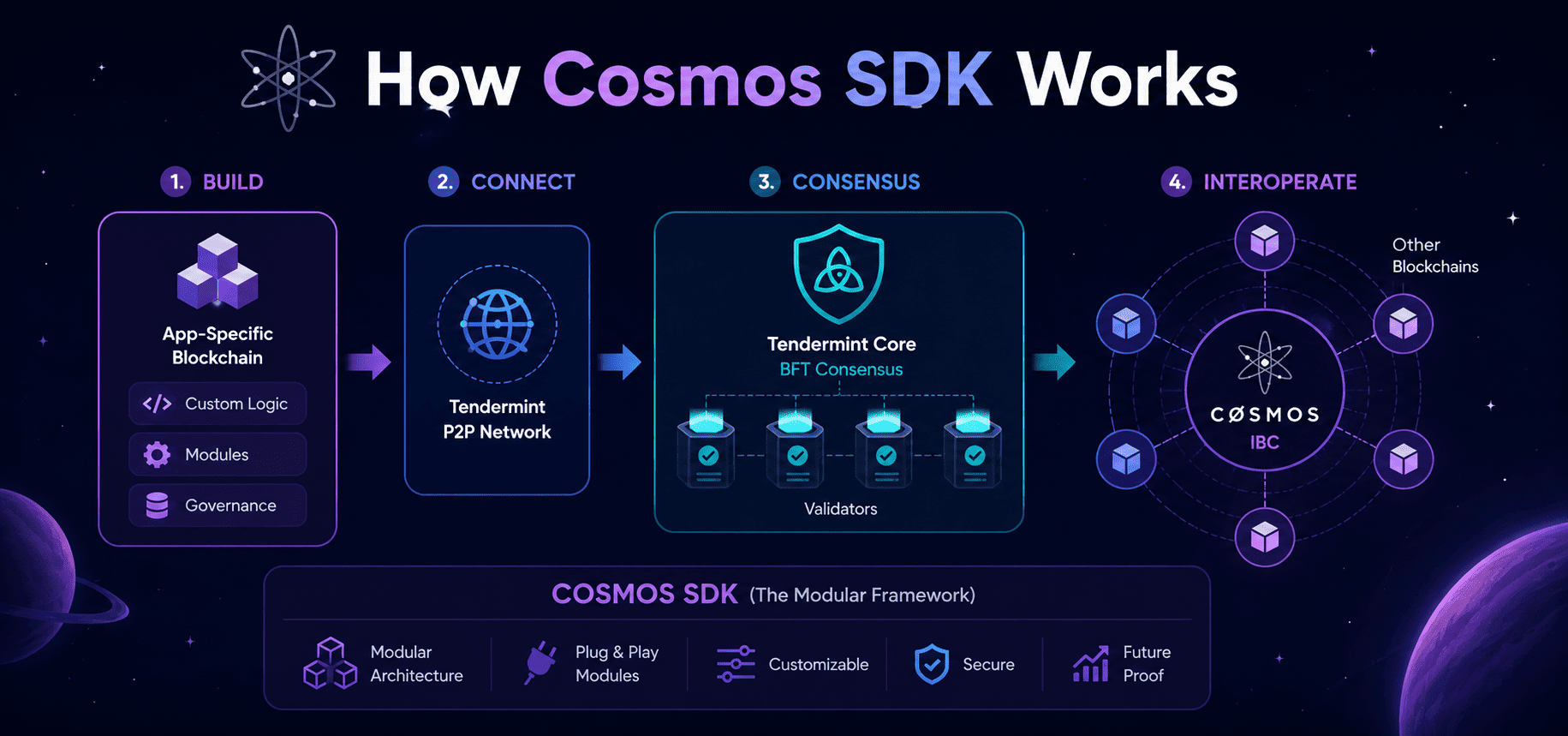
Developers can change how the blockchain works without touching the underlying security or consensus methods since the consensus layer and application layer are separate. It assures that each blockchain can work independently, but also can safely connect with other blockchains via IBC. Derivatives are gaining popularity in the blockchain space. Learn more about derivatives and their use in blockchain-based financial products.
Cosmos SDK Architecture Explained
The Cosmos SDK is designed to be modular and flexible. The two main components are: the application layer, and the agreement layer.
- Consensus Layer (Tendermint Core): For the Cosmos SDK, it all comes down to the Tendermint consensus engine. Tendermint employs Byzantine Fault Tolerance (BFT), allowing the blockchain to operate correctly in the presence of malicious or failed nodes. This consensus engine guarantees that transactions are legal and final, which keeps the blockchain whole. Tendermint is highly flexible and can support thousands of transactions per second with virtually no delay, meaning it can be used for high throughput tasks.
- Application Layer: This is where developers write the business code for the blockchain. It consists of a set of pre-built modules that cover common blockchain use cases such as banking, staking and government. You can use these parts as is, or modify them to fit your needs. This makes the application layer flexible and responsive as developers can create whole new components to fit different requirements.
- IBC Protocol: The IBC protocol is a core part of the Cosmos SDK as it allows blockchains to communicate and transfer assets securely. IBC allows Cosmos SDK chains to transfer data and tokens between themselves. This means that many chains can interact in an environment. This kind of interoperability is a must for autonomous apps that use assets and data from more than one blockchain. You can read more about that in the IBC protocol specification.
- Cosmos Hub: As the name suggests, the Cosmos Hub is the main blockchain that connects all the other blockchains (called “zones”) in the Cosmos environment. It connects to other blockchains via IBC and lets them send resources to each other.
- Modular Structure: Modularity is one of the most important pieces of the Cosmos SDK. Developers can choose which features they want to use in their blockchain, allowing them to make a solution that works best for their application. The modular nature of Cosmos SDK makes it easily adaptable to new needs. This also helps the project succeed in the long term.
This approach allows us to build very flexible, safe and scalable blockchains that can be easily adapted to the needs of different uses.
Key Features of Cosmos SDK
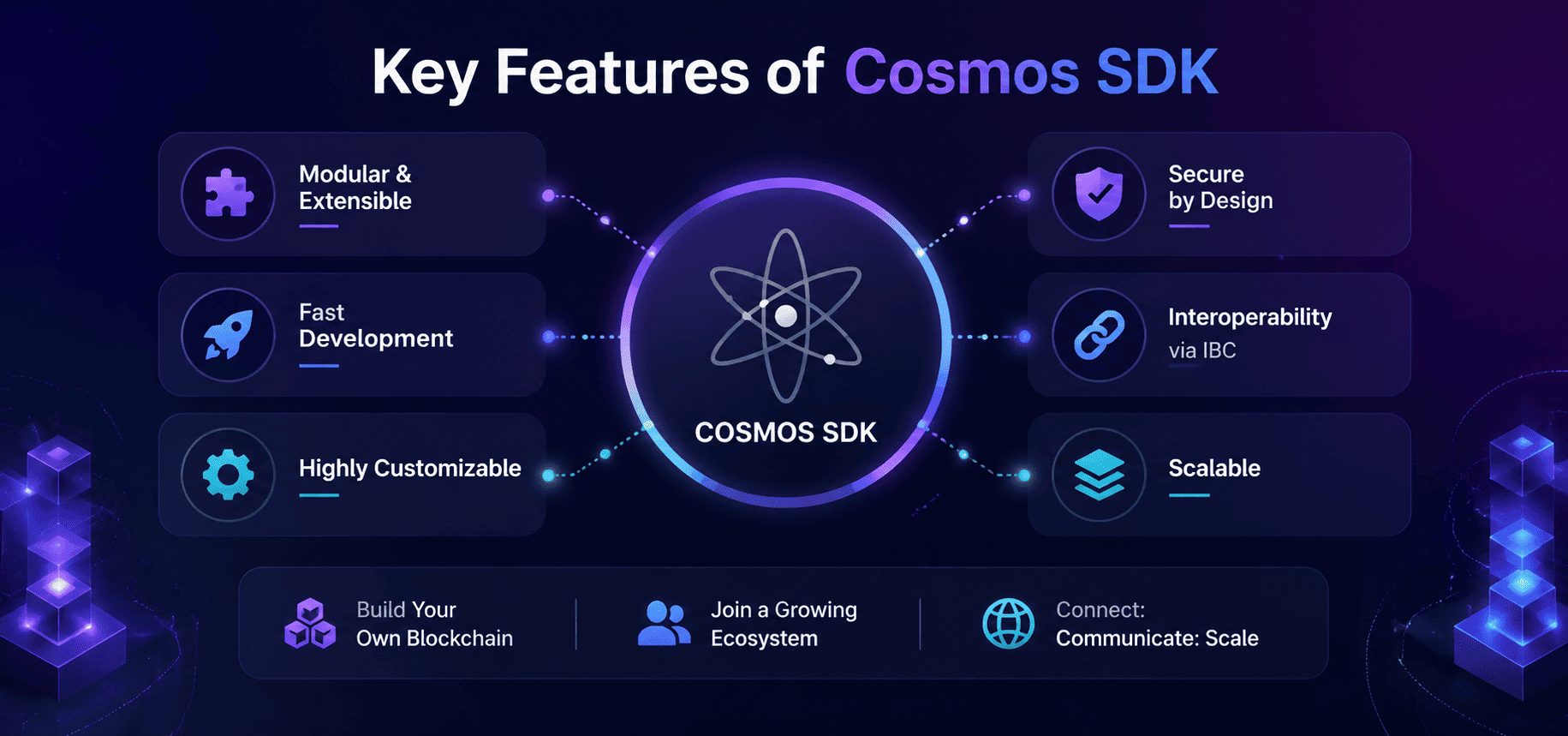
The Cosmos SDK provides important features that make it a suitable platform for constructing safe, scalable and customized blockchains. It was meant to interoperate and be flexible with other blockchains in the cosmos ecosystem. This allows developers to create extremely specific blockchain solutions that are very compatible with other blockchains.
- Modular Design
The developers of the Cosmos SDK can select the components they need to create very specific blockchain systems. This enables the authors to generate blockchains effectively for various applications. - Tendermint Consensus
Cosmos SDK is built on top of the Tendermint consensus engine, which provides high security and rapid speed. Tendermint has Byzantine Fault Tolerance (BFT), which means that the network can still run even if some nodes fail or are malevolent. It can process a very large amount of transactions with practically zero latency. - Interoperability with IBC
The Inter-Blockchain Communication (IBC) protocol is part of the Cosmos SDK. This makes it easy for the several blockchains in the Cosmos network to communicate and share assets. “Multi-chain ecosystems where chains can collaborate and share resources require collaboration across multiple chains. - CosmWasm for Smart Contracts
CosmWasm lets developers bring the Internet of Things to smart contracts, and is compatible with WebAssembly (Wasm). This provides for safe, rapid and flexible integration of smart contracts in blockchains designed with the Cosmos SDK. - Scalability and Modularity
A lot of the Cosmos SDK was built with scalability in mind. The flexible model for blockchain development allows developers to create dApps that may be scaled up or down as needed. The solution continues to be efficient and adaptable to new requirements.
How to Build a Blockchain Using Cosmos SDK
Building a blockchain using the Cosmos SDK is a systematic and efficient process, designed to make the development of custom blockchains straightforward. By leveraging its modular structure, developers can easily choose the components they need, allowing for flexibility and scalability. Below are the steps involved in building a blockchain with the Cosmos SDK.
- Set up the Development Environment
Install the Go programming language and Tendermint, which powers the consensus layer for your blockchain. You can find detailed instructions on setting up your development environment in the Cosmos SDK documentation.
- Create a New Project
Start a new project with the Cosmos SDK development tool. Follow the instructions for the Cosmos SDK to start building your blockchain.
The scaffolding tool allows users to choose the modules they want to include in their blockchain. There are staking, governance, banking modules and more in the system. Talk to our custom blockchain development services to meet your specific blockchain development needs.
- Define Business Logic in the Application Layer
Implement your own business logic in the application layer. Existing modules can be used or custom modules can be built to suit your needs.
- Integrate Tendermint Consensus
Integrate Tendermint consensus to ensure secure transaction validation and finality on your blockchain. Tendermint is a highly efficient BFT consensus algorithm that you can learn more about through the Tendermint consensus algorithm documentation.
- Enable Interoperability via IBC
BC Protocol enables various blockchains developed on Cosmos SDK to communicate with each other, thereby guaranteeing interoperability throughout the Cosmos network. If you want to understand how cross-chain collaboration is possible, read the IBC protocol specification.
- Deploy the Blockchain
Once all the pieces are in place you can go ahead and deploy your blockchain on the network. This will enable it to interoperate with other blockchains in the Cosmos ecosystem. This will facilitate the integration of your blockchain into a larger network, and enable interaction with other blockchains.
- Customize for Specific Applications
Cosmos SDK allows users a great deal of flexibility to build all sorts of blockchain applications including tokenization solutions and decentralized finance (DeFi) applications. DeFi solutions built with DeFi Development using Cosmos SDK are highly scalable. These applications offer customization options tailored to your needs and are guaranteed to be compatible with other blockchains in the community. If you need a hand building a decentralized application, our team of specialists is here to help you realize your app and make sure it launches successfully.
Cosmos SDK vs Ethereum
| Feature | Cosmos SDK | Ethereum |
| Architecture | Modular, customizable | Monolithic, generalized |
| Consensus | Tendermint BFT | Proof of Stake |
| Interoperability | Built-in with IBC | Limited, uses bridges |
| Smart Contract Support | CosmWasm for smart contracts | Solidity-based contracts |
| Scalability | High, supports appchains | Limited by gas costs |
| Governance | On-chain voting | On-chain voting for upgrades |
| Language | Go (with CosmWasm for smart contracts) | Solidity |
| Use Case Fit | Appchains, modular dApps | General-purpose dApps |
Stablecoins are essential in decentralized finance (DeFi) for stability. Learn more about how stablecoins work in the crypto economy.
Cosmos SDK vs Substrate
| Feature | Cosmos SDK | Substrate |
| Language | Go | Rust |
| Modular Framework | Highly modular | Modular with low-level control |
| Consensus Engine | Tendermint BFT | Customizable (Aura, Babe) |
| Interoperability Protocol | IBC | Polkadot’s Relay Chain |
| Governance Model | On-chain voting | On-chain voting |
| Smart Contract Support | CosmWasm | Ink! (Rust-based) |
| Ecosystem | Cosmos Hub + Zones | Polkadot Relay Chain + Parachains |
| Developer Experience | Easier with Go | Requires Rust expertise |
Use Cases of Cosmos SDK
The Cosmos SDK is used by many different types of businesses and programs. This is particularly useful for cross-chain decentralized finance (DeFi) systems, enabling people and assets to move between different blockchains. It’s also a great tool for asset tokenization solutions. In other words, companies can create their own tokenized assets and add them to the Cosmos network. Cosmos SDK is also used to build NFT platforms and supply chain management systems, which must be able to grow, stay safe and work with other systems.
Benefits of Cosmos SDK for Enterprises
- Tailored blockchain solutions
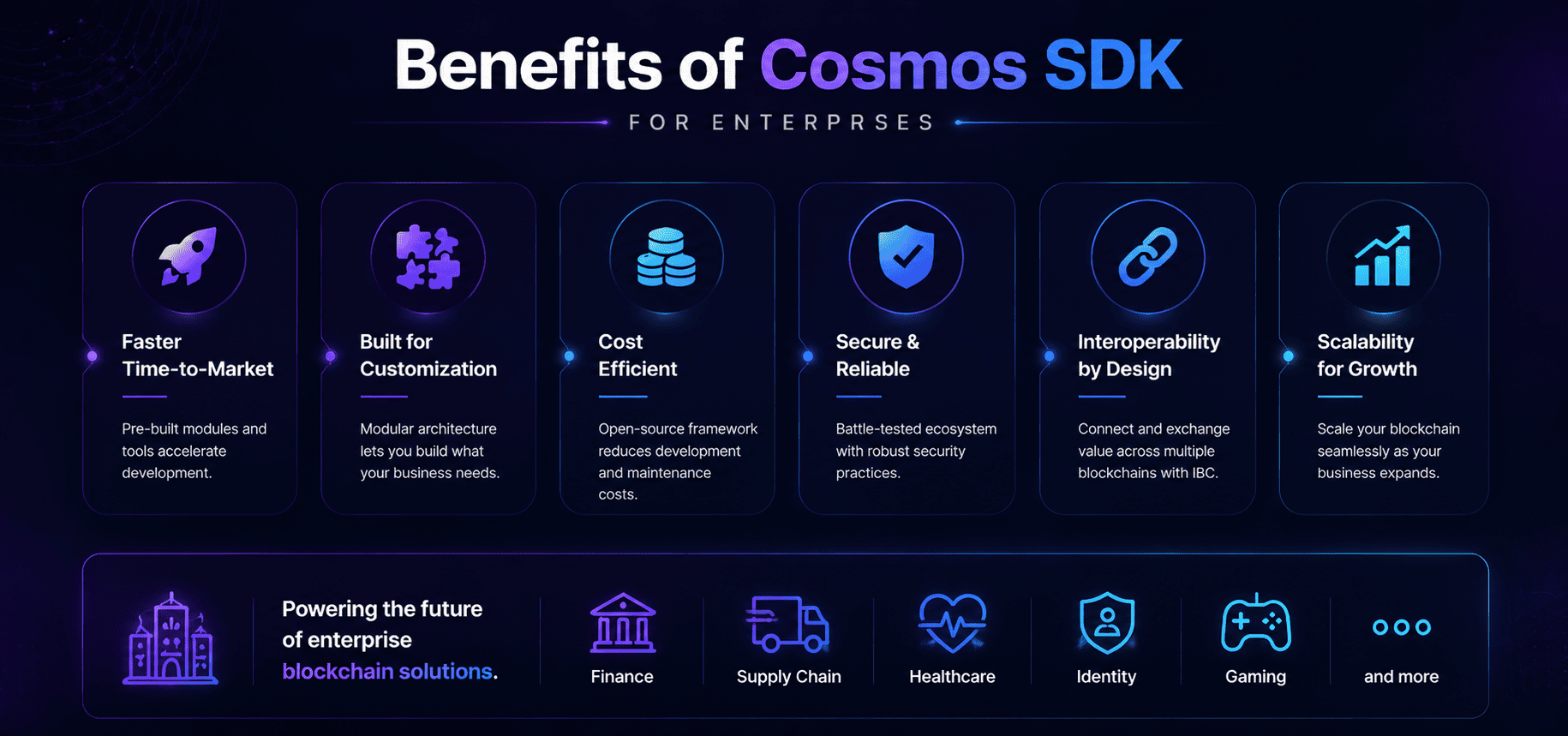
Cosmos SDK allows you to build modular blockchains that can be tailored to the specific needs of your business. This allows companies to develop blockchains that are tailored to their own goals without bloating them with unnecessary features.
- Collaborating with IBC capability
The inbuilt IBC algorithm ensures that multiple blockchains can interoperate without any issues. This feature allows businesses to share data and resources more easily across multiple platforms. This results in one environment and increased operational efficiency.
- High reliability and safety
And Cosmos SDK has strong security and transaction finality provided by Tendermint consensus. This is important for business applications that need to keep data safe and secure, especially in areas like finance and supply chain management.
- Scalability for Growing Needs
Cosmos SDK offers a scalable solution for businesses to scale. That means their blockchain can grow and change, too. The modular nature of the systems makes it easy for businesses to scale their systems to handle more transactions with no impact on speed.
- Flexibility Across Industries
The Cosmos SDK provides a flexible way for companies to take advantage of blockchain technology, whether to facilitate tokenization, supply chain management or financial services. It provides safe, expandable and compatible options that can meet the needs of a broad range of business types.
With the rise of decentralized AI platforms, blockchain technology is becoming more powerful, making it a great choice for enterprises.
Future of Cosmos SDK in Web3
The future of Cosmos SDK lies in its ability to power increasingly sophisticated, automated blockchain environments. As modularity evolves, we will see the integration of advanced logic directly into appchain layers. The intersection of Cosmos SDK and AI will be critical, as seen in our work with AI-based smart contract generation, where we automate complex protocol interactions to drive the next wave of Web3 adoption.
Frequently Asked Questions
1. What is Cosmos SDK?
The Cosmos SDK is a blockchain platform that simplifies the use of Tendermint consensus and the IBC protocol to build custom blockchains that can communicate with each other.
2. How does Cosmos SDK work?
The Cosmos SDK separates the consensus layer from the application layer. Tendermint is used for consensus and IBC is used for communication across chains.
3. What is Cosmos SDK used for?
It’s used to create unique blockchain solutions, like appchains, tokenized assets, and decentralized apps.
4. Is Cosmos SDK better than Ethereum?
Modular blockchain development offers Cosmos SDK more freedom and scalability, while Ethereum is more generalized and has scaling issues.
5. What is the difference between Cosmos SDK and Substrate?
Cosmos SDK relies on Tendermint and IBC for consensus and interoperability. Substrate on the other hand gives you more power on a lower level and communicates using Polkadot’s Relay Chain.
6. What is IBC in Cosmos SDK?
The IBC protocol allows different blockchains in the Cosmos environment to securely communicate and send assets to one another.
7. Can I build smart contracts with Cosmos SDK?
Yes, CosmWasm lets you write smart contracts for the Cosmos SDK in WebAssembly.
8. How do Cosmos SDK appchains achieve interoperability?
IBC enables appchains to interoperate. This allows secure data and assets to flow between blockchains.
9. What tools are used in Cosmos SDK development?
Tools that can be used are Cosmos SDK, Tendermint and Go. CosmosWasm is for smart contracts and Tendermint is for consensus.
10 . Why choose Cosmos SDK for enterprise blockchains?
Cosmos SDK is great for business blockchains as it can be scaled up, is safe with Tendermint consensus and works with other blockchains using the IBC protocol. Its modular design allows businesses to build their own solutions that work well with other blockchains. This gives it flexibility and efficiency.
