P2P Crypto Exchange Development Company
Build a marketplace that grows with confidence. Our P2P Crypto Exchange Development Company creates exchanges engineered for straightforward buying and selling, responsible fund management, and seamless scalability as more users join and trading activity intensifies over time.
- Secure direct trades without intermediaries
- Clear controls for users and admins
- Infrastructure designed for scale












What is P2P Crypto Exchange Development?
P2P Crypto Exchange Development is about building platforms where people can trade crypto directly with each other, without relying on a central party to hold their funds. These exchanges are designed around real trading interactions, including escrow based transactions, user set pricing, and clear steps that make each trade easy to follow and understand. Unlike centralized exchanges that control assets and process trades internally, P2P platforms put more responsibility and visibility in the hands of users. Peer-to-peer exchange platform development focuses on creating trust through trade logic and dispute handling, while decentralized peer-to-peer exchange development reduces dependency on intermediaries altogether. Techfyte specializes in this because we design P2P exchanges around how users actually trade, not just how systems look on paper.
- Direct peer-to-peer trading
- User-controlled fund custody
- Transparent escrow-based trades
80+
P2P Exchange & Crypto Trading Projects Delivered
12+
Years of Experience in Blockchain & Web3
120+
Crypto Exchange & Blockchain Development Experts
99%
Client Satisfaction Across Global Exchange Projects
Crypto Exchange Platform
A powerful cryptocurrency trading platform designed for secure transactions, real-time market data, and seamless digital asset exchange.
- Real-time trading charts and analytics
- Fast and reliable order execution
- Simple and intuitive trading interface

Why Businesses Are Turning to P2P Crypto Exchanges?
P2P crypto exchanges development gives businesses a cleaner way to operate without sitting in the middle of every transaction. The platform sets the rules and infrastructure, while users trade directly with each other. This reduces exposure to custody related issues and keeps operations simpler and easier to manage as the platform grows. They also make it easier to reach users across different regions. With local payment options and flexible pricing, businesses can support global trading without relying on complex banking partnerships. When users remain in control of their funds and clearly understand how trades work, confidence builds naturally. That confidence leads to more consistent trading activity, stronger liquidity, and growth that holds up even when market conditions change. As platforms scale, many also expand into advanced trading models such as decentralized derivatives exchange development, enabling users to access leveraged trading, hedging, and more sophisticated market strategies.

Lower Trading Fees
Lower platform costs and reduced fees through P2P exchanges help improve margins while keeping trading affordable for users across different markets.

Reduced Custody Risk
No intermediary custody reduces freeze risk and limits operational exposure, protecting both the business and its users from sudden disruptions.

Faster Fiat Onboarding
Fiat to crypto P2P systems simplify onboarding by using local payment methods, helping users start trading faster and with more confidence.

Organic Platform Growth
P2P exchanges scale naturally as users add liquidity, expand into new regions, and strengthen network effects over time.
Build a Secure and Compliance Ready P2P Exchange
Let's DiscussBenefits of P2P Exchange Models for Modern Markets
P2P crypto exchange development helps businesses build trading platforms where users deal directly with each other, reducing risk, lowering costs, expanding global access, and creating systems that grow naturally as trust and activity increase over time.

Secure Trade Protection
Secure crypto escrow using crypto escrow smart contracts ensures funds move only when both parties complete the trade as agreed.

Direct User Control
Direct crypto trading benefits include flexible pricing, choosing trading partners, and completing transactions without platform interference or forced execution rules.

No Custody Risk
The platform does not hold user funds, reducing freeze risks, lowering liability, and easing long term operational and compliance pressure.

Global Market Reach
A cross-border P2P crypto exchange enables users to trade across regions freely, without depending on traditional banking infrastructure.

Inclusive Access
Decentralized financial inclusion allows people in restricted or underbanked regions to participate in crypto markets through local payment options.

Simple Trading Flow
User-to-user crypto trading without order books keeps the process clear, straightforward, and easier for non professional traders to understand.

Faster Market Launch
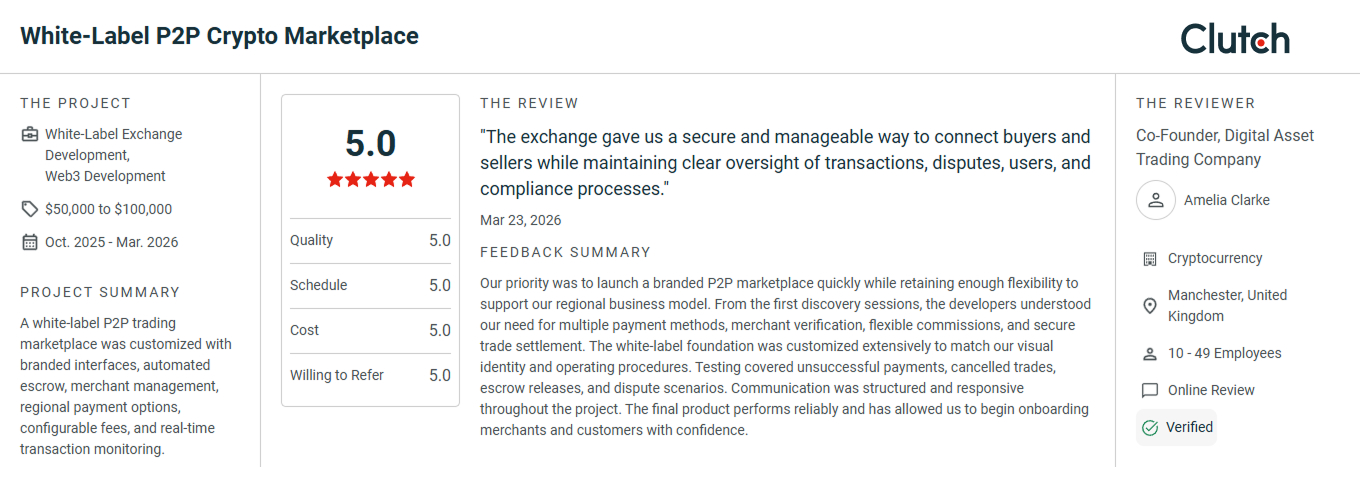
A white-label P2P crypto exchange helps businesses go live quickly using proven architecture, saving time and reducing development uncertainty.

Organic Platform Growth
P2P exchanges grow through liquidity and network effects, with some platforms expanding into margin exchange development for advanced trading.
How P2P Crypto Exchanges Work?
A P2P crypto exchange connects buyers and sellers directly, guiding them through simple steps like creating offers, securing funds in escrow, completing payments, and releasing crypto once both sides confirm the trade.
Create an Offer
A user lists a buy or sell offer with their preferred price, payment method, and trade conditions, making it visible to others.
Find a Match
Other users review available offers, compare terms, and choose a trade that fits their needs and payment preferences.
Trade Is Matched
Once an offer is accepted, both parties are connected through a decentralized order matching system that locks in agreed terms.
Crypto Goes to Escrow
The seller’s crypto is secured using a crypto escrow mechanism, ensuring funds stay protected until the trade is completed.
Fiat Is Transferred
The buyer sends payment directly to the seller using the chosen method and marks the payment as completed on the platform.
Crypto Is Released
After payment confirmation, the crypto is released through a user-to-user crypto settlement process, completing the trade safely.
Our P2P Crypto Exchange Development Services
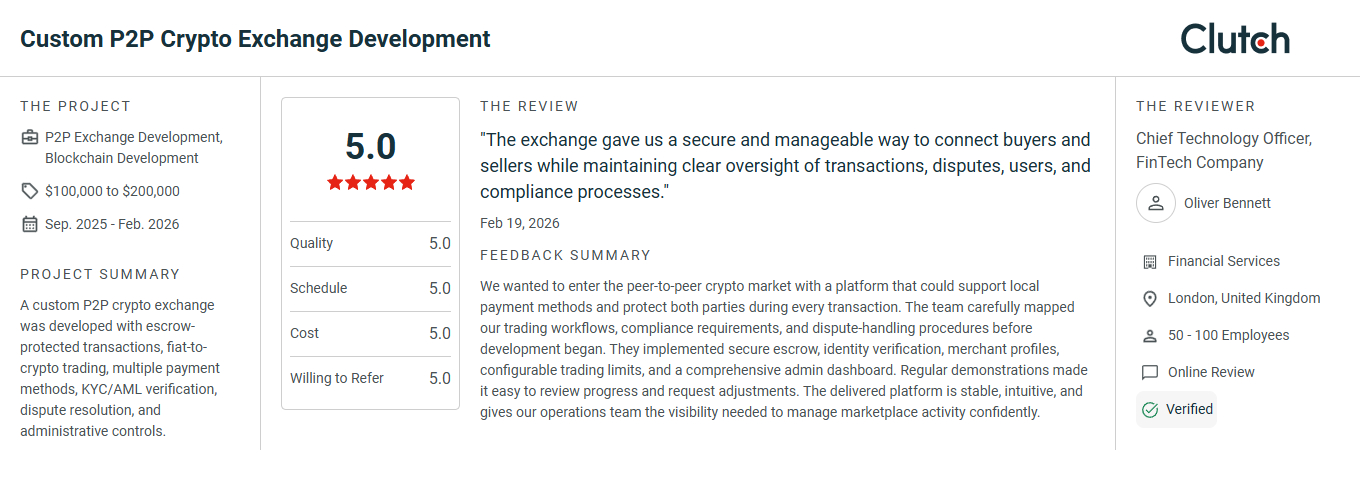
Our P2P crypto exchange development services cover everything needed to launch a P2P crypto exchange, from core trading logic to escrow, admin controls, and post launch support. These solutions are part of our larger Web3 development services, which cover full-stack blockchain applications across trading, DeFi, and infrastructure.

Custom P2P Exchange Development
We design and build P2P exchanges around your business model, user flows, security needs, and future growth plans globally supported.

White Label P2P Crypto Exchange Development
Launch faster with a white label P2P exchange platform you can brand, configure, customize, and deploy with confidence quickly worldwide.

Escrow Based Smart Contract Exchange
Trades are protected through escrow based smart contracts that lock crypto securely and release funds only after confirmation steps are completed.

Enterprise P2P Crypto Exchange Solutions
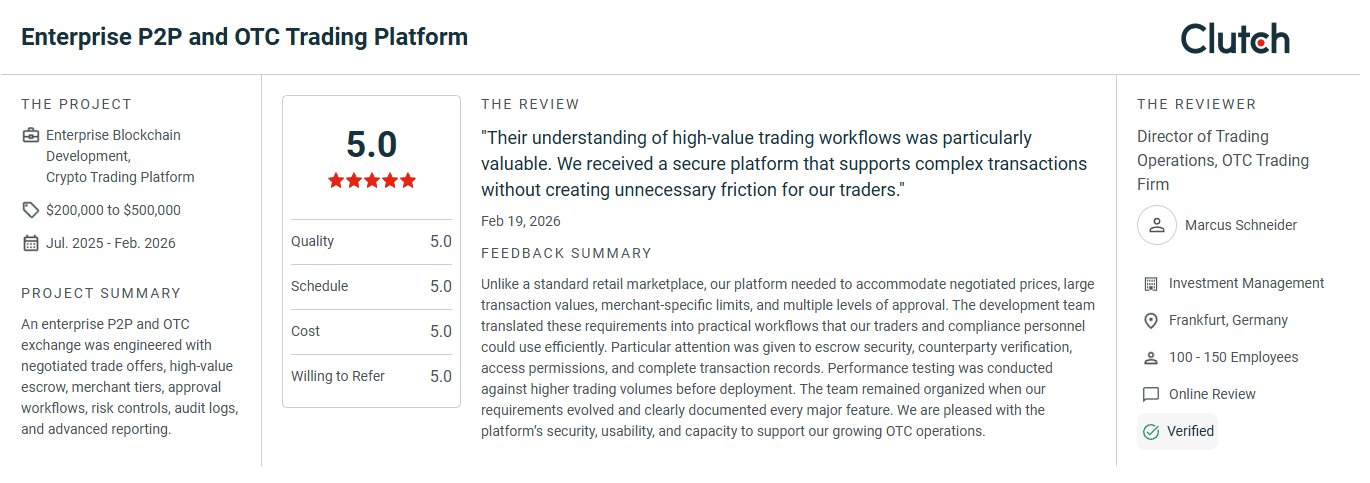
Enterprise P2P solutions built to handle high trading volumes, advanced permissions, reporting needs, and operational reliability at scale globally proven.
Fiat to Crypto P2P Integration
We integrate fiat to crypto P2P flows using local payment methods to make onboarding easier for users worldwide quickly and safely.

Dispute Resolution System
We build dispute systems that help resolve trade issues fairly, protect both sides, and keep marketplace trust intact longterm stable.

Admin Dashboard and Controls
Custom admin dashboards provide visibility into users, trades, risks, and activity so teams can manage platforms confidently every single day.
Security and Compliance Setup
We apply strong security practices and compliance configurations to reduce risk and meet regulatory expectations across regions, markets, users globally.

Ongoing Support and Scaling
We support your exchange after launch, helping with updates, scaling challenges, performance tuning, and long term stability as usage grows.
P2P Crypto Exchange Development Solutions
We build complete P2P crypto exchange development solutions that help businesses launch trading platforms people actually want to use. From secure escrow flows to flexible trade setups and smooth peer to peer transactions, everything is designed for real world usage and steady growth.

Custom P2P exchange architecture

Escrow based trade protection

Fiat to crypto P2P flows

Clear trade and dispute handling

Infrastructure built to scale
P2P Crypto Exchange Use Cases That Drive Adoption
This section highlights common P2P crypto exchange development use cases where direct user trading, local payments, and escrow based systems solve real business and market challenges.

Local Fiat-to-Crypto Marketplaces
P2P exchanges are widely used to help users buy and sell crypto using local payment methods without relying on traditional banking rails.
- Local currency support
- Faster onboarding
- Peer driven pricing
- Regional market access

Cross-Border Remittance Platforms
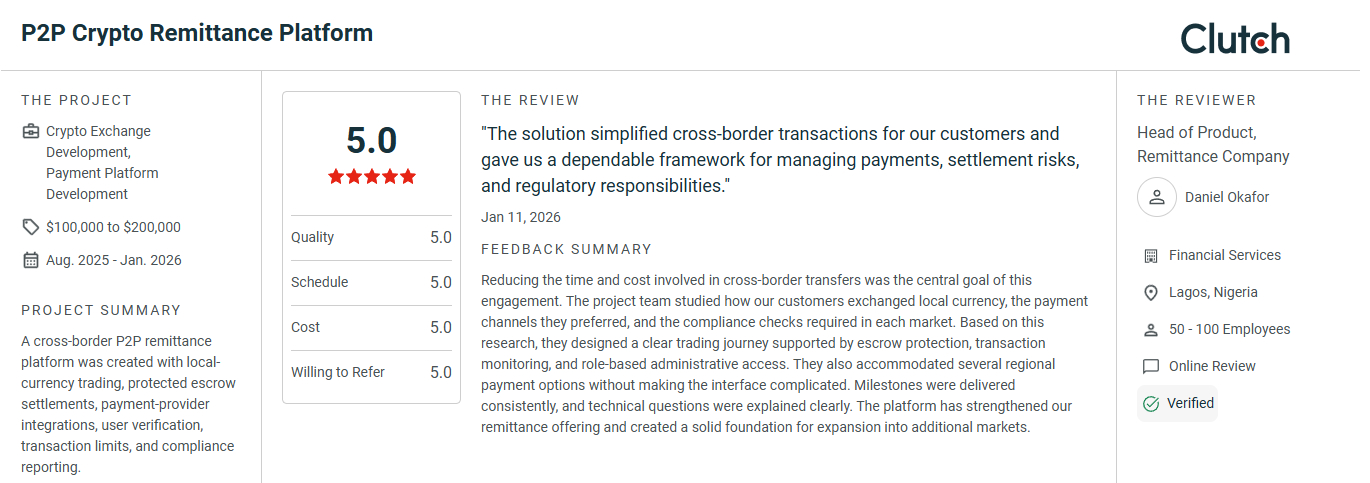
With P2P crypto exchange development, businesses use P2P exchanges to enable low cost cross-border value transfer by matching users directly across regions.
- Lower transfer costs
- Faster settlements
- No banking dependency
- Global user reach

High-Risk Market Access Platforms
P2P exchanges serve regions where centralized platforms face restrictions, offering users continued access to crypto trading.
- Reduced freeze risk
- User controlled funds
- Flexible compliance models
- Market continuity

Crypto-to-Crypto Trading Communities
Some platforms focus purely on peer crypto swaps, allowing users to trade assets directly without order books or intermediaries.
- Direct asset swaps
- Simple trade flows
- Community driven liquidity
- Transparent execution

Merchant and OTC Trading Hubs
Merchants and OTC desks use P2P exchanges to handle larger trades privately with custom pricing and escrow protection.
- Negotiated pricing
- Escrow secured trades
- High value transactions
- Trusted counterpart matching
Local Fiat-to-Crypto Marketplaces
P2P exchanges are widely used to help users buy and sell crypto using local payment methods without relying on traditional banking rails.
- Local currency support
- Faster onboarding
- Peer driven pricing
- Regional market access
Cross-Border Remittance Platforms
With P2P crypto exchange development, businesses use P2P exchanges to enable low cost cross-border value transfer by matching users directly across regions.
- Lower transfer costs
- Faster settlements
- No banking dependency
- Global user reach
High-Risk Market Access Platforms
P2P exchanges serve regions where centralized platforms face restrictions, offering users continued access to crypto trading.
- Reduced freeze risk
- User controlled funds
- Flexible compliance models
- Market continuity
Crypto-to-Crypto Trading Communities
Some platforms focus purely on peer crypto swaps, allowing users to trade assets directly without order books or intermediaries.
- Direct asset swaps
- Simple trade flows
- Community driven liquidity
- Transparent execution
Merchant and OTC Trading Hubs
Merchants and OTC desks use P2P exchanges to handle larger trades privately with custom pricing and escrow protection.
- Negotiated pricing
- Escrow secured trades
- High value transactions
- Trusted counterpart matching
Are you Ready to Launch a P2P Crypto Exchange Platform?
Book a MeetingBuilding a P2P Crypto Exchange Step by Step
As a P2P crypto exchange development company, we follow a simple, practical process to build P2P crypto exchanges. It starts with understanding your idea, shaping how users will actually trade, building secure core features, and making sure everything runs smoothly before real users start using the platform.

User Trading Understanding
We start by getting clear on how your users are actually going to buy and sell, what payment methods they prefer, and where friction might show up in real usage.
Core Trade Flow Build
We set up the core system where buyers and sellers connect, trades are matched, and funds stay secure in escrow until both sides complete their part of the deal.

Launch Readiness Setup
We connect payment options, test the system under real conditions, fix edge cases, and make sure the platform feels smooth and stable before real users start trading on it.
Why Choose Us as P2P Crypto Exchange Development Company?
As a P2P crypto exchange software development company, we work closely with businesses to build P2P exchanges that are simple to use, secure by design, and capable of handling real trading demand from day one and beyond.

Built for Real Trading
Instead of forcing users into rigid systems, we design exchanges based on how people actually trade, pay, and settle transactions in real markets.

Fewer Friction Points
From escrow logic to trade matching, we carefully design each step to avoid delays, confusion, and the common issues that break user trust.

Post Launch Partnership
We stay involved after deployment, helping you enhance performance and user experience so the platform remains stable and actively used over time.
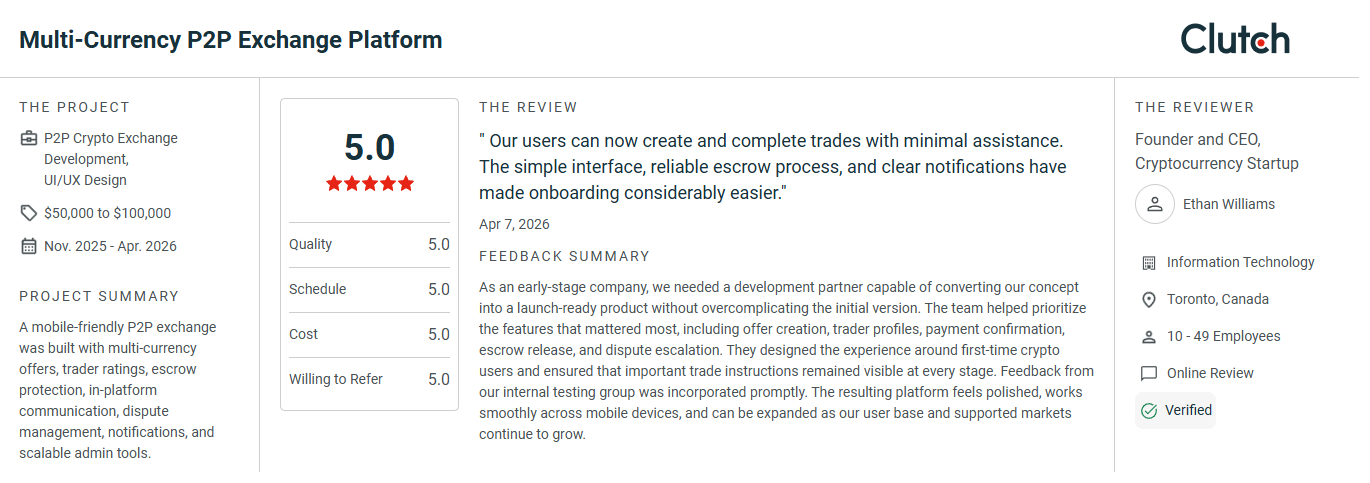
What Clients Say