Cross-Chain Liquidity Aggregation That Eliminates Fragmentation
We help protocols and platforms aggregate liquidity across L1s and L2s so capital flows as one system, not many. By connecting decentralized cross-chain liquidity sources, we reduce slippage, improve execution, and remove the complexity users face in multi-chain environments.
- One liquidity layer across chains
- Better pricing with lower slippage
- Built for real multi-chain growth











What is Cross-Chain Liquidity Aggregation?
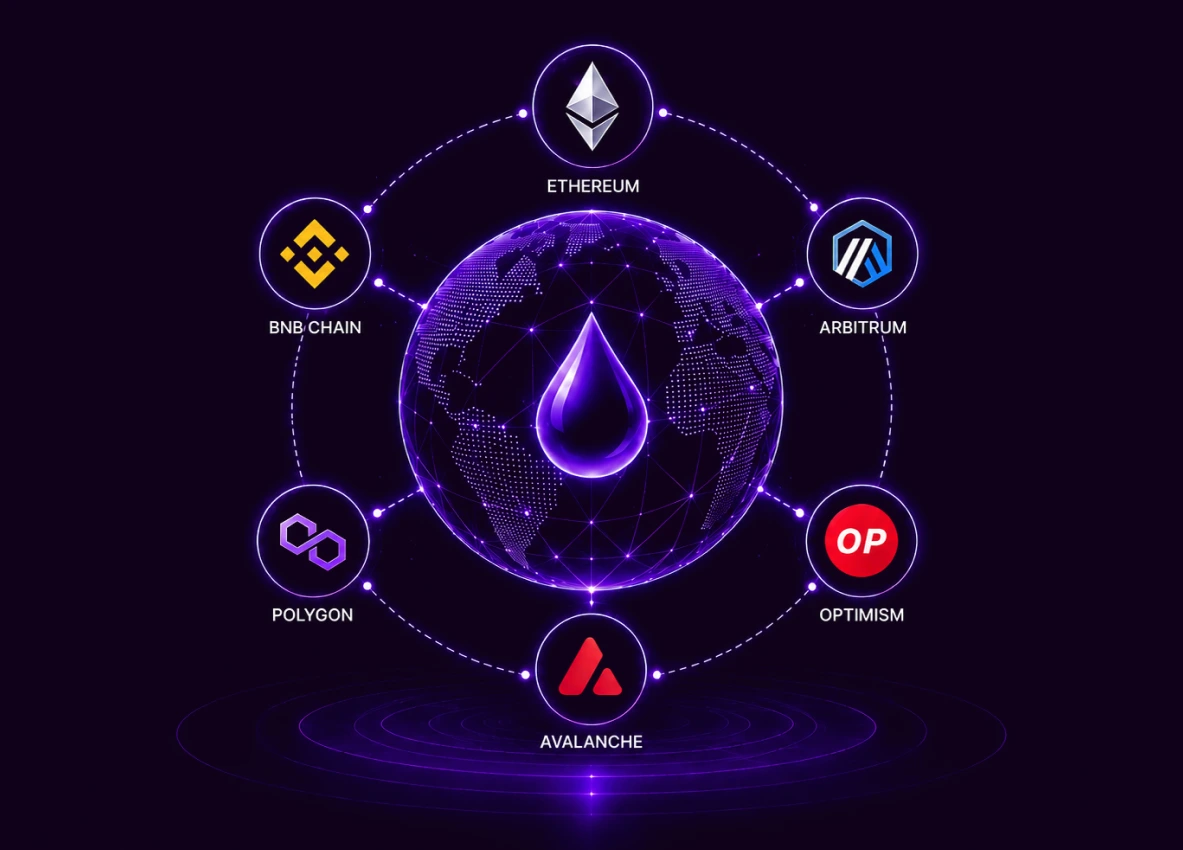
Cross-chain liquidity aggregation is about removing the friction that comes from liquidity being scattered across different blockchains. When liquidity pools are isolated on individual L1s and L2s, capital becomes inefficient, pricing varies from chain to chain, and users face higher slippage. Blockchain liquidity aggregation solves this by enabling liquidity pools aggregation across networks, allowing protocols to treat liquidity as a shared resource instead of a chain-specific constraint. The aggregated cross-chain liquidity protocol can route trades dynamically and execute cross-chain swaps using the deepest available liquidity, rather than relying on a single pool. It works much like SWIFT does for global payments, but for DeFi liquidity, coordinating execution and settlement without centralizing control. This approach improves capital efficiency, delivers more consistent pricing, and supports scalable multi-chain growth as ecosystems continue to expand.
- Liquidity shared across networks
- Smarter cross-chain execution
- Better pricing with less slippage
Why Liquidity Aggregation Matters for Businesses?
DeFi platforms and trading desks feel the impact of fragmented liquidity everyday through weaker pricing, limited trade sizes, and lost users as activity shifts between chains. When liquidity remains locked in isolated pools, capital is underused and execution quality suffers. Cross-chain aggregation for better efficiency allows businesses to manage liquidity as a shared layer rather than a set of disconnected markets. Cross-chain swaps and liquidity pools aggregation unlock enhanced liquidity in decentralized finance without forcing teams to duplicate pools on every new L1 or L2. Pricing becomes more consistent, slippage drops on larger trades, and users can move across chains without leaving the platform, supporting sustainable multi-chain growth. In ecosystems where liquidity is also locked through staking mechanisms, such as in DeFi staking systems, cross-chain aggregation helps maintain healthier capital flow and reduces fragmentation across locked and active assets.

Capital Efficiency Gains
Liquidity is deployed once and reused across multiple chains, improving utilization while lowering the operational cost of maintaining separate pools.

Lower Slippage Execution
Trades draw from deeper combined liquidity, allowing larger orders to clear with less price impact during normal market conditions.

Cross-Chain User Retention
Users stay on the same platform as they move between chains, preserving volume and reducing churn across ecosystems.

Access to Fragmented Order Books
Aggregated routing surfaces liquidity spread across networks, enabling better execution opportunities than any single-chain venue.
Unify your liquidity across every chain
Explore Cross-Chain SolutionsBenefits of Cross-Chain Liquidity Aggregation
Cross-chain liquidity aggregation helps protocols feel less fragmented and more connected across ecosystems. It improves how liquidity is accessed, reduces operational friction, and lets teams scale across chains without rebuilding everything from scratch.

Liquidity Routing Intelligence
Instead of static routing, systems can continuously choose better paths based on real-time chain conditions, gas efficiency, and execution probability.

Cross-Chain Capital Visibility
Teams get a clearer view of where liquidity actually sits across ecosystems, helping them make faster strategic allocation decisions.

Unified Risk Monitoring
Risk signals across multiple chains are tracked in one place, making it easier to detect anomalies before they impact execution.

Adaptive Execution Logic
Execution behavior can adjust dynamically based on congestion, liquidity shifts, or network conditions without manual intervention.

Reduced Integration Overhead
Protocols avoid building and maintaining separate logic for each chain, simplifying engineering effort and long-term maintenance cycles.

Improved System Observability
Every trade route, liquidity source, and execution outcome becomes traceable across chains in a single monitoring layer.

Protocol Coordination Efficiency
Multiple liquidity sources can coordinate automatically instead of being managed in isolation, reducing operational fragmentation.

Smarter Liquidity Planning
Historical cross-chain usage patterns help teams predict where liquidity should move before demand spikes occur.
How Cross-Chain Liquidity Aggregation Works?
Cross-chain liquidity aggregation helps unify fragmented liquidity across blockchains so trades can be routed through smarter paths, executed more efficiently, and settled across networks without relying on a single chain.
Liquidity Sourcing Across Chains
The system continuously scans liquidity pools across multiple blockchains, identifying where capital is deepest and execution conditions are most favorable.
Smart Contract Trade Routing
Smart contracts automatically decide how and where a trade should be executed, splitting or directing flows across optimal liquidity paths.
Cross Chain Bridge Execution
Assets move through secure bridge mechanisms using lock mint burn or hash time locked contracts ensuring safe cross chain settlement.
Real Time Route Optimization
The routing layer adapts instantly to network congestion gas costs and liquidity shifts, selecting the most efficient execution path available.
Atomic Transaction Coordination Layer
Trades are coordinated so execution either completes fully or fails safely, preventing partial fills or inconsistent states across chains.
Final Settlement Confirmation Layer
Once execution completes, destination chain contracts verify final state and confirm settlement ensuring assets are correctly delivered to users.
Our Cross-Chain Liquidity Development Services
We build systems that connect liquidity across blockchains so it actually works as one flow, using advanced capabilities from our Web3 development stack. It helps protocols reduce fragmentation, improve execution, and run smoother across multiple chains without extra operational stress.

Build Liquidity Aggregation Layers
We build the core layer that brings liquidity from different chains into one place, so protocols can operate as a single connected system instead of fragmented markets.
Develop Cross Chain Routing Logic
We design routing systems that look at liquidity conditions across chains and quietly pick the most efficient path for each trade without adding complexity for users.

Integrate Multi Chain Bridge Systems
We connect chains through secure bridge setups that let assets move reliably between networks while keeping execution smooth and predictable.

Create Smart Execution Contracts
We develop smart contracts that handle the actual execution flow across chains, making sure trades complete accurately without manual coordination.

Optimize Liquidity Distribution Models
We structure how liquidity is spread across networks so it stays balanced, usable, and doesn’t get stuck in isolated pockets.

Enable Unified Liquidity Execution
We help systems treat liquidity across chains as one unified pool, so execution feels consistent no matter where the trade originates.

Implement Cross Chain Settlement Logic
We build settlement logic that confirms trades across chains properly, ensuring everything closes cleanly without mismatches or missing states.
Enhance Liquidity Monitoring Systems
We create visibility layers that track how liquidity moves and behaves across chains so teams can actually understand what’s happening in real time.

Add Cross Chain Liquidity Analytics Layer
We build analytics layers that reveal cross-chain liquidity behavior, helping protocols identify inefficiencies, optimize routing, and improve execution decisions.
Decentralized Cross-Chain Liquidity Solutions
We build cross-chain liquidity aggregation solutions that help protocols unify fragmented liquidity across multiple blockchains, enabling smoother execution, better capital efficiency, and more reliable multi-chain trading experiences powered by smart routing and secure interoperability.

Unified liquidity aggregation layer

Cross-chain execution routing systems

Secure bridge integration framework

Smart contract trade orchestration

Multi-chain liquidity monitoring setup
Cross-Chain Liquidity Applications Across DeFi Ecosystems
This section explores how cross-chain liquidity aggregation is applied across DeFi systems to improve trading efficiency, liquidity access, and multi-chain financial operations.

Multi Chain DEX Trading
DEX platforms use cross-chain liquidity aggregation to pull liquidity from multiple networks, helping users execute larger trades with more consistent pricing across chains.
- Unified liquidity across chains
- Better pricing consistency overall
- Higher trade execution capacity
- Reduced dependency on single chain

Institutional Trade Execution
Trading desks route high-value orders through aggregated liquidity sources across chains, improving execution quality and reducing dependence on any single blockchain market
- Deep liquidity access globally
- Improved execution for large orders
- Reduced market fragmentation risk
- Faster cross chain settlements

DeFi Lending Protocol Liquidity
Lending platforms tap into aggregated liquidity pools across chains to maintain healthier collateral ratios and ensure borrowing markets stay liquid during demand spikes.
- Stable lending liquidity support
- Better collateral efficiency management
- Reduced liquidity shortfalls risk
- Continuous borrowing market availability

Cross Chain Arbitrage Systems
Arbitrage bots use unified liquidity access to spot and execute price differences between chains faster, improving efficiency across fragmented DeFi markets.
- Faster price difference detection
- Efficient cross chain execution
- Higher arbitrage profit potential
- Reduced execution latency issues

Multi Chain Perpetual Markets
Derivatives platforms aggregate liquidity across ecosystems to support deeper order books, allowing more stable perpetual trading environments with reduced funding imbalance.
- Deeper perpetual market liquidity
- More stable trading environments
- Reduced funding rate volatility
- Better order book depth
Multi Chain DEX Trading
DEX platforms use cross-chain liquidity aggregation to pull liquidity from multiple networks, helping users execute larger trades with more consistent pricing across chains.
- Unified liquidity across chains
- Better pricing consistency overall
- Higher trade execution capacity
- Reduced dependency on single chain
Institutional Trade Execution
Trading desks route high-value orders through aggregated liquidity sources across chains, improving execution quality and reducing dependence on any single blockchain market
- Deep liquidity access globally
- Improved execution for large orders
- Reduced market fragmentation risk
- Faster cross chain settlements
DeFi Lending Protocol Liquidity
Lending platforms tap into aggregated liquidity pools across chains to maintain healthier collateral ratios and ensure borrowing markets stay liquid during demand spikes.
- Stable lending liquidity support
- Better collateral efficiency management
- Reduced liquidity shortfalls risk
- Continuous borrowing market availability
Cross Chain Arbitrage Systems
Arbitrage bots use unified liquidity access to spot and execute price differences between chains faster, improving efficiency across fragmented DeFi markets.
- Faster price difference detection
- Efficient cross chain execution
- Higher arbitrage profit potential
- Reduced execution latency issues
Multi Chain Perpetual Markets
Derivatives platforms aggregate liquidity across ecosystems to support deeper order books, allowing more stable perpetual trading environments with reduced funding imbalance.
- Deeper perpetual market liquidity
- More stable trading environments
- Reduced funding rate volatility
- Better order book depth
Explore Real-World Applications of Cross-Chain Liquidity
Explore Real-World ApplicationsDevelopment Workflow for Cross-Chain Liquidity Systems
We follow a structured approach that moves from understanding fragmented liquidity across chains to building execution systems and continuously refining performance in live environments to support scalable multi-chain DeFi operations.

Liquidity Mapping
We start by studying how liquidity is actually distributed and used across chains in real conditions, so we can clearly identify where fragmentation is impacting execution.
Execution Layer Build
We then build the core system that manages how trades move across chains, focusing on practical routing logic and smooth coordination between liquidity sources.


Live Optimization
After deployment, we keep refining the system based on real market behavior, making sure it adapts as liquidity conditions change across different networks over time.
Why Choose Us as Cross-Chain Liquidity Development Company

Built for Real Cross-Chain Liquidity Behavior
We design systems based on how liquidity actually moves across chains, so execution stays stable, routing feels smarter, and performance holds up even in unpredictable market conditions.

Security and Execution Designed Together
We don’t separate security from routing. Both are built into the same system, which reduces weak points and makes cross-chain liquidity aggregation more reliable in real environments.

Ongoing Intelligence After Deployment
Once deployed, we keep watching how liquidity behaves in real time and refine the system so it stays useful as markets and chain activity continue to shift.