



Key Takeaways
- Real Estate Tokenization: Converting property ownership into digital tokens on a blockchain, enabling fractional ownership and easier transactions.
- Core Blockchain: Ethereum and Polygon are common platforms, with ERC-3643 smart contracts for regulatory compliance.
- Regulatory Oversight: VARA, SCA, and DLD ensure secure, compliant tokenization in the UAE.
- Benefits: Liquidity, fractional ownership, automation via smart contracts, and transparency through blockchain.
- Challenges: Issues include regulatory compliance, liquidity fragmentation, and asset custody.
- Future Outlook: Full tokenization adoption by 2026, with on-chain transactions and potential for city-wide tokenization.
- Building a Platform: Steps include defining requirements, selecting blockchain infrastructure, developing smart contracts, and ensuring VARA and DLD compliance.
Introduction
Real estate tokenization in the UAE is the process of turning real property ownership rights into digital tokens that are stored on a blockchain. This makes it possible for people to own parts of properties and makes transactions easier. New technology is making it possible for investors to get into real estate markets with smaller amounts of money. It also offers a creative way to deal with the problem of lack of cash in property purchases.
What Is Real Estate Tokenization?
Real estate tokenization is the practice of using a blockchain to create digital coins that can be used to show ownership of real estate. People can now invest in real estate in a new way with these tokens, which are often backed by security tokens and smart contracts. Tokenization’s main benefit is fractional ownership, which lets buyers buy a piece of a property instead of having to pay for the whole thing.
Key Concepts in Real Estate Tokenization:
- Tokenized Assets: These are real-world assets, like real estate, that have been turned into digital tokens. This makes trading and fractional ownership easy.
- Security Tokens: These tokens legally own an object and follow the rules, so they are a safe and clear way to invest in real estate.
- Smart Contracts: agreements that run themselves because the terms are written straight into code. When certain conditions are met, they automatically carry out tasks like transferring ownership and settling payments.
Tokenizing real estate in the UAE gives buyers from all over the world some very special chances. Not only are tokenized assets an easy way to get into the UAE real estate market, they also make deals safer and more flexible.
How Real Estate Tokenization Works in the UAE
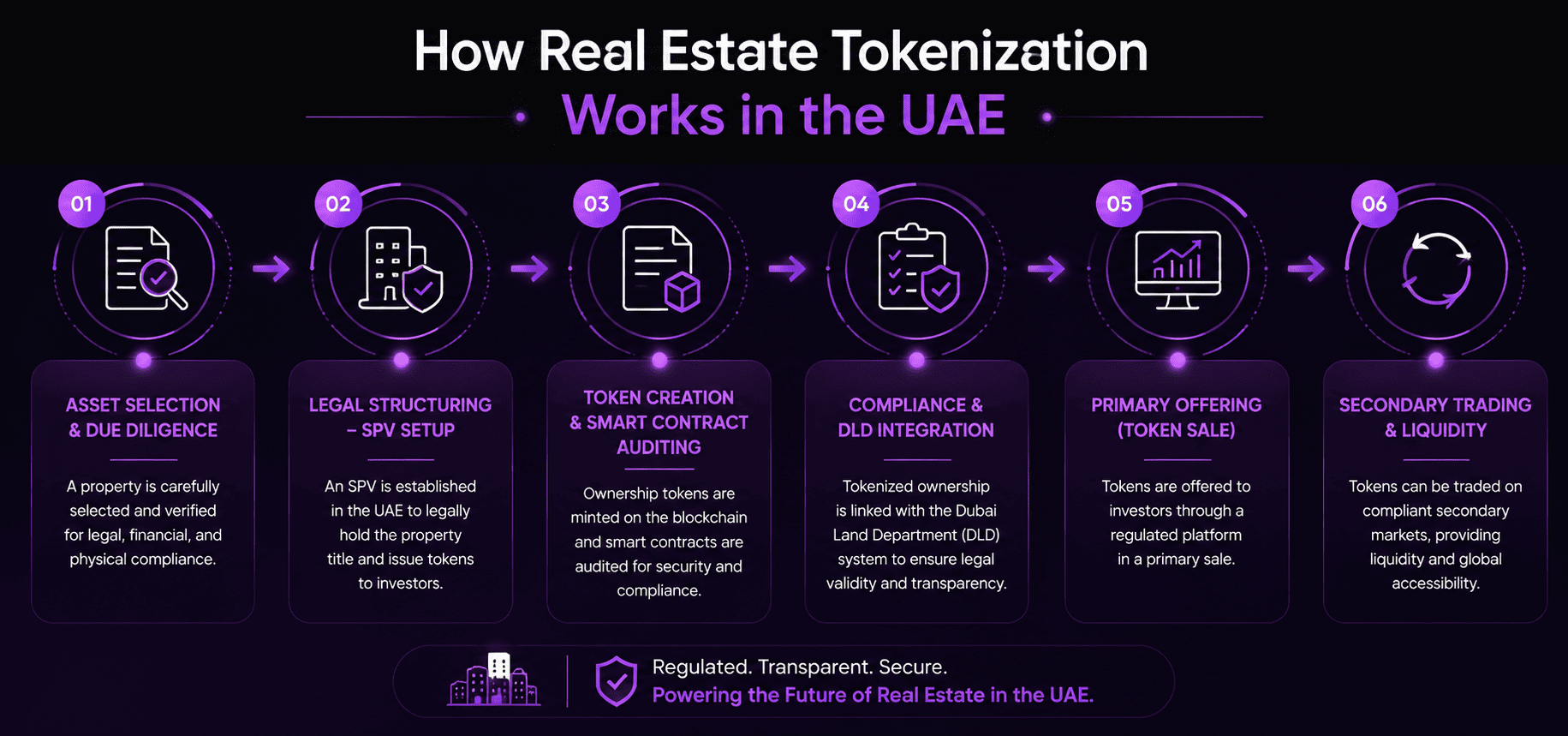
The tokenization of real estate in the UAE is carried out in accordance with the local rules and market conditions. For ease of understanding, the steps are as follows:
Step 1: Asset Selection & Due Diligence
To begin the process, a feature is selected to be tokenized. Due diligence helps to ensure that the object meets all the legal, financial and physical standards for it to tokenize.
Step 2: Legal Structuring – The SPV Structure
Tokenization in the UAE is commonly carried out using a Special Purpose Vehicle (SPV) structure, which is registered in a free zone or onshore. This structure has the formal title of the property. Investors don’t buy the land itself, but tokens that represent shares in the SPV. In this model, there is a secure connection to the blockchain, but control is open to change.
Step 3: Token Creation & Smart Contract Auditing
The SPV is created and ownership tokens are then generated on a blockchain. Smart contracts govern tokens and verify their compliance, safety and transparency. This enables transfers to occur automatically.
Step 4: Compliance & DLD Tokenization System
The Dubai Land Department (DLD) links tokenized ownership records to the official property register, ensuring compliance with local rules. The DLD’s tokenization system pilot allows you to easily verify title records of tokenized properties.
Step 5: Primary Offering & Secondary Trading
The final step is launching the property via a primary offering where buyers can purchase tokens. These tokens are then traded on regulated platforms, increasing the liquidity of the UAE property market and making it accessible to more people. This type of secondary trading opens the door to buyers from around the world.
UAE Regulatory Framework for Tokenized Real Estate
The UAE has a strong set of laws that makes tokenized real estate legal and safe. Key regulatory bodies include:
- Virtual Assets Regulatory Authority (VARA)In Dubai, VARA governs the sale, issuance and purchase of tokenized real estate as virtual assets. Their structure ensures compliance with foreign standards, giving investors confidence.
- Securities and Commodities Authority (SCA)The SCA is responsible for the regulation of security tokens and ensuring compliance with anti-money laundering (AML) and know-your-customer (KYC) rules. This offers buyers extra security.
- Dubai Land Department (DLD)The DLD inspects the title deeds of tokenized properties and ensures they are registered in the official property record. This adds a reality factor to the properties.
These authorities are working together to make tokenized real estate in the UAE legal and safe, protecting investors and complying with the rules.
Why UAE Leads Real Estate Tokenization Globally
Thanks to blockchain technology and strong regulatory backing from groups like VARA and the Dubai Land Department (DLD), the UAE is a leader in tokenizing real estate. The VARA real estate tokenization rules make it clear how to market and trade tokenized properties in Dubai. The DLD tokenization system makes sure that tokenized assets are tied to the official property register to make things more clear and real.
Traditional Real Estate vs. Tokenized Real Estate in the UAE
| Feature | Traditional Real Estate Investment in UAE | Tokenized Real Estate Investment in UAE |
| Minimum Investment | $200,000+ (mortgage barrier) | Starting from $5,000 |
| Investor Access | Limited to HNIs & Institutional | Open to global retail investors |
| Liquidity | Low (12+ months to sell) | High (potential for instant trading on compliant secondary markets) |
| Ownership Proof | Paper/Fragmented Digital Title Deed | Immutable, transparent on-chain ledger |
| Transaction Speed | Weeks to Months | Minutes to Days |
| Cost Structure | High broker, DLD, and bank fees | Lower intermediary costs, transparent platform fees |
Dubai’s low taxes and popularity around the world make it appealing to both large and small businesses. Tokenizing real estate makes investing easier for more people, giving them more access to the market. The UAE is a leader in blockchain property ownership Dubai and the future of tokenized real estate UAE because its laws are clear and its infrastructure is strong.
Benefits of Real Estate Tokenization
Tokenizing real estate in the UAE has a number of clear benefits that buyers, developers, and business owners like:
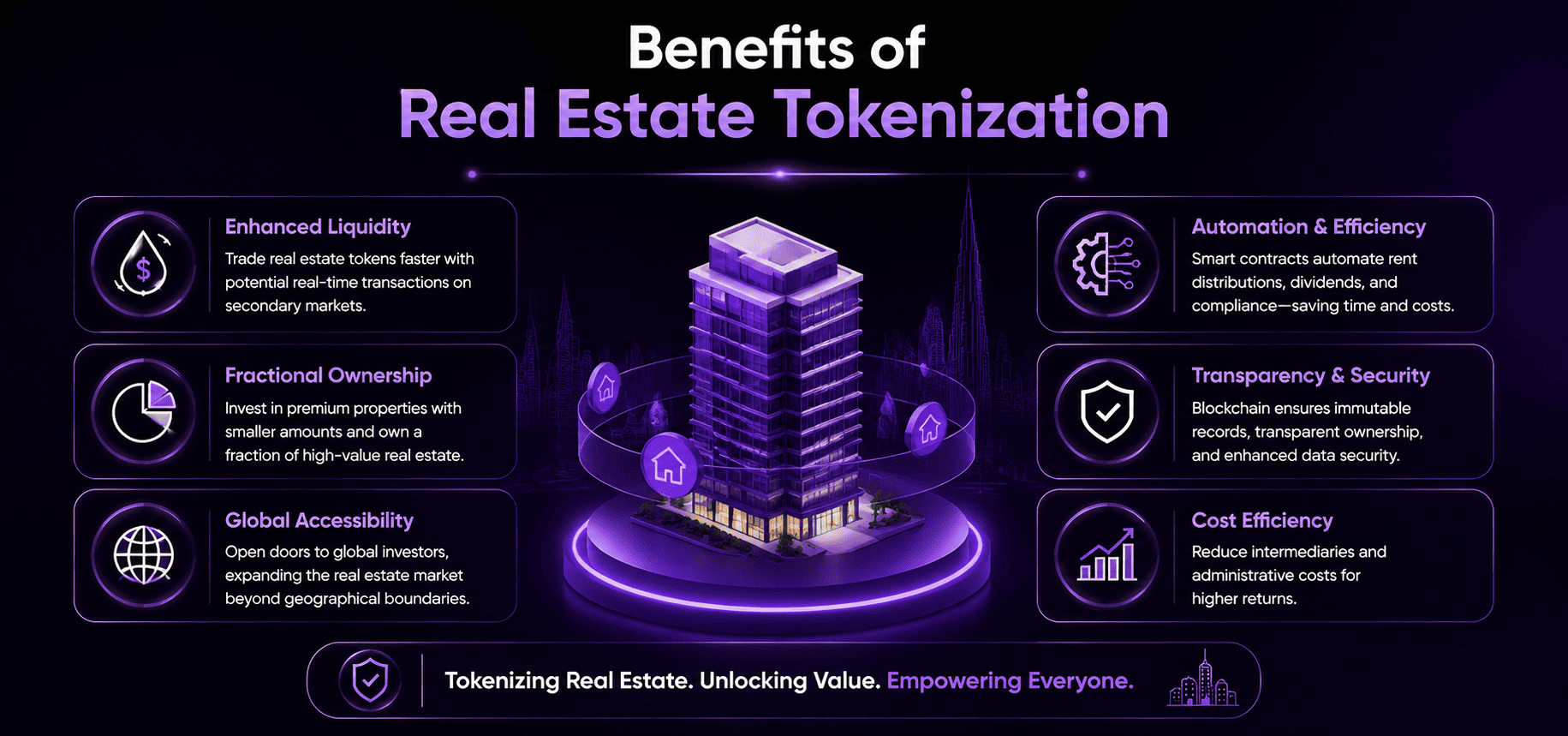
- Enhanced Liquidity: Traditional real estate is known for having low liquidity, as it can take months to sell. Tokenized real estate platforms in the UAE allow for faster transactions and could even allow for real-time selling on secondary markets, which would bring liquidity to an asset class that hasn’t had it before.
- Fractional Ownership & Accessibility: With fractional real estate investment UAE, investors can buy small pieces of expensive properties like luxury homes in Palm Jumeirah or high-end apartments in Downtown Dubai. This makes it much easier for small investors to get started.
- Automation & Efficiency: Smart contracts automate tasks like paying rent, dividends, and following the rules. This cuts down on administrative work and makes things run more smoothly for investors and devs alike.
- Transparency & Security: Blockchain technology keeps track of all transactions, ownership changes, and title information on a public ledger that can’t be changed. This makes blockchain property ownership in Dubai a lot better by making title records that can be checked and are safe for everyone to see.
Real Estate Tokenization Use Cases in UAE
Here are real-world and growing instances of how tokenization is being used in the UAE’s property industry, backed by recent developments:
- Dubai Tower Tokenization; Prypco Mint Platform: The Prypco Mint platform enabled tokenized shares of a villa to sell out in under five minutes, with the support of a government-backed initiative by the Dubai Land Department (DLD) and regulation by VARA, underscoring robust global demand for fractional property investment in Dubai.
- Luxury Properties & Fractional Shares: Blockchain property tokenization pilots in Dubai enable investments starting from AED 2,000, democratizing luxury real estate segments (e.g. riverfront residences or business bay flats) for a wider investor base.
- Institutional Tokenization of Commercial Assets: In 2025, top real estate developers like MultiBank Group and MAG started large-scale efforts to tokenize luxury portfolios (some deals over $3 billion), bringing institutional capital into tokenized real estate platforms in the UAE and setting benchmarks for future commercial tokenized deals.
These use examples showcase the UAE’s evolution from pilot to real-world compliant tokenized real estate transactions, reducing obstacles to entry while enhancing transparency and access for investors across residential, commercial and high-value categories.
Cost of Real Estate Tokenization
The laws and technology at hand make it extremely difficult to tokenize real estate in the UAE. The price depends on the intricacy of the project, the laws that have to be followed and the instrument utilized. The key cost factors are listed below:
- Legal Structure (SPV Setup): $5,000 to $15,000 SPV setup fee to hold the property title dependent on the location like free zone or onshore.
- Smart Contract Development & Audit: Smart contract development & audit might range from $15,000 to $50,000.
- Regulatory Licensing Fees (VARA): VARA compliance expenses range from $10,000 to $30,000 depending on the regulatory authority, and the size of the task.
- Token Issuance Platform Fee: The fees for issuing tokens through a compliant platform typically range from $5,000 to $20,000, depending on the platform and the complexity of the token structure.
- Marketing: The marketing costs for a tokenized real estate product can vary, but in general, they start at $10,000 for targeted digital advertising and branding.
Ballpark Cost Range:
The cost of tokenizing real estate can vary from $50,000 to more than $150,000, depending on the size, complexity and location of the project. Real estate tokenization is a legal and technology project. You want to collaborate with the specialists in RWA Tokenization Services to ensure everything works smoothly and lawfully.
How to Build a Real Estate Tokenization Platform
To get around the many technical, legal, and regulatory issues that come up when building a real estate tokenization platform, you need an organized plan. This is a short guide on how to make a platform in the UAE.
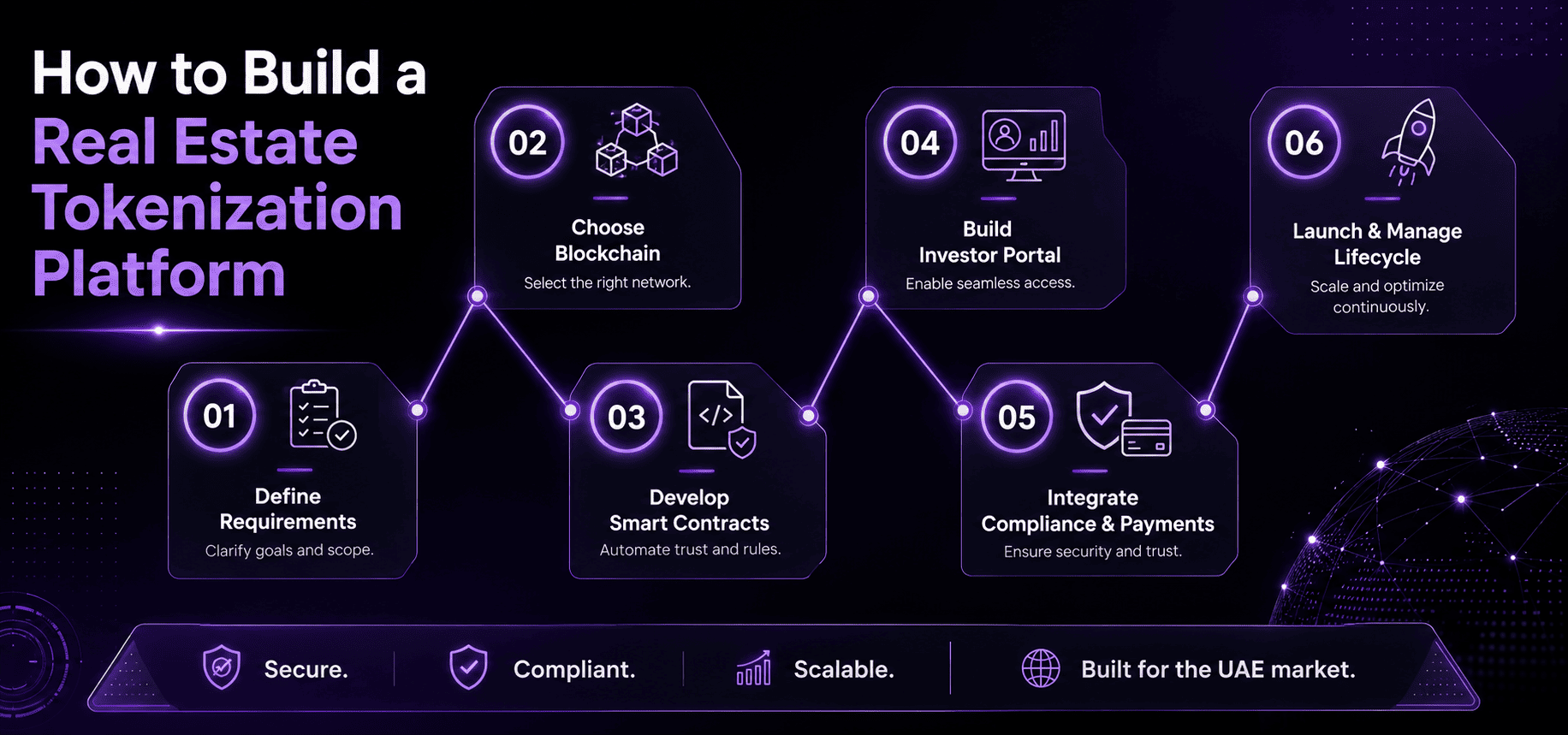
Step 1: Define Requirements & Jurisdiction (Free zone vs. onshore)
First, figure out what your platform needs and choose whether to set up in a free zone in the UAE or locally. This choice has an effect on legal duties such as following VARA and DLD rules.
Step 2: Choose the Core Blockchain Infrastructure
Pick a blockchain network like Ethereum, Polygon, or a blockchain that is specifically made for real estate. ERC-3643 is often used for security tokens that need to be authorized in controlled settings.
Step 3: Develop Smart Contracts
Smart contracts simplify tasks like changing who owns something and giving out rent. For security tokens, use standards like ERC-3643 and check the contracts to make sure they follow the rules. Read the Consensys Guide to learn about the best ways to do things.
Step 4: Build a User-Friendly Investor Portal with KYC/AML Integration
Make a website where investors can look at properties and safely finish transactions. Using both KYC and AML procedures together makes sure that SCA rules are followed.
Step 5: Integrate with UAE Payment Gateways and DLD/VARA Compliance APIs
Payment gateways and APIs for DLD and VARA compliance should be built in so that deals go smoothly. This will also make sure that real estate registration and virtual asset rules are followed.
Step 6: Launch, Market, and Manage the Token Lifecycle
Lastly, put your main offering on the market and let traders on the secondary market trade. To keep things compliant and make sure the tokens work, managing their lives needs ongoing help.
This methodical technique makes sure that the real estate tokenization platform for the UAE market is legal and works well.
Challenges in UAE Real Estate Tokenization
Tokenizing real estate in the UAE has a lot of promise, but there are some problems that need to be fixed:
- Evolving Regulations: As rules change, it can be hard to make sure you’re following both VARA and SCA. Legal standards must be kept up to date in order for platforms to remain legitimate.
- Market Liquidity Fragmentation: There are different types of market liquidity, and the process of creating a large, liquid secondary market for tokenized real estate is still in its early stages. Tokenized assets real estate in the UAE is a new market, and it will take time and acceptance for high-frequency trade to become common.
- Custody of Hybrid Assets: Most of the time, Special Purpose Vehicles (SPVs) in the UAE hold the real property for tokenized assets. A big problem that needs strong answers is making sure that the on-chain token is securely linked to the off-chain property title.
- Valuation Standards: It is very important to come up with a way for the whole business to value tokenized assets. As the DLD’s tokenization system grows, clear and widely accepted value standards need to be set to make sure that prices are fair and investors have faith in the system. The International Valuation Standards Council has information on the best ways to value things.
Future of Tokenized Real Estate in UAE
Real estate tokenization in the UAE has a bright future ahead of it. Over the next few years, it is expected to grow a lot.
- Mass Adoption: Real estate tokenization will probably be fully built into the DLD’s core registry by 2026. This will make property deals easier and give investors more trust. Tokenized real estate in the UAE will be safer in the future and more people will be able to use it.
- End-to-End Property Transactions On-Chain: In the future, progress will make it possible to buy, sell, and even mortgage real estate all digitally. As more people use blockchain, blockchain property ownership Dubai will replace more and more traditional real estate ways.
- City-Wide Tokenization: Tokens can also be used for big projects like building an entire city or the infrastructure for a data center. This opens up a lot of investment possibilities in tokenized assets real estate UAE.
- Global Secondary Market: Once the market is fully developed, there will be a global secondary market for tokenized real estate that is linked by regulated hubs in the UAE. This will make it easy for buyers from other countries to trade tokenized assets.
As the UAE moves toward widespread adoption, discovering how to tokenize real estate on blockchain can help investors and developers navigate this emerging digital property landscape
Frequently Asked Questions
1. What is real estate tokenization in the UAE?
Real estate tokenization in the UAE is the process of turning real estate into digital tokens stored on a blockchain. This makes for fractional ownership and easy trades. It is legal and safe, as it complies with the rules set by the city VARA and DLD.
2. Is real estate tokenization legal in the UAE?
The UAE has allowed the tokenization of real estate as long as it adheres to the right SPV structure and the VARA and SCA rules. This safeguards investors and assets alike.
3. How does fractional property ownership work?
Fractional property ownership involves purchasing a percentage of an SPV which legally owns the property. The property is owned by investors and their stake is represented by coins on the blockchain.
4. What is the minimum investment for tokenized property?
Minimum investments in tokenized real estate can be as low as $1,000 to $5,000, depending on the platform and the type of property. This allows more investors to purchase high-value homes.
5. How much does real estate tokenization cost?
Real estate tokenization costs are usually between $50,000 and $150,000 and include legal fees, smart contract development and compliance fees. The exact number will depend on how complex the project is.
6. Can foreigners invest in tokenized UAE real estate?
Yes, foreign investors can buy tokenized real estate in the UAE, provided they comply with the rules of the platform and complete the KYC and AML procedures.
7. How long does it take to tokenize real estate?
Tokenization of real estate generally takes three to six months, involving the legal framework, creation of smart contracts and checking compliance with regulatory requirements.
8. How are rental yields distributed to token holders?
The SPV gives rental returns to token holders according to how many tokens they hold in the SPV. Often this is done via smart contracts.
9. What happens if the real estate tokenization platform shuts down?
When a platform shuts down the assets are usually moved to a safe legal entity. This makes sure that the token holders still have their property rights.
10. Which blockchain is most commonly used for tokenization in the UAE?
Ethereum and Polygon are the most popular blockchains used for tokenization in the UAE as they are secure, scalable and compatible with ERC-3643 security tokens.
11. Ready to digitize your prime Dubai asset?
Get Techfyte to help you launch your real estate tokenization platform in the UAE. Our all-in-one solution takes care of everything, from setting up the SPV and smart contract development to making sure the VARA rules are followed and putting up the investor site. Find out more about how Blockchain Real Estate Solutions can help your project.
