Launch Verifiable Inference Systems That Make AI Outputs Provable
Deliver cryptographic proof that AI outputs come from the claimed model with tamper-proof verification across AI development services workflows.
- Cryptographic Proof of Inference
- Deterministic GPU Execution
- On-Chain Verification Registry












What are Blockchain AI Verification Systems?
Blockchain AI verification systems are frameworks that substantiate the claim that an AI output was generated by the asserted model by utilizing approved inputs and a verifiable execution path. By linking predictive analytics solutions with reproducible ML pipeline development, they establish a trust layer that ensures tamper-proof AI outputs. This enables enterprises to affirm the integrity of inferences, detect output manipulation, and verify the provenance of models prior to the implementation of AI-generated decisions in compliance-intensive or financial environments.
- Cryptographic Receipts
- Model Hash Registry
- Zero-Knowledge Proofs
- Deterministic Re-execution
Why Enterprises Need Verifiable Inference to Ensure AI Output Accuracy
Enterprises are unable to verify whether the outputs originated from the asserted model, inputs, or execution path due to the fact that current AI APIs only provide answers, not proof. Verifiable inference bridges the trust divide in critical AI workflows that impact capital, compliance, user safety, and operational accountability, from securities tokenization to agentic process automation. Enterprises are at risk of relying on outputs that are manipulated, substituted, inadequately logged, or impossible to defend during audits in the absence of cryptographic verification.

Deepfake Fraud Exposure
Enterprises require more robust proof layers to mitigate the risks of AI manipulation, as deepfake losses have already exceeded $200M in Q1 2025 and are anticipated to reach $40B by 2027.

Model Substitution Fraud
Opaque providers have the potential to supplant premium models with less expensive alternatives without detection, which would complicate the development of reliable AI systems that rely on third-party inference.

EU AI Act Compliance
Enterprises are increasingly pursuing audit-ready AI systems with verifiable execution records, as high-risk AI systems necessitate event logging, traceability, and audit traces.

Supply Chain Vulnerabilities
Inference integrity across enterprise AI pipelines can be compromised by unvalidated open-source models, which may contain backdoors, poisoned weights, or hazardous dependencies.

Zero Authenticity Checks
Metadata is provided by platforms such as AWS SageMaker and MLflow, but cryptographic proof is not provided that a particular model generated a specific output.
Prove Your AI Predictions Before They Power Critical Decisions
Verify AI OutputsBenefits of Verifiable Inference Systems That Enable Tamper-Proof AI Decisions
For AI development services that necessitate model integrity and cross-chain smart contract verification, verifiable inference generates cryptographically verifiable AI outputs.

100% Tamper Detection
Ensure the security of AI model predictions before execution by detecting manipulated records with 100% accuracy and 0% false positives.

Sub-Millisecond Validation
Enable real-time verification for high-throughput enterprise AI workflows by validating record and hub operations in under 1 millisecond.

$0.001 Verification Cost
Utilize x402 micropayments to render on-chain inference verification economically viable for enterprise deployments of verifiable AI on a large scale.

Adversarial Node Removal
Preserve network reliability during hostile or compromised validation attempts by excluding malevolent verifier nodes within two consensus rounds.

Zero Model Exposure
Verify the accuracy of inferences using ZK proofs without disclosing private inputs, prompts, datasets, or proprietary model weights.

Cross-Node Trust
Enable independent verifiers to audit any inference without operator cooperation, thereby enhancing AI transparency and trust across distributed systems.
Understanding How Verifiable Inference Systems Work
Zero-knowledge proof AI inference integrates deterministic off-chain computation, on-chain verification, smart contract audit controls, and secure wallet infrastructure.
Model Hash Registration
The operator establishes a verifiable computation blockchain record for model authenticity by committing a keccak256 model hash to an on-chain registry.
Deterministic Inference
The request is processed on a fixed GPU architecture with bit-exact reproducibility, which allows for the generation of cryptographic proof of inference through repetitive execution.
Encrypted Log Publication
The output and execution traces are submitted to EigenDA or a comparable data availability layer to ensure tamper-resistant availability and subsequent verification.
Attestation Signing
The inference receipt is signed by the operator using an ECDSA or TEE-backed key, which establishes a connection between the output and a particular execution environment.
On-Chain Submission
The proof is submitted to a smart contract with immutable storage, utilizing smart contract-based verification to preserve inference records.
Optimistic Verification
The operator's stake can be reduced when fraud is proven, as any verifier has the ability to challenge output discrepancies, resulting in re-execution.
Our Verifiable AI Development Services
Our verifiable AI development services integrate AI development services for model integrity with web3 development services for on-chain verification.

ZK-ML Circuit Development
Transform AI models into zero-knowledge circuits to facilitate the development of production-grade zero-knowledge proof AI and verifiable inference

Deterministic Inference Engine
Develop inference engines that are optimized for GPUs and have bit-exact reproducibility, which will allow validators to verify the outputs through deterministic re-execution.

On-Chain Verification Registry
Create smart contract systems that facilitate the storage of model hashes, the submission of proofs, the access of verifiers, and the development of immutable blockchain AI verification solutions.

TEE Integration for Privacy
Integrate trusted execution environments to facilitate confidential inference without disclosing private prompts, datasets, user inputs, or model weights.

Optimistic Verification Protocol
Develop challenge-response systems that incorporate stake slashing for invalid inference, fraud proofs, consensus tests, and verifier participation.

Compliance Audit Trail System
Develop documentation systems that are compliant with the EU AI Act, including cryptographic receipts, traceability, event records, and audit-ready inference histories.

Agentic Verification Framework
Develop AI systems that are trustless by implementing zero-trust IAM/PAM controls for autonomous agents, delegated actions, and privileged AI workflows.

Inference Receipt APIs
Create APIs that generate signed inference invoices, model IDs, timestamped proofs, and verification metadata for enterprise applications.

Verifier Node Infrastructure
Deploy independent verifier nodes to facilitate re-execution, proof validation, fraud detection, and participation in the decentralized inference network.
Verifiable Inference Solutions by Use Case
Our AI inference verification platform development encompasses custom LLM development for trustless AI systems and the verification of cross-chain smart contracts.
Optimistic Verification Protocol
Enable re-execution in the manner of EigenAI with stake slashing to validate suspicious outputs and deter fraudulent inference operators.
- Deterministic re-execution
- Stake slashing
- Challenge window

ZK-SNARK Inference Proofs
For the purpose of efficient cryptographic inference validation, generate constant-size proofs that are approximately 5.5KB in size and undergo rapid layerwise verification.
- 70x smaller proofs
- 5.7x faster proving
- Layerwise verification

TEE-Based Confidential Verification
Conduct privacy-preserving inference within attested enclaves that utilize threshold decryption for sensitive financial and enterprise AI workflows.
- Hardware attestation
- Confidential inputs
- Encrypted logs
On-Chain Attestation Registry
For tamper-proof AI output provenance, store ECDSA-signed receipts immutably on Flare, Ethereum, or similar networks.
- USDT payments
- ecrecover verification
- Tamper-proof receipts

Agentic Execution Verification
Implement cryptographic audit trails and zero-trust IAM/PAM controls for delegated enterprise actions and autonomous AI agents.
- IAM store
- JIT privileges
- Tamper-evident logs

Model Provenance Verification
Before enterprise or on-chain systems accept AI outputs, verify the authenticity of deployments, version upgrades, hash history, and model lineage.
- Model hash tracking
- Versioned deployments
- Provenance receipts
Industries We Serve with Enterprise AI Verification Services
Enterprise AI verification solutions are utilized by industries that require cryptographic proof of AI integrity, ranging from commodity tokenization for energy markets to enterprise AI assistants for compliance.

Prediction Markets & Dispute Resolution
Verify the deployment of AI judges for market outcomes, dispute resolution, and oracle-assisted rulings. Each decision must be traceable back to the asserted model, have a signed inference receipt, and have an auditable execution path.
- Audit-driven outcomes
- Publicly verifiable rulings
- Accountable AI judges
Autonomous Trading & DeFi
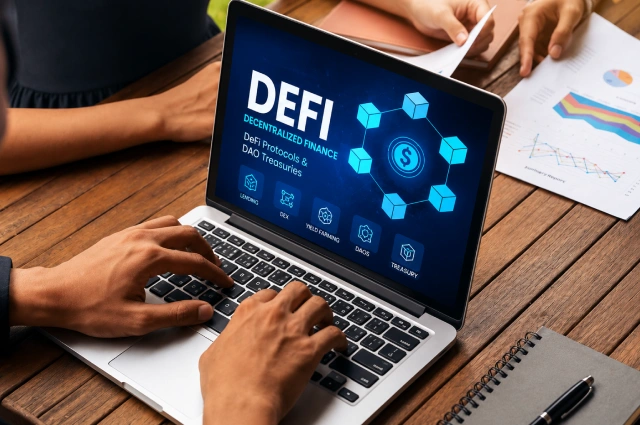
Provide AI trading bots and DeFi agents with accountable, replayable decision traces to assist trading teams, DAO operators, and compliance evaluators in determining the rationale behind the execution of specific actions by an automated strategy.
- AI trading agents
- Accountable execution
- Replayable decisions

Healthcare & Medical AI
Provide tamper-proof inference receipts to support cancer detection, diagnostics, triage, and medical risk models. These receipts assist providers in validating model usage, reducing liability exposure, and maintaining clinical governance.
- Medical liability support
- Tamper-proof logs
- Clinical audit trails

Financial Compliance & Auditing
Develop AI procedures that are regulatory-ready by incorporating cryptographic proof of model usage, output integrity, approved execution environments, and timestamped audit records for internal controls and external inspection.
- Compliance-ready AI
- Audit trails
- Model authenticity

Content Moderation & Social Media
Ensure that moderation decisions are verifiable by incorporating third-party challenge capabilities, which will enable platforms to demonstrate the rationale behind AI decisions. This will also facilitate transparent appeals and accountable policy enforcement.
- Decision transparency
- Independent verification
- Appeal-ready workflows

Insurance Claims Processing
Utilize AI underwriters that provide insurers with verifiable claim decisions, which assist in the verification of model authenticity, the preservation of evidence for audits, the mitigation of fraud exposure, and the support of regulator-ready claims governance.
- Claim auditability
- Fraud prevention
- Regulatory ready
Prediction Markets & Dispute Resolution
Verify the deployment of AI judges for market outcomes, dispute resolution, and oracle-assisted rulings. Each decision must be traceable back to the asserted model, have a signed inference receipt, and have an auditable execution path.
- Audit-driven outcomes
- Publicly verifiable rulings
- Accountable AI judges
Autonomous Trading & DeFi
Provide AI trading bots and DeFi agents with accountable, replayable decision traces to assist trading teams, DAO operators, and compliance evaluators in determining the rationale behind the execution of specific actions by an automated strategy.
- AI trading agents
- Accountable execution
- Replayable decisions
Healthcare & Medical AI
Provide tamper-proof inference receipts to support cancer detection, diagnostics, triage, and medical risk models. These receipts assist providers in validating model usage, reducing liability exposure, and maintaining clinical governance.
- Medical liability support
- Tamper-proof logs
- Clinical audit trails
Financial Compliance & Auditing
Develop AI procedures that are regulatory-ready by incorporating cryptographic proof of model usage, output integrity, approved execution environments, and timestamped audit records for internal controls and external inspection.
- Compliance-ready AI
- Audit trails
- Model authenticity
Content Moderation & Social Media
Ensure that moderation decisions are verifiable by incorporating third-party challenge capabilities, which will enable platforms to demonstrate the rationale behind AI decisions. This will also facilitate transparent appeals and accountable policy enforcement.
- Decision transparency
- Independent verification
- Appeal-ready workflows
Insurance Claims Processing
Utilize AI underwriters that provide insurers with verifiable claim decisions, which assist in the verification of model authenticity, the preservation of evidence for audits, the mitigation of fraud exposure, and the support of regulator-ready claims governance.
- Claim auditability
- Fraud prevention
- Regulatory ready
Stop Trusting Black-Box AI and Start Verifying Every Decision
Build Verifiable AIOur Verifiable Inference Development Process
Our methodology integrates blockchain development with AI development services to generate cryptographically verifiable inference systems that are reproducible.

Model Circuitization & Registry Setup
Transform the AI model into a ZK circuit and register its keccak256 hash on-chain to ensure the model's verifiable identity.
Deterministic Inference Configuration
Ensure that inference outputs are reproducible across verification environments by modifying GPU architecture, drivers, runtime versions, and random seeds.


Attestation & Proof Generation
Bind outputs to approved models and execution environments by implementing ECDSA signature, TEE attestation, or ZK proof pipelines.
Verification Layer & Audit Deployment
Implement the smart contract verifier with audit trails, immutable proof recordings, and stakeholder-based challenges to ensure operational transparency.

Why Choose Techfyte for Verifiable Inference Systems
Our AI and blockchain expertise is yours to leverage when you employ AI and blockchain expertise from Techfyte to develop verifiable inference systems that enterprises can rely on.

ZK-ML & Proving System Experts
Build advanced inference proof systems with circom, EZKL, and GPU-accelerated proof generation for production-grade verification.

Deterministic GPU Specialists
Engineer bit-exact reproducibility on H100/A100 environments with version-pinned drivers, runtimes, and controlled execution paths through the use of deterministic GPU specialists.

EU AI Act Compliance Ready
Develop audit trails and cryptographic receipts that facilitate post-hoc verification, traceability, and Article 12 event logging.