Custody Integrations Built for Modern Institutions
Modern custody shouldn’t require rebuilding your infrastructure. Techfyte helps institutions connect custody systems into existing platforms in a way that feels natural, secure, and easy to scale as your product grows.
- Plug into custody systems without heavy engineering lift
- Security-first design aligned with institutional needs
- Flexible integration that scales with your platform










What is Custody Integration in Tokenized & RWA Ecosystems?
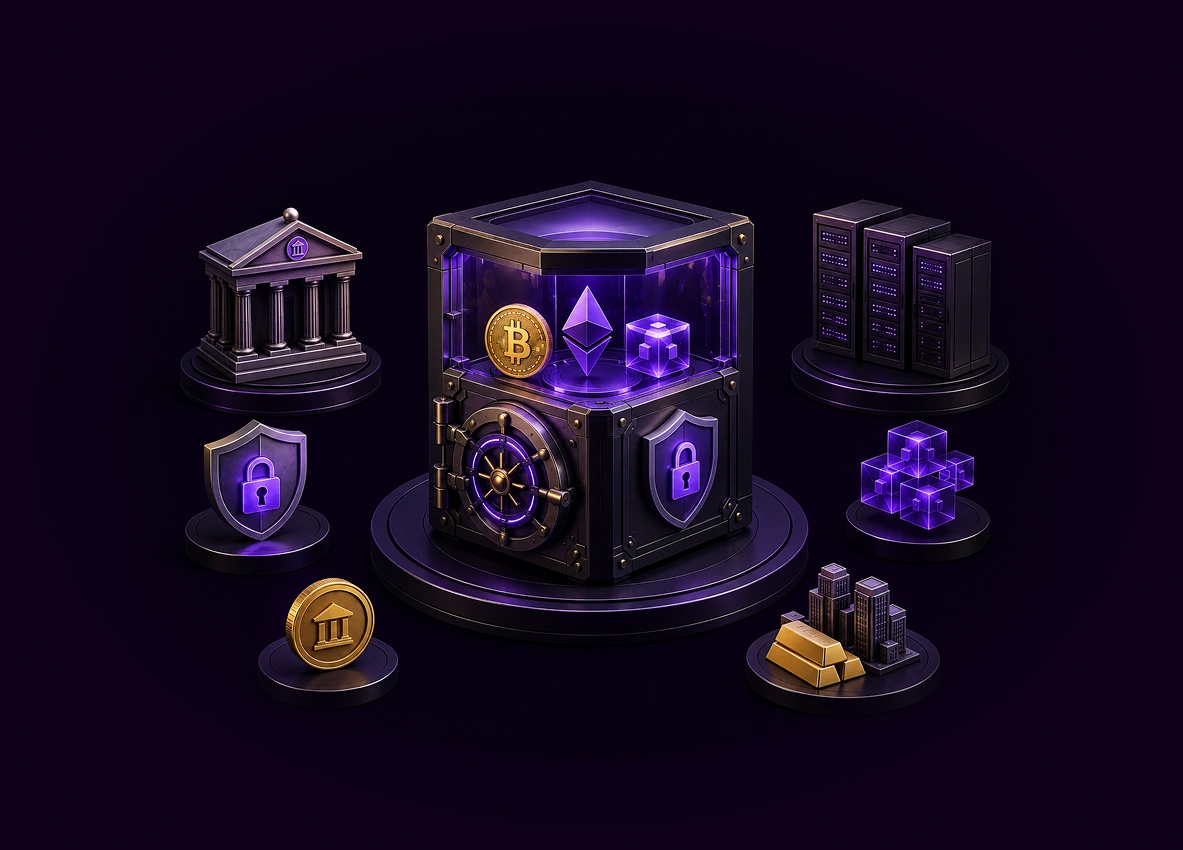
Custody integration connects tokenized assets to secure storage, governance, and transaction controls within live platforms. It allows businesses to embed custody capabilities into their products without rebuilding critical security and operational layers, using proven infrastructure designed for regulated environments. By supporting custody integration services and digital asset custody integration, platforms can choose custody models that match their risk profile and user experience. In custodial integration, a trusted provider manages keys and transactions. In non-custodial integration, users retain control while platforms apply policies and safeguards. In self-custody integration, users manage keys independently. Understanding these models helps explain why custody integration becomes essential as tokenized and RWA platforms scale. It often extends into downstream asset lifecycle workflows such as issuance, distribution, and revenue automation in tokenized systems like dividend distribution automation.
- Embedded custody setup
- Custodial model options
- Platform-level asset control
Why Do Businesses Need Dedicated Custody Integrations?
As fractional ownership and RWA platforms mature, custody stops being an infrastructure choice and becomes a risk management decision. Holding assets without a dedicated custody layer increases exposure to private key loss, operational errors, and regulatory uncertainty. Platforms that plan to work with institutional custodians or regulated investors need custody built in from the start, not patched in later. In regulated setups, custody design is often influenced by how the token itself is structured for compliance, including regulatory compliant token design considerations. Dedicated custody integrations allow platforms to separate asset protection from product logic. This makes it easier to enforce compliant asset transfers, apply governance rules, and protect fractional ownership tokens at scale. The result is stronger investor trust, clearer accountability, and better transaction oversight without changing how the platform itself is built.

Reduced Key Risk
Private keys are handled outside the platform, lowering security exposure and minimizing the impact of internal mistakes or system failures.

Regulated Custody Readiness
Platforms align with institutional custody expectations, making it easier to onboard regulated capital and enterprise partners.

Compliant Asset Transfers
Transfer conditions and permissions ensure assets move only when business and regulatory requirements are satisfied.

Improved Transaction Governance
Clear approval logic and traceability help manage complex asset flows and reduce disputes as transaction volumes grow.
Define Your Custody Boundary
Outline Custody ScopeBenefits of Enterprise-Grade Custody Integration
Custody integration supports controlled asset handling, regulatory readiness, and transparent ownership as platforms scale fractionalized and real world assets responsibly.

Protect Investor Digital Assets
Keeps investor assets isolated from platform risk, reducing exposure to breaches while strengthening confidence in tokenized investment participation and longevity.

Enable Institutional-Grade Asset Protection
Applies custody controls institutions expect, supporting regulated participation, asset segregation, and long-term protection for high-value tokenized assets across complex platforms.

Simplify Wallet Management
Removes direct key handling from product teams, lowering operational burden while improving security consistency across growing asset portfolios and scale.

Improve Custody Compliance
Aligns custody workflows with regulatory expectations, audits, and reporting needs, helping platforms operate confidently across jurisdictions with institutional counterparties globally.

Reduce Asset Custody Risk
Limits single points of failure through governed approvals and controlled transfers, reducing loss, misuse, and operational disputes at scale over time.

Support Auditable Ownership Records
Creates clear custody trails that support audits, dispute resolution, and trust in tokenized investments for institutional stakeholders over time periods.
How Digital Asset Custody Integration Works?
Connects tokenization platforms with custody infrastructure to manage assets securely, enforce compliance rules, and enable controlled transaction flows without exposing private keys.
Platform Connects Via Custody APIs
Custody APIs connect directly with tokenization platforms to handle secure transaction routing, policy checks, and authorization without exposing private keys at any point.
Wallets are Generated Through MPC Setup
MPC wallet integration splits key control across multiple independent nodes, ensuring no single system or operator can fully control asset signing.
Wallet Whitelisting is Configured Upfront
Approved wallet lists define where assets can move before any transaction starts, ensuring only verified addresses participate in custody workflows.
Asset Segregation is Enforced Per Holder
Each investor’s assets are isolated within dedicated custody boundaries, preventing cross-account risk and maintaining clear ownership separation across the platform.
Transactions Move Through Authorization Layers
Multi-signature custody introduces structured approval steps where multiple parties validate a transaction before it is eligible for execution.
On-Chain Settlement Updates Custody State
Once approved, transactions are settled on-chain and custody records are updated in real time for transparent tracking and audit consistency.
Our Custody Integration Development Services
Secure custody infrastructure that connects directly with tokenized platforms, enabling controlled execution, governance enforcement, and scalable digital asset management across institutional systems.

Custody API Integration Services
We connect custody infrastructure with tokenization platforms through secure APIs that handle transactions, policy enforcement, and system level authorization.
MPC Wallet Integration
We implement MPC wallet integration to distribute key control across multiple nodes, reducing single points of failure in asset signing.

Multi Signature Wallet Integration
We build multi signature wallet integration systems that require multiple approvals before transactions are executed, improving governance and security control.

Custom Custody Integration Development
We design custom custody integration flows tailored to platform architecture, compliance needs, and specific tokenized asset operational requirements.

Token Custody Platform Integration
We integrate custody systems directly into token platforms, enabling secure asset handling, controlled transfers, and structured ownership management.

Wallet Infrastructure for Tokenized Assets
We develop secure wallet infrastructure for tokenized assets, supporting scalable storage, access control, and transaction readiness across growing platforms.
Secure Custody for Tokenized Assets
We implement secure custody layers that protect digital assets through segregation, controlled access, and compliant transaction execution frameworks.

Enterprise Custody Integration Solutions
We deliver enterprise custody integration solutions designed for institutional-grade platforms requiring scalability, governance, and regulatory aligned asset operations.

Programmable Custody Workflows
We build rule based custody logic that lets platforms automate approvals, restrictions, and transaction conditions directly into custody flows without manual intervention.
Custody Integration Architecture Solutions
Custody integration solutions act as an operational layer between tokenized platforms and regulated custody systems. They ensure structured ownership and controlled movement, aligned with asset tokenization frameworks managing digital asset structure and lifecycle.

Connects platforms with custody networks

Builds adaptive wallet frameworks

Uses distributed signing systems

Applies real time transfer rules

Creates structured execution paths
Custody Integration Use Cases in Practice
Practical applications showing how custody systems operate within tokenized environments to manage asset control, execution flows, and structured ownership across different platform models.

Real World Asset Tokenization
Custody integration enables secure issuance and management of tokenized real world assets, ensuring ownership, transfer control, and compliance aligned settlement across platforms.
- Asset backed issuance flows
- Regulated ownership verification systems
- Controlled secondary market transfers
- Institutional settlement readiness

Fractional Ownership Platforms
Platforms offering fractional ownership use custody integration to divide, track, and protect shared asset holdings with clear governance and transparent execution rules.
- Shared asset custody structure
- Investor level asset segregation
- Controlled fractional transfer rules
- Transparent ownership tracking system

Institutional Trading Systems
Institutional trading systems rely on custody integration for secure execution, multi approval validation, and controlled movement of high value digital assets.
- Pre trade authorization checks
- Multi party approval workflows
- Secure execution routing layers
- Post trade reconciliation support

Token Issuance Platforms
Token issuance platforms use custody integration to manage lifecycle control, secure minting processes, and enforce governance rules on newly created digital assets.
- Controlled token minting logic
- Governance driven issuance policies
- Secure treasury asset handling
- Lifecycle based token control
Real World Asset Tokenization
Custody integration enables secure issuance and management of tokenized real world assets, ensuring ownership, transfer control, and compliance aligned settlement across platforms.
- Asset backed issuance flows
- Regulated ownership verification systems
- Controlled secondary market transfers
- Institutional settlement readiness
Fractional Ownership Platforms
Platforms offering fractional ownership use custody integration to divide, track, and protect shared asset holdings with clear governance and transparent execution rules.
- Shared asset custody structure
- Investor level asset segregation
- Controlled fractional transfer rules
- Transparent ownership tracking system
Institutional Trading Systems
Institutional trading systems rely on custody integration for secure execution, multi approval validation, and controlled movement of high value digital assets.
- Pre trade authorization checks
- Multi party approval workflows
- Secure execution routing layers
- Post trade reconciliation support
Token Issuance Platforms
Token issuance platforms use custody integration to manage lifecycle control, secure minting processes, and enforce governance rules on newly created digital assets.
- Controlled token minting logic
- Governance driven issuance policies
- Secure treasury asset handling
- Lifecycle based token control
See Custody in Real Systems
View Integration ScenariosCustom Integration Development Process
A structured approach to building custody integration tailored to platform architecture, where asset control logic, transaction rules, and wallet systems are implemented in coordinated stages.

System & Custody Design Phase
Define custody architecture, asset control boundaries, and signing logic, ensuring platform level integration aligns with token behavior and operational structure.
Integration & Execution Layer Setup
Connect custody APIs with platform systems, configure signing flows, wallet permissions, and controlled asset movement rules across execution environments.


Governance, Validation & Deployment
Activate policy enforcement, audit visibility, and transaction validation, followed by structured testing and controlled deployment into production environments.
Why Choose Us as Digital Asset Custody Integration Company?
Custody integration systems designed to embed directly into platform infrastructure, ensuring asset movement follows controlled logic and remains consistent across execution environments.

Production Proven Delivery
Custody integrations implemented in live tokenized environments where real asset movement, execution reliability, and system stability are already in production use.

Distributed Signing Expertise
Strong implementation experience with MPC and multi signature systems that reduce centralized risk while keeping transaction approval structured and verifiable.

Platform Aligned Engineering
Integration approach designed around existing platform architecture, ensuring custody capability fits into current systems without requiring structural redesign or disruption.