



Key Takeaways
- A real estate tokenization platform digitizes property ownership and facilitates seamless investor interactions.
- Successful development requires careful planning of features, compliance, and blockchain integration.
- Costs vary based on platform complexity, security, integrations, and UI/UX requirements.
- Revenue models typically include token issuance fees, transaction fees, and subscription or service charges.
- Partnering with the right real estate tokenization development company ensures expertise in blockchain, regulatory compliance, and scalable architecture.
- Choosing an experienced development team accelerates time-to-market while reducing operational risks.
Introduction
This guide focuses on building a real estate tokenization platform from a product and business perspective. A real estate tokenization platform digitizes property ownership, streamlines investor management, and enables on-chain transactions, allowing asset managers, PropTech startups, and real estate businesses to efficiently manage fractional ownership. See real-world asset tokenization use cases across industries for how businesses are applying this today. In 2026, companies are increasingly adopting these platforms to improve liquidity, operational efficiency, and access a global investor base without traditional geographic constraints. This guide explores the essential aspects of developing such a platform, including business models, must-have features, cost considerations, technology stacks, and step-by-step development processes. Techfyte brings experience in building real estate tokenization platforms, ensuring compliance, security, and scalability, while aligning development with the business goals of real estate enterprises.
What Is a Real Estate Tokenization Platform?
A real estate tokenization platform is a digital system designed to manage the full lifecycle of tokenized property assets. It enables asset owners to tokenize real estate, onboard investors, handle compliance, issue digital tokens, and facilitate ownership transfers securely on-chain. The platform integrates multiple core modules, including an asset owner dashboard for property management, an investor portal for viewing holdings and transactions, a token issuance engine, and a smart contract layer to automate agreements and transfers. Compliance workflows like KYC/AML are embedded to ensure regulatory adherence, while wallet and payment integrations manage investments and distributions. An admin panel provides oversight of operations, investor activity, and reporting. Together, these modules create a comprehensive product that allows real estate businesses to manage tokenized assets efficiently without relying on traditional intermediaries, ensuring operational efficiency, transparency, and a seamless investor experience.
Real Estate Tokenization Platform Business Models
Developing a successful revenue strategy is critical in real estate tokenization platform development. Platform owners can monetize through multiple business models, depending on their target audience and market approach. Each model addresses a specific aspect of platform usage, from asset onboarding to ongoing investor activity.
- Asset Listing Fee
Charge property owners or developers a one-time fee to list their assets on the platform. This provides upfront revenue for the platform while ensuring serious, committed asset listings.
- Token Sale Commission
Earn a percentage of every primary token sale when properties are tokenized and offered to investors. This aligns the platform’s success with the performance of each token offering.
- Secondary marketplace enablements
Generate revenue from fees on secondary market trades, where investors buy and sell tokenized property shares among themselves. This encourages liquidity while sustaining platform operations.
- Subscription Model
Offer monthly or annual SaaS-based access for real estate firms, crowdfunding platforms, and asset managers. Subscriptions can include premium features, analytics dashboards, and investor management tools.
- Compliance and Onboarding Fee
Charge for KYC/AML verification, investor accreditation, and other regulatory onboarding services. This ensures that the platform remains compliant and reduces legal risks for all participants.
- White Label Licensing
License the platform to other businesses under a white label real estate tokenization platform model. This allows partners to deploy a fully branded tokenization system while generating recurring licensing fees for the platform owner.
Launch a Compliance-Ready Real Estate Tokenization Platform
Core Features of a Real Estate Tokenization Platform
| Feature | Purpose |
| Property Onboarding Module | Add property details, valuation, legal documents, images, and investment terms. |
| Investor KYC/AML | Verify investors before participation to ensure regulatory compliance. |
| Token Issuance Engine | Create property-backed tokens based on the approved legal structure. |
| Smart Contract Management | Automate ownership records, transfers, and yield distribution. |
| Investor Dashboard | Display portfolio, ownership share, returns, and key documents. |
| Admin Panel | Manage users, assets, transactions, compliance, and generate reports. |
| Wallet Integration | Enable secure token storage and investor transactions. |
| Payment Gateway | Support fiat, stablecoin, or cryptocurrency payments for investments. |
| Secondary Marketplace | Allow eligible investors to trade tokens in a controlled environment. |
| Reporting Module | Generate audit, transaction, and compliance reports efficiently. |
Real Estate Tokenization Platform Architecture
A well-structured platform requires a modular architecture that allows for scalability and flexibility. With the incremental addition of each module, the business requirements and MVP scope can be considered.
- Frontend Layer: It provides the user interface for asset owners, investors and administrators. Ensures responsiveness and usability. Learn more about modern interface frameworks such as React.js.
- Backend layer: It handles all the business logic, user administration, and data processing. Allows you to connect APIs for analytics, purses and payments. Refer to Scalable Backend Development with Node.js.
- Blockchain Layer: It securely records the ownership of property tokens, transactions and execution of smart contracts on the blockchain. See Ethereum for Ethereum-based solutions.
- Compliance Layer: Enforces regulatory reporting, KYC/AML and investor accreditation for legal compliance. Refer to the FATF Guidance for best practices.
- Custody and Wallet Layer: Utilizes trusted solutions like Fireblocks to provide institutional-grade custody and security for the storage of tokens and signing of transactions.
- Payment Layer: Allows seamless exchange of fiat, stablecoin and crypto payments through integration with payment gateways. Explore the pairing of fiat with Stripe and the pairing of USDC/stablecoin payments with Circle.
- Marketplace Layer: An optional module that enables secondary trading of tokenized assets, offering more flexibility and liquidity for investors. Learn about secondary marketplaces on tZERO.
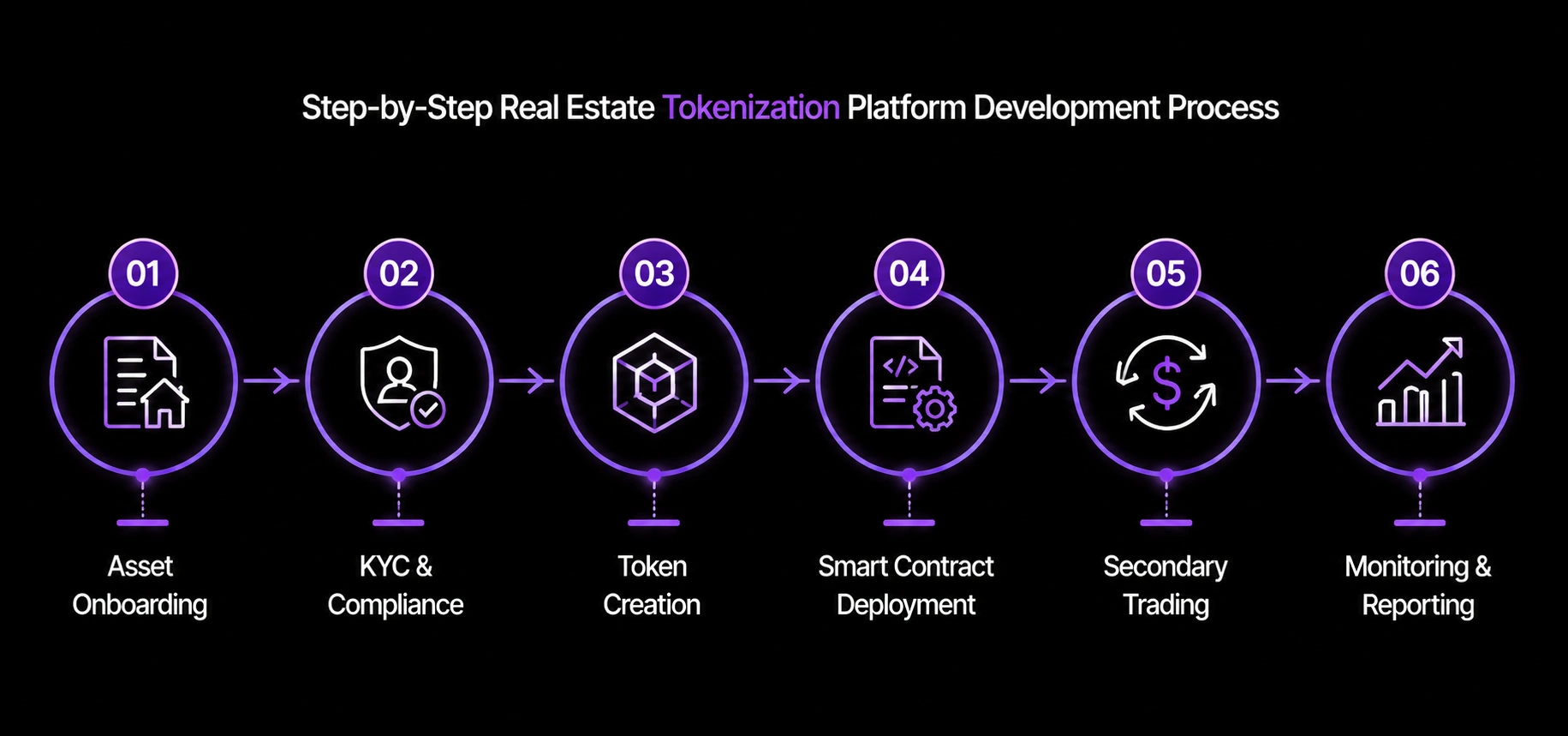
Step-by-Step Real Estate Tokenization Platform Development Process
Building a real estate tokenization platform is a stepwise process that guarantees a user-friendly, secure, and compliant solution in the end. Businesses can ensure their platform meets legal requirements, investor needs, and operational goals by using a transparent development process.
1. Business Model and Jurisdiction Planning
Define the revenue model, asset classes, and investor eligibility. Determine the compliance requirements and target markets based on the operating jurisdiction to guide the structure and capabilities of the platform.
2. Legal and compliance issues mapping
Map property ownership structures, KYC/AML obligations and cross-border distribution transfer restrictions. Ensure regulatory compliance from the beginning to avoid legal issues and build investor confidence.
3. Product Scope and UI/UX
Design dashboards accessible to administrators, Asset owners, and investors. Define the product scope including modules for portfolio monitoring, investor onboarding, token issuance and reporting.
4. Creation of Smart Contracts
Create and execute smart contracts for token issuance, transfer of ownership and distribution of dividends. First understand what smart contracts are in blockchain before designing your contract logic.
5. Backend Development and API for Platform
Provide APIs for integration with external compliance reporting modules, payment systems and multi-chain wallets.
6. KYC, Payments and Wallets Integration
Integrate payment rails to accept fiat and crypto payments. Connect MPC wallets to store tokens securely. Embed KYC/AML verification systems. Streamline onboarding. These integrations are critical to the efficient management of the business and the seamless experience of investors.
7. Launch, Audit and Testing
Conduct full QA cycles, penetration testing, and smart contract audits. Conduct a smaller launch with a select set of investors to test performance prior to a wider launch.
Partnering with experienced real estate tokenization development service providers can speed up the process and ensure technical excellence.
Tech Stack for Real Estate Tokenization Platform Development
| Layer | Technology / Tools |
| Blockchain | Ethereum, Polygon, Avalanche, Solana, BNB Chain |
| Smart Contracts | Solidity, Rust, Move |
| Token Standards | ERC-20, ERC-1400, ERC-3643, ERC-721/1155 |
| Frontend | React, Next.js, Vue |
| Backend | Node.js, NestJS, Python, Go |
| Database | PostgreSQL, MongoDB |
| Wallets | MPC, custodial, non-custodial |
| Payments | Fiat gateways, stablecoins, crypto |
| Compliance | KYC/AML APIs, sanctions screening |
| Security | Smart contract audit, penetration testing |
Real Estate Tokenization Platform Cost in 2026
| Platform Type | Estimated Cost |
| MVP Tokenization Platform | $40,000–$80,000 |
| Mid-Level Platform | $80,000–$180,000 |
| Enterprise Platform | $180,000–$350,000+ |
There are a lot of factors that influence the cost of a real estate tokenization platform. It includes: number and complexity of user roles, sophistication of smart contracts, choice of blockchain network, KYC/AML workflows, wallet and custody integration, payment gateway implementation, secondary marketplace capabilities, reporting modules, security audits, and complexity of the administrative panel. Other factors like jurisdiction, feature set, scope of compliance and whether the platform is launched as a private or public solution also influence the final price.
Disclaimer: Final cost may vary significantly based on launch model, selected features, regulatory requirements and jurisdiction.
Get a Cost Breakdown for Your Tokenization Platform
Common Mistakes to Avoid Before Launch
Avoid these common mistakes before launching a real estate tokenization platform:
- Starting development without legal clarity on ownership structures and securities law.
- Regardless of the suitability standards for non-accredited or accredited investors.
- Selecting the wrong token standard for your platform’s needs.
- Launching without a secondary liquidity/trading plan.
- Poor wallet and custody planning poses security risks.
- Skipping penetration testing or smart contract audits.
- Investor dashboard has bad user experience which is affecting adoption and engagement.
- There is no internal control or reporting mechanism for the conformity of the regulators.
These errors may cause investor unhappiness, lawsuits or delays. Promptly addressing them helps ensure a secure, compliant and user-friendly platform.
How to Choose a Real Estate Tokenization Development Company
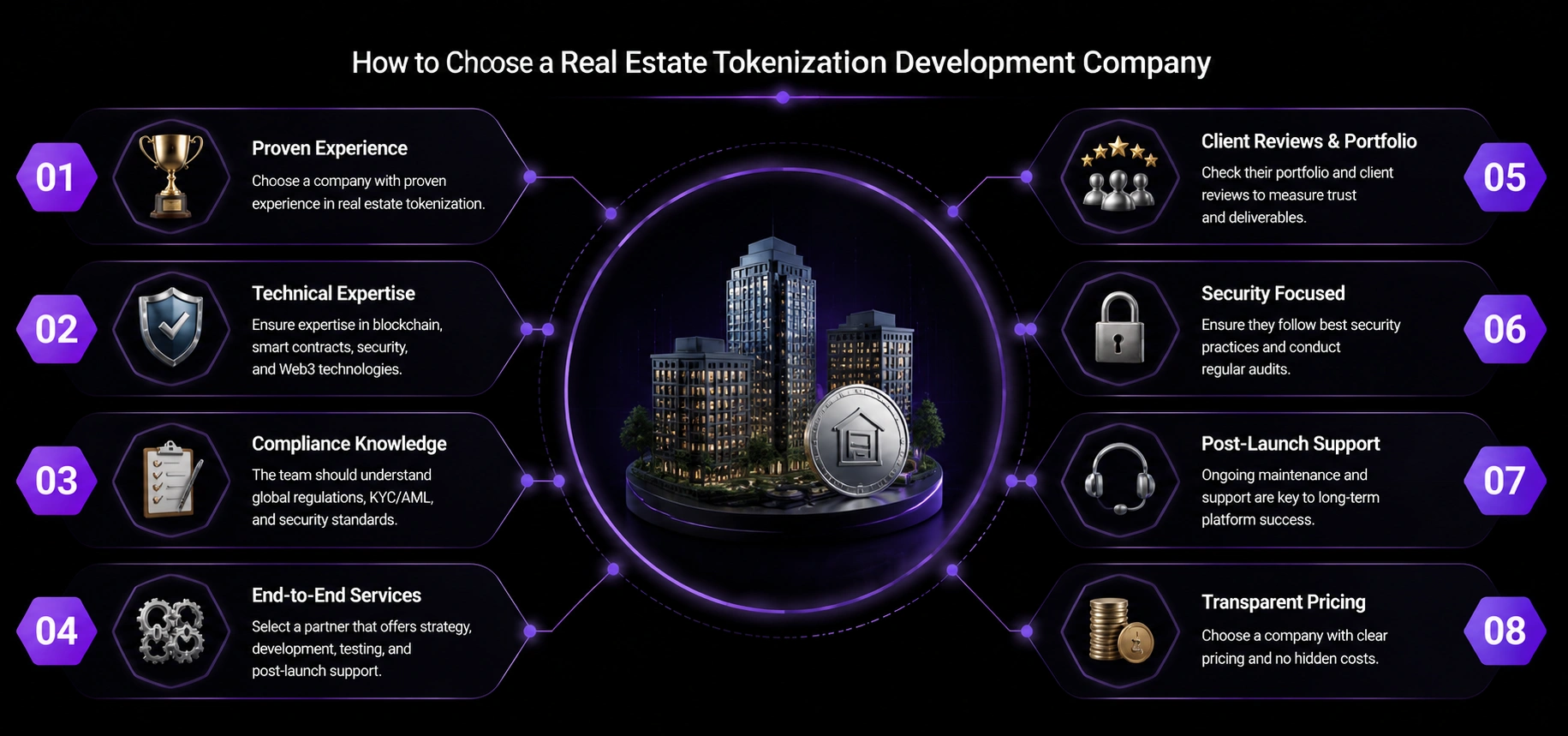
Choosing the right development partner is key to building a scalable, compliant, and secure platform. The key criteria are:
- Knowledge of blockchain platforms and tokenized assets is evident.
- Expertise in smart contract-based yield automation, transfers and issuances.
- KYC/AML and Regulatory Compliance with a Compliance First Approach.
- Experience with custody and wallet solutions.
- Assist with security assessments and penetration testing
- Design ability to scale architecture to accommodate future growth
- Updates and New Features After Launch Maintenance
- Ability to deliver platforms from MVP to enterprise level solutions
A good real estate tokenization development company will go beyond coding for you. It should help with platform strategy, technical architecture, token logic, compliance standards, integrations, testing and long term scalability. Partner with a company that has broad technical expertise and regulatory understanding to successfully make your platform in the complex real estate tokenization field.
Concluding Note
Real estate tokenization platforms are rapidly transforming the practical infrastructure for digital property investment by providing fractional ownership, enhanced investor administration, and fast on-chain transactions. Choosing the right company model, legal structure, platform architecture and full security measures is vital to be successful. The collaboration with a development team that has knowledge of both blockchain engineering and real estate investment operations allows companies to guarantee compliance, scalability and a frictionless experience for investors. Discuss with Techfyte’s experts to create & develop a secure & scalable real estate tokenization platform customized for your business model. They are able to give expert advice and unique solutions.
Frequently Asked Questions
1. What is a real estate tokenization platform?
Real estate tokenization platform is a digital platform that facilitates the creation of blockchain-based tokens representing ownership or revenue interests in real estate assets. This enables investors to more efficiently buy, sell and manage fractional interests in real estate.
2. How much does a real estate tokenization platform cost?
The platform fees vary from $40,000 to $350,000+ depending on the complexity of features such as smart contract development, compliance connections, wallet & payment setup and secondary marketplace capabilities.
3. How long does real estate tokenization platform development take?
Usually, MVP development takes 8-12 weeks. It takes 4-6 months to build a full platform including KYC/AML, wallet integration and secondary marketplace including testing and audits.
4. What features should a real estate tokenization platform include?
Key Features are Investor KYC Token Generation Property Registration Smart contracts management Payments supports Wallet integration Admin panel Investor dashboard Reporting modules and optional secondary trading for liquidity.
5. How do I choose the right real estate tokenization development company?
Look for a company with extensive experience in blockchain development, smart contracts, compliance workflows, token standards, wallet integration, security audits and scalable platform architecture to ensure your platform is robust, compliant and future-ready.
Take Your Real Estate Tokenization Idea from Concept to Launch
