Build Future-Ready NFT Platforms for Web3 Growth
We help brands design and launch NFT platforms that feel intuitive, scale smoothly, and create real value for users, while aligning technology with long-term product and business goals in Web3.
- Product-led NFT strategy
- Scalable Web3 platforms
- User-focused utility design










What Is NFT Development?
NFT development turns digital concepts into assets that can be owned, transferred, and verified on a blockchain. It focuses on how value is structured behind the scenes, defining rules for creation, ownership changes, and interaction so assets behave consistently across different environments. This work involves writing secure token logic, structuring asset data, and connecting user interfaces with wallets in a way that feels seamless. When executed correctly, the technology stays out of sight while enabling trust, transparency, and control. It supports use cases that demand clarity around ownership and authenticity, while remaining flexible enough to adapt as products evolve and platforms mature over time.
- Token ownership logic
- Asset data structure
- Blockchain transaction flow
Why NFT Development Matters to Businesses?
Businesses adopt NFTs to gain control over how digital value is created, distributed, and retained. Instead of chasing trends, teams use tokenized digital ownership to formalize access, authenticity, and participation across digital products. This shift changes how customers interact, turning one time transactions into ongoing relationships grounded in trust and measurable usage. From media to commerce, NFTs support operating models that connect revenue, engagement, and data. Brands use NFT-based revenue models to reward loyalty, unlock premium access, and extend product lifecycles without added complexity. These models are commonly implemented through utility NFT platforms, where NFTs deliver ongoing value rather than functioning as one-time digital assets. When aligned with business goals, NFTs evolve into durable infrastructure that supports growth, compliance, and long-term digital ecosystems.

New Revenue Streams
NFTs package access, content, or experiences into sellable units, enabling repeat value creation without relying solely on traditional pricing models.

Stronger Customer Relationships
Ownership based access encourages participation, loyalty, and advocacy, helping brands build lasting connections rather than short term transactional interactions online.

Clear Brand Differentiation
NFTs allow brands to offer verifiable experiences competitors cannot easily copy, reinforcing positioning through authenticity, scarcity, and controlled distribution channels.

Unlock Digital Value
Static digital assets gain programmability, traceability, and ownership clarity, making them usable across platforms, partners, and long term strategies globally.
How NFT Development Works?
NFT development is a deliberate, multi-stage process that balances architectural decisions, security, and experience design to ensure digital assets perform reliably from day one through scale.
Strategic Definition Phase
Every initiative begins by clarifying asset purpose, ownership boundaries, and long-term behavior, ensuring the system is designed around intent, not assumptions.
Blockchain Architecture Choice
The underlying network is selected based on performance expectations, cost efficiency, ecosystem maturity, and future flexibility rather than short-term convenience.
Contract Logic Engineering
Ownership rules, minting conditions, transfers, and royalties are encoded into carefully structured contracts that prioritize clarity, security, and controlled extensibility.
Metadata Infrastructure Design
Asset data is structured and stored for durability and consistency, allowing seamless presentation and verification across platforms without compromising integrity.
Experience Wallet Connectivity
Interfaces are designed to abstract complexity, while wallet connections enable secure authentication and transactions with minimal friction for end users.
Validation Launch Readiness
Before release, systems undergo rigorous testing and review, followed by controlled deployment to ensure stability, performance, and operational confidence post-launch.
Core Capabilities of Comprehensive NFT Development
These features define how an NFT platform holds up under real usage, supports growth, and adapts over time without sacrificing security, performance, or user trust.

Modular Contract Architecture
Smart contracts are designed in flexible components, making it easier to update logic, extend functionality, and reduce long-term risk without redeploying the entire system.

Multi-Network Readiness
Platforms are built to operate across different blockchains, allowing strategic expansion, cost optimization, and ecosystem alignment as market conditions evolve.

Structured Metadata Systems
Asset data is organized for consistency and durability, ensuring NFTs remain readable, verifiable, and usable across interfaces, partners, and future integrations.

Marketplace Functionality Layer
Core marketplace mechanics like listings, pricing logic, and transfers are engineered to support volume, liquidity, and predictable user behavior from launch onward.

Secure Wallet Interaction
Wallet connections are implemented to balance security with ease of use, enabling reliable authentication, signing, and transactions without exposing users to friction.

Performance and Scale Planning
Infrastructure decisions account for growth scenarios early, helping platforms maintain speed, stability, and cost control as user activity and asset volume increase.
See What NFTs Enable
Explore NFT OpportunitiesOur NFT Development Services
We partner with ambitious teams to design, build, and scale NFT systems with purpose, combining technical rigor and product thinking to support long-term ownership, adaptability, and measurable outcomes.

Discovery and Product Strategy
Every engagement starts with clarity. We work with stakeholders to define intent, assess feasibility, and shape NFT initiatives around real product and business objectives.

Blockchain and Architecture Advisory
We guide blockchain selection and system design based on performance requirements, cost considerations, ecosystem maturity, and the ability to evolve over time.
NFT Smart Contract Development
Ownership logic, minting rules, transfers, and royalties are engineered with precision, security, and extensibility at the core, ensuring contracts remain reliable as platforms grow.

NFT Platform Development
Custom platforms are built to support asset creation, management, and interaction, tailored to product needs rather than constrained by prebuilt frameworks.

NFT Marketplace Development
We design marketplaces that support trading, pricing, and liquidity across scalable NFT marketplace platforms built for real-world transaction activity and long-term growth.
Token and Asset Structuring
NFT collections and assets are structured for consistency and longevity, with metadata designed to remain usable, verifiable, and portable across environments.

Ecosystem and Utility Integration
NFTs are connected to access, rewards, governance, or other utilities, allowing platforms to support engagement models that extend well beyond initial launches.
Wallet and Infrastructure Integration
Secure wallet connectivity and supporting infrastructure are implemented to enable authentication, transactions, and ownership verification without unnecessary friction.

Launch and Lifecycle Support
We support testing, deployment, and iteration to ensure platforms launch with confidence and continue adapting as usage patterns, markets, and requirements evolve.
Industry-Specific Applications of NFT Solutions
NFT applications shift depending on where they are applied. Instead of a fixed model, they adapt to how different industries structure ownership, access, and digital value within their existing systems.

Gaming Economies Ownership
NFTs enable players to carry ownership of in-game assets beyond a single environment, supporting progression, tradeability, and persistent value across interconnected gaming experiences where control stays with the user.
- Player owned assets
- Cross game portability
- Persistent game value
Virtual World Assets
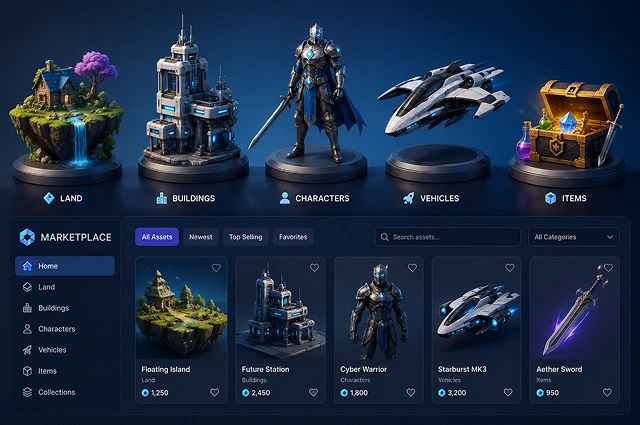
In virtual spaces, NFTs define ownership of land, identity, and items, allowing users to maintain continuity across immersive environments while preserving scarcity, transferability, and long-term digital presence.
- Virtual land ownership
- Identity based assets
- Interoperable environments
Creative Monetization Models
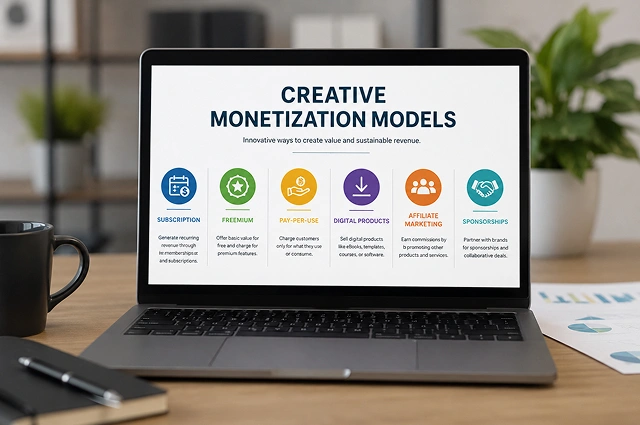
NFTs allow creators to distribute digital work with built-in ownership, royalties, and authenticity, enabling value to continue beyond initial release while reducing reliance on centralized distribution platforms.
- Onchain royalty flow
- Verified ownership records
- Direct creator access

Utility Driven Access
NFTs function as programmable access mechanisms for memberships, experiences, and gated services, giving organizations flexible control over participation without relying on traditional authentication layers.
- Token gated entry
- Dynamic access control
- Usage based permissions

Enterprise Digital Assets
Within enterprise systems, NFTs bring structure to digital records such as credentials, documents, and assets, improving traceability, control, and consistency across internal and external workflows.
- Verified digital records
- Controlled data access
- Audit ready systems
Gaming Economies Ownership
NFTs enable players to carry ownership of in-game assets beyond a single environment, supporting progression, tradeability, and persistent value across interconnected gaming experiences where control stays with the user.
- Player owned assets
- Cross game portability
- Persistent game value
Virtual World Assets
In virtual spaces, NFTs define ownership of land, identity, and items, allowing users to maintain continuity across immersive environments while preserving scarcity, transferability, and long-term digital presence.
- Virtual land ownership
- Identity based assets
- Interoperable environments
Creative Monetization Models
NFTs allow creators to distribute digital work with built-in ownership, royalties, and authenticity, enabling value to continue beyond initial release while reducing reliance on centralized distribution platforms.
- Onchain royalty flow
- Verified ownership records
- Direct creator access
Utility Driven Access
NFTs function as programmable access mechanisms for memberships, experiences, and gated services, giving organizations flexible control over participation without relying on traditional authentication layers.
- Token gated entry
- Dynamic access control
- Usage based permissions
Enterprise Digital Assets
Within enterprise systems, NFTs bring structure to digital records such as credentials, documents, and assets, improving traceability, control, and consistency across internal and external workflows.
- Verified digital records
- Controlled data access
- Audit ready systems
Turn Industry Needs Into NFT Systems
Talk to an NFT ArchitectNFT Development Execution Flow
A structured delivery flow that focuses on product clarity, system design, and controlled execution, ensuring NFT platforms are built for real usage rather than just launch readiness.

System and Contract Design
We define blockchain selection, NFT standards, and smart contract architecture, including ownership logic, minting rules, metadata structure, and interaction flow between on-chain and off-chain systems.
Platform and Integration Development
Smart contracts are developed and connected with frontend interfaces, wallet systems, and APIs, enabling minting, trading, and asset interaction through secure and responsive user flows.


Testing and Mainnet Deployment
The full system is tested for contract security, transaction accuracy, gas efficiency, and performance before deploying to mainnet with monitored launch execution and stabilization.
Why Choose us as NFT Development Company?
Techfyte works as a focused NFT development partner helping teams move from concept to production-ready systems with clarity, technical depth, and long-term thinking. We don’t treat projects as one-off builds; we approach them as evolving digital products.

Systems Built for Real Load
Many platforms work in controlled environments but struggle under real demand. We design architecture that anticipates congestion, high transaction volume, and unpredictable user behavior so performance doesn’t collapse when growth starts.

Engineering That Reduces Failure Points
Instead of stacking tools and integrations, we design tightly connected systems where smart contracts, wallets, APIs, and interfaces are aligned from the start. Fewer dependencies means fewer breakdowns later.

Execution That Thinks Beyond Launch
Most agencies optimize for delivery milestones. We optimize for post-launch reality. That includes how the system behaves after users arrive, how it scales under pressure, and how it adapts without constant rebuilds.