Embedded Wallet SDK Development Built for Seamless Onboarding
We help product teams embed secure, non custodial wallets directly into their apps, cutting onboarding friction, accelerating first transactions, and delivering a Web3 experience users trust, understand, and keep using across exchanges, games, and DeFi platforms.
- Native in app wallets
- Faster first transactions
- Scales across ecosystems











What Is Embedded Wallet SDK Development?
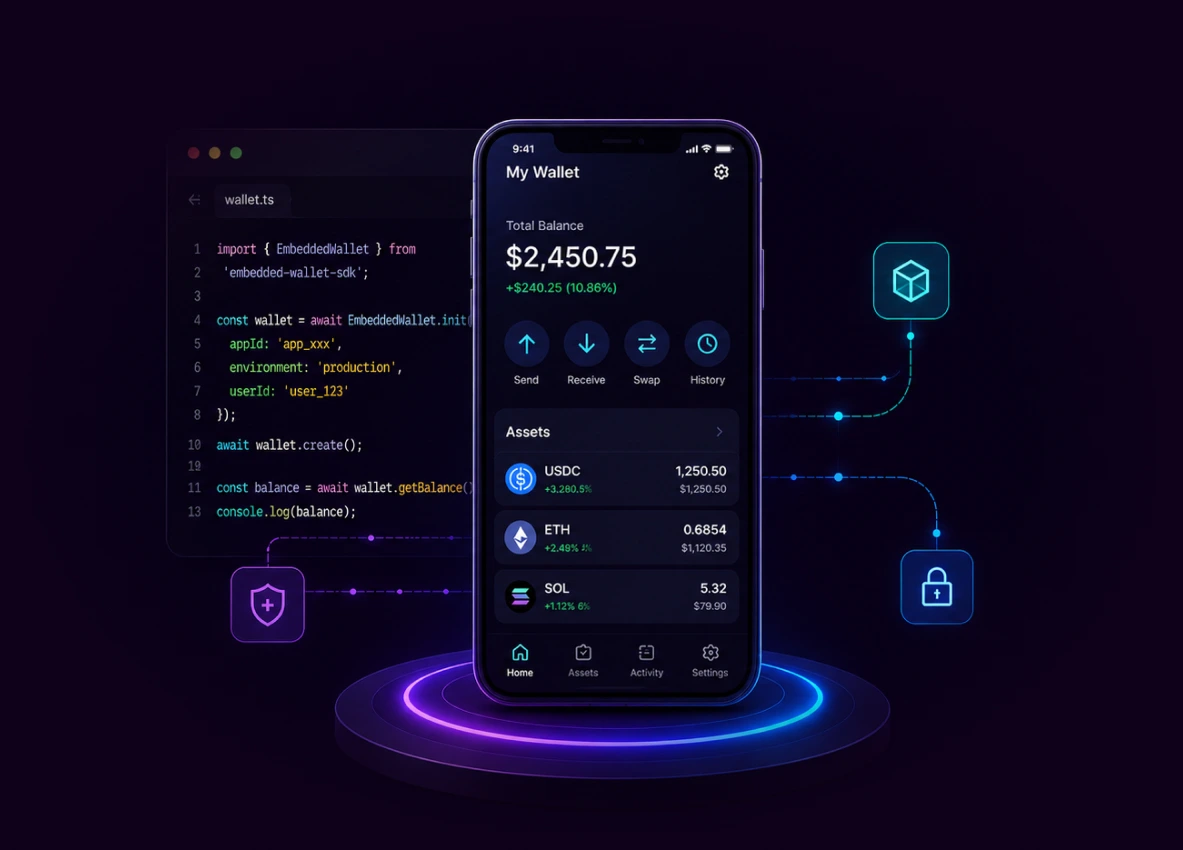
Embedded wallet SDK development enables applications to generate and operate crypto wallets directly inside the product experience, using client side libraries instead of external wallet apps or browser extensions. It provides SDKs for iOS, android and react so teams can control wallet creation, signing and transactions without sending users away. Compared to backend heavy wallet services embedded SDKs move critical flows to the client enabling tighter UX faster performance and deeper product customization. Keys are protected through MPC or secure enclaves removing seed phrase exposure while keeping users non custodial. This approach supports modern onboarding where wallets are created through email or social login making Web3 feel familiar from the first interaction across consumer and enterprise products at global scale.
- Client side wallets
- Secure key handling
- Social login onboarding
100+
Embedded Wallet Projects Delivered
12+
Years of Experience in Blockchain & Web3
120+
Wallet SDK & Blockchain Experts
98%
Client Retention Across Global Web3 Projects
Crypto Market Intelligence Platform
A real-time crypto and stock market analytics platform with live price tracking, portfolio management, market insights, and integrated Web3 wallet support.
- Live multi-exchange market data
- Portfolio & ERC20 wallet tracking
- Smart alerts & market analytics

Why Are Modern Apps Moving to Embedded Wallet SDKs?
Modern apps struggle not with blockchain capability, but with user friction. Traditional wallets interrupt onboarding with extensions, seed phrases, and unfamiliar flows, causing massive drop-offs before users experience real value. Embedded wallet SDKs remove this break by creating wallets instantly inside the product, often through a simple email login, so users stay focused on what the app actually offers from the first interaction every time. Beyond onboarding, real usage breaks when users face gas fees or network confusion. Expecting people to manage native tokens or switch chains adds cognitive load and leads to failed actions. This challenge becomes even more significant in multi-chain wallet development systems, where users interact across multiple blockchains. Embedded wallet SDKs solve this quietly with gasless transactions and automatic multi-chain handling, allowing teams to design smooth experiences while the infrastructure stays invisible to the end user across apps, regions, devices, and evolving blockchain ecosystems.

Instant User Onboarding
Users create wallets instantly using email, avoiding extensions and seed phrases, reducing friction and keeping onboarding fast and intuitive simple.

Gasless User Actions
Transactions succeed without users holding native tokens, as apps sponsor fees, preventing failures and confusion during core actions for everyone.

Multi-Chain Simplicity Layer
Developers ship once while the wallet handles networks automatically, sparing users from chain switching or technical decisions inside everyday apps.

Retention Through Experience
Embedded wallets reduce friction and improve engagement, evolving into AI crypto wallet development with intelligent automation.
See How Embedded Wallets Work?
Explore the SDKBenefits Built into Embedded Wallet SDKs
Embedded wallet SDKs let teams deliver secure, intuitive crypto experiences faster, lowering onboarding friction, simplifying transactions, improving security, and accelerating product launches without operational overhead.

Frictionless User Onboarding
Users create wallets through email or social login, avoiding extensions and recovery phrases, which dramatically improves activation and early engagement.

Gasless Transaction Flow
Applications sponsor transaction fees transparently, allowing users to complete actions without holding native tokens or understanding blockchain mechanics confidently easily.

Built-In Account Abstraction
Bundled transactions and smart wallet logic reduce failed actions, simplify approvals, and enable advanced flows without exposing protocol complexity details.

Non-Custodial Security Model
Private keys are never stored centrally, using MPC to distribute risk while maintaining user ownership and strong security guarantees everywhere.

Faster Product Launch
Prebuilt wallet components reduce engineering effort, helping teams ship reliable wallet features in weeks instead of months safely consistently faster.

Custom Brand Experience
White-label wallets adapt to existing design systems, ensuring the wallet feels native while preserving consistent product identity across platforms globally.
How Embedded Wallet SDKs Work?
Embedded wallet SDKs operate quietly inside applications, handling key generation, signing, and transactions while abstracting blockchain complexity from users and developers securely.
App Initialization
Developers install the SDK, configure supported chains, permissions, and environments, enabling wallet functionality directly within the app without redirects externally.
Wallet Creation
When users authenticate via email or social login, the SDK triggers secure wallet creation without exposing keys or recovery phrases.
Key Generation
Private keys are split using MPC across device and server with no single key existing centrally using MPC wallet development architectures.
Transaction Signing
On approval, the SDK assembles signatures inside secure environments and submits transactions through bundlers for gasless execution across supported networks.
Session Handling
Short-lived session keys manage active usage, reducing repeated authentication while isolating long-term credentials from everyday interactions securely within applications only.
Account Recovery
If devices are lost, users recover wallets through verified login flows, resharing MPC keys without seed phrases or manual intervention.
Our Embedded Wallet Development Services
We help product teams design, build, and scale embedded wallet SDKs with production-ready security, flexibility, and performance tailored for real-world Web3 applications.

Custom Wallet SDK
We design custom embedded wallet SDKs from scratch or extend existing cores, aligning architecture, flows, and APIs with your product requirements.

MPC Wallet SDK
Distributed key generation using MPC ensures institutional-grade security, eliminating single points of failure while preserving non-custodial ownership models.

White-Label Wallet SDK
Fully rebrandable wallet components adapt to your design system, allowing fast deployment without compromising user experience or product identity.

Multi-Chain Wallet SDK
Unified SDK supports Ethereum, Solana, and 20+ EVM networks, handling balances and transactions through one consistent developer interface.

Wallet Infrastructure SDK
Core infrastructure modules manage session keys, transaction orchestration, and recovery workflows required for secure, scalable wallet operations.
Account Abstraction Setup
Smart wallet integration enables bundled actions, sponsored fees, and advanced transaction logic using modern account abstraction standards.
Gasless Transaction Enablement
We configure paymasters and bundlers to allow transactions without native tokens, removing friction from critical user actions.
Security Architecture Design
We design wallet security models, audit key flows, and harden implementations against threats specific to embedded environments.

SDK Integration Support
Hands-on technical support ensures smooth SDK integration across web and mobile stacks, reducing launch risk and implementation delays.
Embedded Wallet SDK Development Solutions by Use Cases
Our embedded wallet SDK development solutions are designed around real product needs, helping teams ship secure wallet functionality without adding architectural complexity.
In-App Self-Custody Wallets
Embed non-custodial wallets directly into your product so users control assets without managing keys or leaving your application.
- MPC-based key splitting
- App-level wallet ownership
- No exposed private keys
Gasless Transaction Flow
Remove gas friction by abstracting fees at the SDK level, making transactions feel instant and familiar for mainstream users.
- Paymaster-based fee handling
- Relayer-backed submissions
- User-friendly approval flows

Programmable Wallet Accounts
Enable smart account wallets that support flexible authentication and advanced transaction logic beyond basic key signing.
- Account abstraction support
- Custom authorization rules
- Batched transaction execution

Cross-Chain Wallet Support
Operate wallets across multiple chains using a single SDK interface, reducing integration effort and maintenance overhead.
- EVM and Solana support
- Unified transaction handling
- Chain-aware signing logic

Fiat-to-Crypto Wallet Flows
Allow users to move between fiat and on-chain assets directly within embedded wallets, without breaking product flow.
- On-ramp integrations
- Off-ramp settlement handling
- Compliance-ready architecture

Enterprise-Controlled Wallets
Design wallets for teams and organizations that require structured access, approvals, and operational safeguards.
- Role-based permissions
- Multi-approval transactions
- Policy-driven execution rules
Industries We Support with Embedded Wallet SDKs
Embedded Wallet SDK Development is used by Web3-native and digital finance products that need seamless wallet experiences built directly into their platforms.

Crypto Exchanges
Exchanges integrate embedded wallets to simplify onboarding, reduce dependency on external extensions, and keep trading activity fully inside their platform experience.
- Faster account activation
- Higher first-trade conversion
- Reduced wallet drop-offs

Web3 Gaming Studios
Game studios use embedded wallets to power in-game economies where players can own assets instantly without setting up external wallets or managing keys.
- Instant player onboarding
- Real-time asset ownership
- Seamless in-game transactions

DeFi Protocols
DeFi platforms embed wallets to make complex financial actions like staking, swapping, and lending accessible without exposing users to wallet complexity.
- Simplified transaction flows
- Higher protocol participation
- Lower user abandonment
NFT Marketplaces
NFT platforms use embedded wallets to remove onboarding friction and enable users to collect, trade, and store digital assets instantly within the marketplace.
- Frictionless NFT purchases
- Improved conversion rates
- Direct asset custody

Fintech & Crypto Apps
Fintech platforms integrate embedded wallets to offer crypto features inside mainstream financial experiences without requiring external wallet apps or extensions.
- Unified fiat + crypto UX
- Faster user onboarding
- Improved engagement retention
Crypto Exchanges
Exchanges integrate embedded wallets to simplify onboarding, reduce dependency on external extensions, and keep trading activity fully inside their platform experience.
- Faster account activation
- Higher first-trade conversion
- Reduced wallet drop-offs
Web3 Gaming Studios
Game studios use embedded wallets to power in-game economies where players can own assets instantly without setting up external wallets or managing keys.
- Instant player onboarding
- Real-time asset ownership
- Seamless in-game transactions
DeFi Protocols
DeFi platforms embed wallets to make complex financial actions like staking, swapping, and lending accessible without exposing users to wallet complexity.
- Simplified transaction flows
- Higher protocol participation
- Lower user abandonment
NFT Marketplaces
NFT platforms use embedded wallets to remove onboarding friction and enable users to collect, trade, and store digital assets instantly within the marketplace.
- Frictionless NFT purchases
- Improved conversion rates
- Direct asset custody
Fintech & Crypto Apps
Fintech platforms integrate embedded wallets to offer crypto features inside mainstream financial experiences without requiring external wallet apps or extensions.
- Unified fiat + crypto UX
- Faster user onboarding
- Improved engagement retention
Embed Wallets Across Your Industry
Start Industry Integration PlanEmbedded Wallet SDK Development Flow
A structured approach focused on how engineering decisions are made under real constraints like security risk, chain fragmentation, and production reliability at scale.

System Constraints Mapping
The process starts by translating product expectations into technical constraints around chains, custody boundaries, latency tolerance, and security assumptions before any build decisions are made.
Security Model Design
Core decisions are made around key management, MPC distribution, and execution isolation to ensure no single point of compromise exists across device, server, or network layers.


Production Deployment Strategy
Instead of linear development steps, the SDK is rolled out through controlled integration, validation under live network conditions, and iterative hardening based on real usage behavior.
Why Choose Us as Embedded Wallet SDK Development Company?
Techfyte focuses on giving engineering teams a deployable SDK that behaves like part of their core system, not an external dependency. That means fewer hidden abstractions, cleaner integration boundaries, and wallet logic that stays predictable as your product scales.

True Client-Side Execution Control
Wallet creation, signing, and transaction flow run inside your application runtime, giving you deterministic control over user flows without routing critical actions through external systems.

Audit-Friendly Modular Stack
Our architecture separates core wallet logic from enterprise modules, making MPC flows, and execution layers transparent, reviewable, and easier to validate for security and compliance teams.

No Vendor-Locked Wallet Logic
You retain ownership of wallet behavior, transaction rules, and integration logic, avoiding dependency lock-in that typically comes with hosted wallet APIs or closed SDK ecosystems.