Multi-Agent Orchestration Development Company for Autonomous Enterprise AI
As a Multi-Agent Orchestration Development Company, we engineer intelligent agent ecosystems that turn complex workflows into coordinated, self-optimizing enterprise automation.
- Intelligent Agent Coordination
- Distributed Decision-Making
- Conflict Resolution & Task Allocation
- Scalable Agent Infrastructure










Enterprise Multi-Agent Orchestration for Coordinated AI Systems
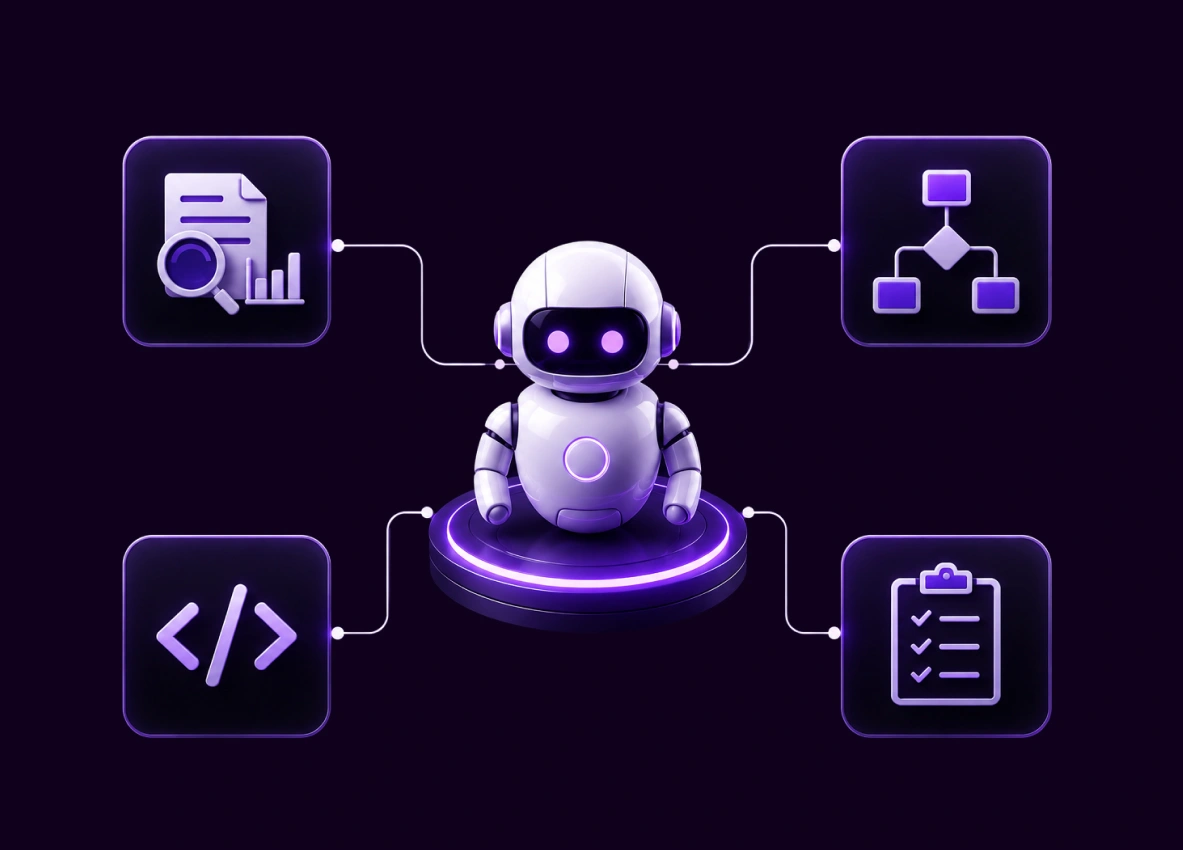
Multi-Agent Orchestration Development involves creating intelligent networks of AI agents that can work together, communicate, reason and perform tasks in complex enterprise environments. Multi-agent orchestration is a distributed approach that delegates responsibilities in planning, research, validation, execution, monitoring and escalation to specialized agents, instead of a single AI model handling an entire workflow. Enterprises can now build adaptive AI systems that correlate decisions, remove human dependency and work seamlessly across departments, data sources, tools and business applications with in-house custom LLM development for specialized reasoning and autonomous process automation to execute workflows.
- Agent Collaboration & Communication
- Task Allocation Algorithms
- Conflict Resolution Mechanisms
- Multi-Agent Reinforcement Learning
Complete Multi-Agent Orchestration, Built Your Way
Build Customized Multi-Agent AI Solutions Enterprise outcomes through agentic process automation and AI agent infrastructure.

Multi-Agent System Architecture
Build and deploy collaborative AI agents that can handle complex business procedures with tools, groups and decisions.

Intelligent Task Allocation
Assign tasks smartly by capability, workload, availability and priority signals to speed operational execution and ensure reliable outcomes.

Real-Time Agent Communication
Enable dedicated agents to share context, hand off, and orchestrate across live business systems.

Conflict Resolution & Negotiation
Policies and adaptive decision logic for resolving agent goal competition and resource contention in a structured negotiation.

Multi-Agent Reinforcement Learning
Help agents learn optimal behaviors through continuous interaction, feedback loops, rewards, and changing workflow conditions

Scalable Agent Infrastructure
Trace, manage and get performance visibility to monitor, observe and deploy hundreds of production agents.
Build Enterprise AI That Works Together
Build Your Agent SystemEnterprise Multi-Agent Systems for Faster Decision-Making AI
Single-agent, automated workflows start to fall apart when decisions require multiple systems, teams, data sources, permission layers, and evolving business priorities. Solutions like agentic process automation to run workflow and predictive analytics solutions to forecast and see risks are used in multi-agent systems to fill the coordination gaps that would otherwise stop the organization from working. They allow specialized agents to communicate, decentralize decision making, resolve conflicts and adapt in real time when static workflows or manual procedures are unable to keep up.

Complex Workflow Bottlenecks
They don’t lend themselves easily to single agents and manual procedures, those interdependent, multi-step jobs that cross departments, systems, approvals and data sources.

Slow, Siloed Decision-Making
Disconnected teams and platforms lead to decisions flowing, delaying and duplicating efforts and costly execution failures.

Resource & Priority Conflicts
Conflicting tasks, limited resources and critical business priorities call for intelligent orchestration, not simple rule-based automation.

Scaling Automation Complexity
As businesses scale the number of agents or workflows, there is a coordinating overhead without a structured orchestration layer.

Real-Time Adaptation Gaps
Static workflows do not respond well to changing conditions, to unplanned events, to operational hazards or to real business context.
How Multi-Agent Orchestration Works with Distributed Decision-Making AI
Distributed Decision-Making AI organizes the enterprise’s workflows in a sequence of interlinked planning, execution, verification, and learning steps across specialized autonomous agents and interconnected systems.
Goal Decomposition & Task Planning
The system breaks down complex goals into structured sub-tasks, identifies dependencies and required agent capabilities within the process, prior to the initiation of the orchestration.
Agent Selection & Task Allocation
An algorithm for task allocation determines the suitable specialized agent to be assigned to each sub-task, depending on signals of capability, availability, workload, priority and execution context.
Agent Communication & Coordination
Agents use standardized messaging protocols and shared operational state channels to communicate progress, negotiate dependencies, ask for context, and coordinate actions.
Conflict Resolution & Priority Management
It also identifies conflicting goals, duplicate activities or competition for resources. These conflicts are solved applying the negotiation logic and priority rules of the orchestration layer.
Result Aggregation & Verification
The outputs are then fed into the orchestration layer where results are evaluated, reconciled and consolidated into final replies or next-step actions.
Feedback & Learning Loop
Reinforcement learning uses feedback on performance to modify agent policies, incentive signals and execution strategies. This results in ongoing improvements in repetitive tasks.
Features of Multi-Agent Orchestration Solutions for Distributed AI Agents
Our multi-agent capabilities combine AI development services with scalable agent infrastructure for coordinated enterprise AI execution.
Agent Communication Protocols
By standardizing messaging, agents can share data, coordinate workflows, send status updates, and hand off decisions in an organized manner.

Task Decomposition & Allocation
Complex goals are decomposed into subtasks and assigned to agents according to capability, availability, priority and context.

Conflict Detection & Resolution
The orchestration logic identifies resource congestion, redundant operations or conflicting agent goals and handles them according to the policies set.

Shared Agent Memory & State
Shared State Persistent memory holds workflow context, decisions, task history and shared state over long running agent operations.

Multi-Agent Reinforcement Learning
Agents learn optimal policies through interaction, feedback loops, rewards and continued adaptability to changing company conditions.

Real-Time Orchestration Dashboard
Real-time monitoring of the agent decisions, job handovers, execution status, performance indicators, failures and operational bottlenecks.
Our Multi-Agent Orchestration Services at a Glance
We offer Professional AI Development Services to transform complex enterprise processes into coordinated, observable, and production-ready multi-agent systems.

Custom Multi Agent Systems Development
Build collaborative agents to explore, plan, validate, and execute enterprise workflows across connected tools and data systems.

Agent Communication & Coordination Architecture
Define standard message formats to enable agent migration, collaboration, status information and process synchronization.

Multi-Agent Reinforcement Learning (MARL)
Use reinforcement learning algorithms to allow agents to adapt strategy, improve decisions and learn from feedback.

Task Allocation & Resource Optimization
Optimization of task assignment based on agent capabilities, availability, workload, priority, resource constraints and execution context signals

Negotiation & Conflict Resolution Platform
Identify conflicting goals and resource competition and resolve through negotiation logic, policy rules and escalation.

Human-in-the-Loop Agent Workflows
Add custom approval gates, review checkpoints and escalation channels for sensitive enterprise actions and decisions

Agent Monitoring & Observability Dashboard
Monitor agent decisions, handoffs, failures, latency, performance metrics and execution status in real time.

Agent Memory & Context Management
Build shared memory systems that keep context, task history, decisions, and workflow state for long-lived activities.

Multi-Agent Integration & Tool Connectivity
Link up with APIs, databases, business applications, cloud services, CRMs, ERPs and workflow automation platforms.
Enterprise Multi-Agent AI Development Across High-Impact Industries
Enterprise Multi-Agent AI Development allows complex companies to coordinate autonomous decisions, operational workflows, and specialized AI agents in mission-critical environments.

Financial Services & Banking
Harmonize fraud detection agents, compliance monitors, risk scoring systems and customer care bots for better fraud prevention, faster compliance checks, better audit readiness and faster customer help across digital banking processes.
- Fraud detection
- Compliance monitoring
- Customer service

Supply Chain & Logistics
Route planning agents, inventory managers, demand forecasting systems and supplier negotiators are brought together to minimize shipment delays, maximize stock movement efficiency, improve vendor cooperation and guarantee operational resilience across distributed logistics networks.
- Route planning
- Inventory optimization
- Supplier negotiation

Healthcare & Life Sciences
Patient triage agents, diagnosis assistants, treatment planning agents and care coordination systems enable clinical workflows to bypass administrative delays, facilitate decision making and improve management of patient journey.
- Patient triage
- Diagnosis support
- Treatment planning

E-commerce & Retail
Better product discovery, fewer fulfillment gaps, automation of buyer aid, and more responsive shopping experiences come from the coordination of personalization agents, inventory managers, price assistants, and customer support bots.
- Personalization
- Inventory management
- Support automation

Energy & Utilities
They include grid monitoring agents, demand forecasting systems, maintenance planners and load balancing agents. Together they can improve energy distribution, detect abnormalities, minimize downtime and enable utilities to function in a better manner.
- Grid monitoring
- Demand forecasting
- Load balancing
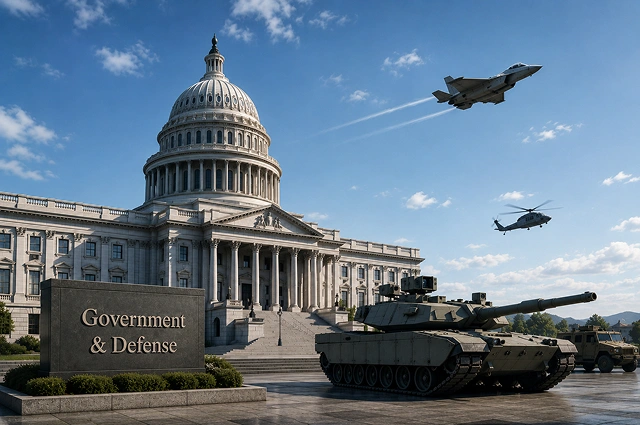
Defense & Intelligence
The combined efforts of surveillance agents, threat assessment systems, intelligence analysts, and reaction planners to improve situational awareness, prioritize risks, support mission planning, and increase response readiness are invaluable in high-stakes situations.
- Surveillance analysis
- Threat assessment
- Response planning
Financial Services & Banking
Harmonize fraud detection agents, compliance monitors, risk scoring systems and customer care bots for better fraud prevention, faster compliance checks, better audit readiness and faster customer help across digital banking processes.
- Fraud detection
- Compliance monitoring
- Customer service
Supply Chain & Logistics
Route planning agents, inventory managers, demand forecasting systems and supplier negotiators are brought together to minimize shipment delays, maximize stock movement efficiency, improve vendor cooperation and guarantee operational resilience across distributed logistics networks.
- Route planning
- Inventory optimization
- Supplier negotiation
Healthcare & Life Sciences
Patient triage agents, diagnosis assistants, treatment planning agents and care coordination systems enable clinical workflows to bypass administrative delays, facilitate decision making and improve management of patient journey.
- Patient triage
- Diagnosis support
- Treatment planning
E-commerce & Retail
Better product discovery, fewer fulfillment gaps, automation of buyer aid, and more responsive shopping experiences come from the coordination of personalization agents, inventory managers, price assistants, and customer support bots.
- Personalization
- Inventory management
- Support automation
Energy & Utilities
They include grid monitoring agents, demand forecasting systems, maintenance planners and load balancing agents. Together they can improve energy distribution, detect abnormalities, minimize downtime and enable utilities to function in a better manner.
- Grid monitoring
- Demand forecasting
- Load balancing
Defense & Intelligence
The combined efforts of surveillance agents, threat assessment systems, intelligence analysts, and reaction planners to improve situational awareness, prioritize risks, support mission planning, and increase response readiness are invaluable in high-stakes situations.
- Surveillance analysis
- Threat assessment
- Response planning
Launch Smarter Workflows With Multi-Agent Intelligence
Explore Multi-Agent SolutionsOur Multi-Agent Orchestration Development Process Explained
Methodology for systematic discovery, protocol design, simulation, testing, deployment and ongoing optimization to make Multi-Agent System Architecture production-ready orchestration.

Requirements & Workflow Analysis
We define the operational activities, the roles and dependencies between agents, the communication patterns between systems, teams, approvals and data flows.
Agent Role & Capability Mapping
Before development starts we define responsibility of each agent, scope of decisions, tool access, data permissions and performance requirements.


Agent Architecture & Protocol Design
For each specialized agent type, we define agent capabilities, messaging protocols, coordination rules, shared memory and governance mechanisms in workflows.
Agent Development & Collaboration Testing
We build individual agents that have reasoning logic, access to tools, validation controls, and test collaboration in realistic interaction settings.


Task Allocation & Conflict Resolution Setup
We implement allocation algorithms, priority rules, conflict detection, fallback handling and escalation channels for robust multiagent coordination.
Deployment, Monitoring & Continuous Learning
We deploy the system, observe the interactions of the agents, analyze their performance and use MARL procedures to adapt and improve over time.

Our Multi-Agent Orchestration Engineering Expertise
AI Agent System Integration Techfyte offers AI Agent System Integration using our AI and agent experience to achieve scalable, intelligent and production-ready corporate automation.

Multi-Agent RL & Coordination Experts
Rich experience on reinforcement learning algorithms for multiple agents, communication protocols for agents and coordination methods for adaptive decision making of multiple agents.

Distributed Agent Architecture Architects
Set up design patterns for agent discovery, messaging, state sharing and fault tolerant orchestration in distributed enterprise systems.

Scalable Agent Deployment & Monitoring
With serverless deployment methods, you can have observability, optimize costs and have a reliable performance in production, with real time monitoring.