AI Resource Allocation for Autonomous Web3 Operations
Optimize computational, financial, and organizational resources through AI development services and DAO governance.
- Predictive Resource Optimization
- Automated DAO Treasury Management
- Smart Contract Cost Controls
- Cross-Chain Resource Coordination










What is AI Resource Allocation?
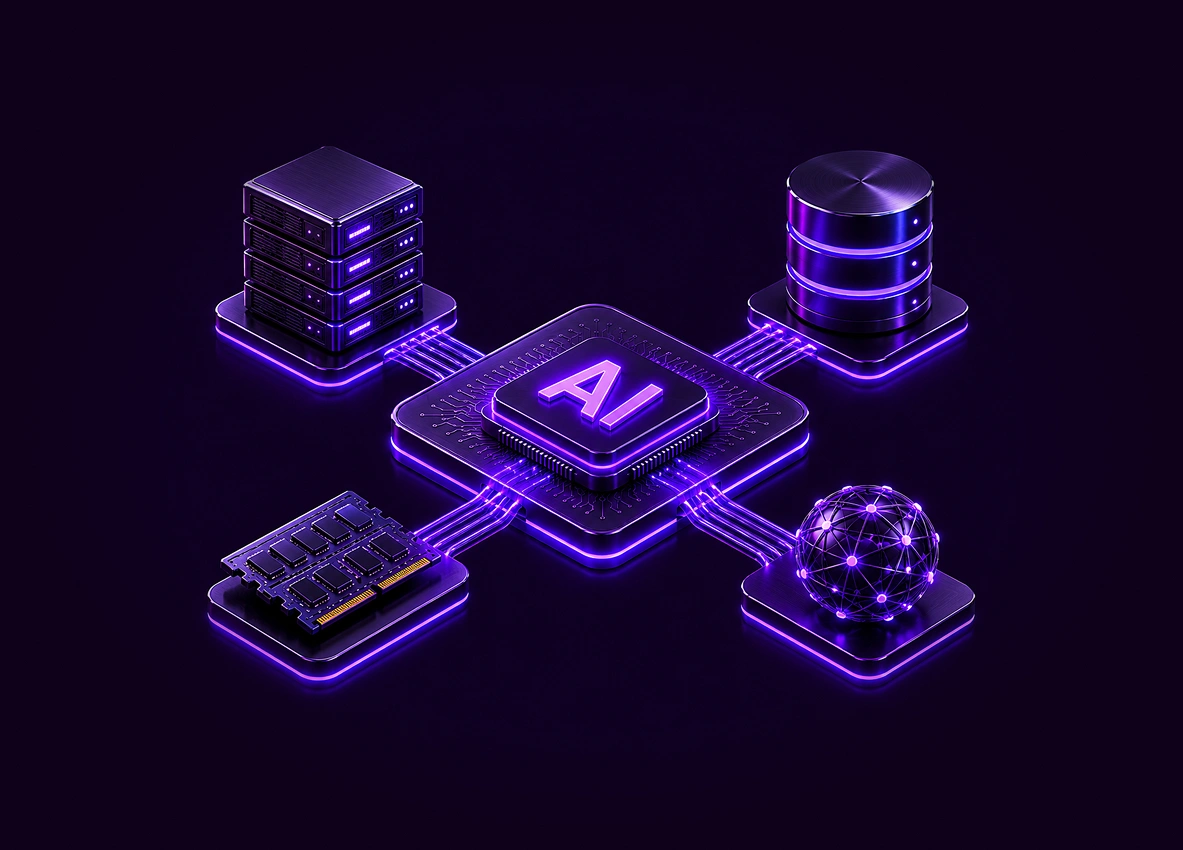
AI resource allocation refers to the division of computation, capital, storage and workforce capacity across decentralized systems using machine learning, autonomous agents and programmable policies. Decentralized Resource Optimization allows DAOs, DeFi protocols and infrastructure networks to predict demand, avoid congestion and allocate resources under governance rules, budget caps and real-time performance signals in Web3 contexts. Organizations can leverage predictive analytics solutions and agentic process automation to transition from manual resource planning to policy-directed intelligent execution.
- Predictive Analytics
- Smart Contract Enforcement
- Multi-Agent Coordination
- Policy-Constrained Automation
Why Organizations Need AI Resource Allocation
Decisions get bogged down, implementation is delayed and fragmented businesses are left responding to costly inefficiencies with manual resource management. Models of static allocation often miss real-time demand, governance activity, treasury exposure, or cross-chain infrastructure needs for DAOs, DeFi protocols and enterprise Web3 teams. AI resource allocation lessens human resource allocation intervention and increases speed, accuracy and operational control from agentic process automation for proposal triage to cross-chain smart contract patterns for multi-network allocation.

Slow Manual Decisions
Investment DAOs can’t seize market opportunities when capital deployment depends on long proposal reviews, voting periods, and slow execution.

Reactive Resource Management
Conventional systems only provision compute, treasury or operational capacity when congestion, shortages or budget pressure already exist.

Voter Apathy Risk
Low governance involvement and concentrated voting power compromise decentralized decision-making, and limit optimum project and token distribution.

Technical Participation Barriers
Proposal writing is generally concentrated in the hands of technical members, making it difficult for a larger set of contributors to shape the allocation priorities.

Cross-Chain Complexity
The challenge for teams is managing resources, policies and budgets across numerous blockchain networks without scalable autonomous organization management.
Build Smarter Systems That Allocate Resources Autonomously
Discuss Your ProjectBenefits of AI Resource Allocation
AI allocation is faster, safer and cost-effective for AI & Blockchain development services, ML pipeline development requires resource forecasting and AI allocation.

50% Faster Response Times
AI allocates computation, capital and operational resources ahead of congestion to improve the responsiveness of the system in decentralized situations.

35% Lower Latency
Predictive optimization alleviates cross-shard communication costs and hence enhances transaction coordination and infrastructure performance in distributed networks.

Cost Control via Escrow
Programmable budgets and escrow logic avoid unbounded AI execution expenses, keeping treasury, compute and automation spend within agreed boundaries.

24/7 Autonomous Operation
It allows for the scalable management of autonomous organizations that can be continuously monitored, forecasted and reallocated without waiting for manual reviews or governance delays.

Proposal Democratization
NLP interfaces lower technical hurdles, enabling more people to participate and more efficiently distribute projects and tokens among DAO contributors.

Policy-Constrained Safety
Resource allocation is still determined by human-defined exposure limits, spending constraints, and governance-approved risk thresholds, but with less human participation.
How AI Resource Allocation Works
AI resource allocation means using predictive analytics solutions with agentic process automation to predict, validate, execute and refine allocation decisions.
Data Collection & Monitoring
The system is constantly ingesting resource utilization, transaction patterns, treasury activity, task queues and network conditions across decentralized and off-chain contexts.
Demand Forecasting
Machine learning algorithms estimate the requirement for computing, liquidity, storage and governance resources, blocks or process phases in advance.
Policy Constraint Check
Prior to execution, proposed allocations are evaluated against rules, risk thresholds, spending restrictions and permission criteria defined within governance.
Smart Contract Execution
Resource distribution (powered by smart contracts): Approved budget allocations can be executed transparently with programmable budgets, escrow logic and enforcement criteria.
Multi-Agent Coordination
AI agents are specialized to handle computing, financial, storage and operational layers, illustrating how AI maximizes the resources of autonomous organizations in complex systems.
Performance Feedback
The allocation outcomes feed back into the forecasting models. It’s a constant optimization loop that improves process automation in DAOs with AI.
Our AI Allocation Services for Enterprises
Our AI development services and web3 development services provide AI allocation solutions for organizations across decentralized infrastructure, treasury operations, and governance workflows.

Predictive Allocation Engine
ML models predict demand, identify bottlenecks and provision computation, capital, storage or operational resources before the problems arise.

DAO Treasury Management
AI-powered DAO platforms automate capital allocation within governance-approved liquidity, risk, diversification, and treasury exposure policies.

Programmable Budget Controls
Programmable smart contract controls impose AI execution costs, spending restrictions and resource consumption regulations via escrow logic consistent with LEP100-3.

Multi-Agent Coordination
Specialized agents manage computing, storage, financial and workflow resources across autonomous systems with minimal manual involvement.

Cross-Chain Resource Bridge
Blockchain resource management software provides a uniform approach to allocation across Ethereum, Solana, BNB Chain, L2s and off-chain infrastructure environments.
Proposal Analytics & Triage
AI evaluates, rates and ranks governance proposals based on budgetary impact, technological feasibility, risk exposure and community significance.

Performance Dashboard
Real-time dashboards track allocation efficiency, utilization rates, cost savings, ROI, latency improvements and treasury performance KPIs.

Institutional Policy Framework
Enterprise-grade control with configurable risk limits, spending limitations, approval workflows and compliance standards from AI resource management service providers.

Resource Risk Simulation
Scenario modeling checks allocation strategies against liquidity shocks, network congestion, governance delays, and infrastructure failures before live execution.
AI Resource Allocation Solutions by Use Case
Automated Resource Management in DAOs allows for coordinated allocation across treasury, compute, liquidity and governance systems, from multi-chain wallet development to cross-chain liquidity aggregation.

Predictive Shard Allocation
The ML models predict the workload patterns and proactively move the accounts, transactions, or execution lanes before the congestion affects the performance.
- Workload forecasting
- Shard rebalancing
- Latency reduction

AI Treasury Management Vault
Autonomous agents invest DAO funds in approved yield strategies, according to governance-defined risk, liquidity and diversification regulations.
- Strategy diversification
- Risk limits
- Performance monitoring

Edge Computing Resource Optimizer
Deep Q-networks dynamically divide the compute power among the edge nodes to minimize delay, maximize revenue and improve the distributed execution.
- Network delay prediction
- Revenue maximization
- Smart contract distribution

Proposal Analytics & Triage System
AI sorts, filters, and scores DAO proposals by practicality, budget impact, success likelihood, and community significance.
- NLP analysis
- Success prediction
- Community feedback

Budget-Controlled AI Execution
AI execution cost is controlled via per-user quota, deterministic settlement, and automatic budget resets, enforced by escrow.
- Spending limits
- Quota management
- Deterministic settlement

Liquidity Routing Optimizer
AI analyzes liquidity depth, slippage, bridge fees and execution speed to assign treasury swaps via the most efficient cross-chain routes.
- Slippage analysis
- Route optimization
- Bridge fee control
Industries We Serve as Enterprise AI Resource Management Service Providers
Enterprise AI resource management solution providers empower intelligent allocation across decentralized and institutional processes from commodity tokenization to enterprise AI assistants.

Decentralized Autonomous Organizations
DeFi platforms streamline capital deployment across yield strategies, liquidity pools, loan markets and cross-chain execution routes, allowing protocol teams to increase liquidity efficiency, reduce risk exposure and respond more rapidly to market changes.
- Treasury automation
- Proposal analytics
- Policy enforcement

DeFi Protocols
DeFi platforms optimize capital allocation across yield strategies, liquidity pools, lending markets, and cross-chain execution routes, enabling protocol teams to improve liquidity efficiency, manage risk exposure, and respond faster to market shifts.
- Yield optimization
- Risk management
- Liquidity routing

Blockchain Infrastructure
L1 and L2 networks use predictive shard allocation and compute distribution to improve scalability, throughput, and network responsiveness to allow infrastructure operators to mitigate congestion while ensuring reliable transaction processing.
- Shard balancing
- Latency reduction
- Throughput optimization

Edge & Cloud Providers
AI-driven performance forecasting allows infrastructure providers to deploy computing across edge nodes, data centers and IoT networks, enabling better workload allocation, lower service delays and higher revenue from available capacity.
- Compute distribution
- Delay prediction
- Revenue maximization

Investment & Venture DAOs
Investment DAOs leverage predictive analytics, proposal grading and real-time performance tracking to make better decisions on where to deploy capital. This helps members analyze possibilities faster and keep allocations consistent with risk and portfolio goals.
- Investment allocation
- Performance tracking
- Risk control

Enterprise Treasury Departments
AI allocation engines help corporate treasury teams manage multi-chain assets, automate rebalancing and implement compliance-ready controls to improve capital visibility, audit preparedness and policy-driven execution across digital asset operations.
- Multi-chain allocation
- Policy enforcement
- Audit readiness
Decentralized Autonomous Organizations
DeFi platforms streamline capital deployment across yield strategies, liquidity pools, loan markets and cross-chain execution routes, allowing protocol teams to increase liquidity efficiency, reduce risk exposure and respond more rapidly to market changes.
- Treasury automation
- Proposal analytics
- Policy enforcement
DeFi Protocols
DeFi platforms optimize capital allocation across yield strategies, liquidity pools, lending markets, and cross-chain execution routes, enabling protocol teams to improve liquidity efficiency, manage risk exposure, and respond faster to market shifts.
- Yield optimization
- Risk management
- Liquidity routing
Blockchain Infrastructure
L1 and L2 networks use predictive shard allocation and compute distribution to improve scalability, throughput, and network responsiveness to allow infrastructure operators to mitigate congestion while ensuring reliable transaction processing.
- Shard balancing
- Latency reduction
- Throughput optimization
Edge & Cloud Providers
AI-driven performance forecasting allows infrastructure providers to deploy computing across edge nodes, data centers and IoT networks, enabling better workload allocation, lower service delays and higher revenue from available capacity.
- Compute distribution
- Delay prediction
- Revenue maximization
Investment & Venture DAOs
Investment DAOs leverage predictive analytics, proposal grading and real-time performance tracking to make better decisions on where to deploy capital. This helps members analyze possibilities faster and keep allocations consistent with risk and portfolio goals.
- Investment allocation
- Performance tracking
- Risk control
Enterprise Treasury Departments
AI allocation engines help corporate treasury teams manage multi-chain assets, automate rebalancing and implement compliance-ready controls to improve capital visibility, audit preparedness and policy-driven execution across digital asset operations.
- Multi-chain allocation
- Policy enforcement
- Audit readiness
Turn Resource Decisions Into Autonomous Intelligence
Get A Free CallAI Resource Allocation Development Process
We mix ML pipeline development for predicting with secure wallet infrastructure for controlled resource distribution.

Resource & Policy Discovery
Before you start building the system design, be aware of the types of resources, governance regulations, operational restrictions, and measurable success indicators.
Predictive Model Development
Develop predictive models for demand, congestion, treasury movement and allocation outcomes from historical and real-time data.


Smart Contract & Agent Integration
Policy Enforcement for Decentralized Resource Flows, Execution With Wallets, Orchestration With Multiple Agents, Control With Escrow.
Testing, Audit & Launch
Perform testing, security audits, and deploy the allocation system with production-grade monitoring.

Why Choose Techfyte for AI Resource Allocation
Techfyte is one of the AI resource management service providers who build secure, autonomous allocation systems with our AI and blockchain knowledge.

Predictive ML & RL Experts
We design workload forecasting and safe reinforcement learning models for proactive policy-constrained resource allocation.

DAO & Smart Contract Integration
We create allocation systems appropriate for DAOs in Ethereum, Solana and cross-chain governance contexts.

Programmable Budget Controls
Our LEP100-3 certified escrow solutions have per-user quotas, predictable costs and automated spending limits