White Label Crypto Wallet Development company
Launch your branded, non-custodial wallet with white label crypto wallet development solutions and multi-chain Web3 infrastructure. Go live in weeks, not months, with a secure, customizable wallet built for seamless digital asset management across multiple blockchain networks.
- Full Brand Control
- Multi-Chain Support
- dApp Browser Built-In











Your Trusted White Label Crypto Wallet Development Company
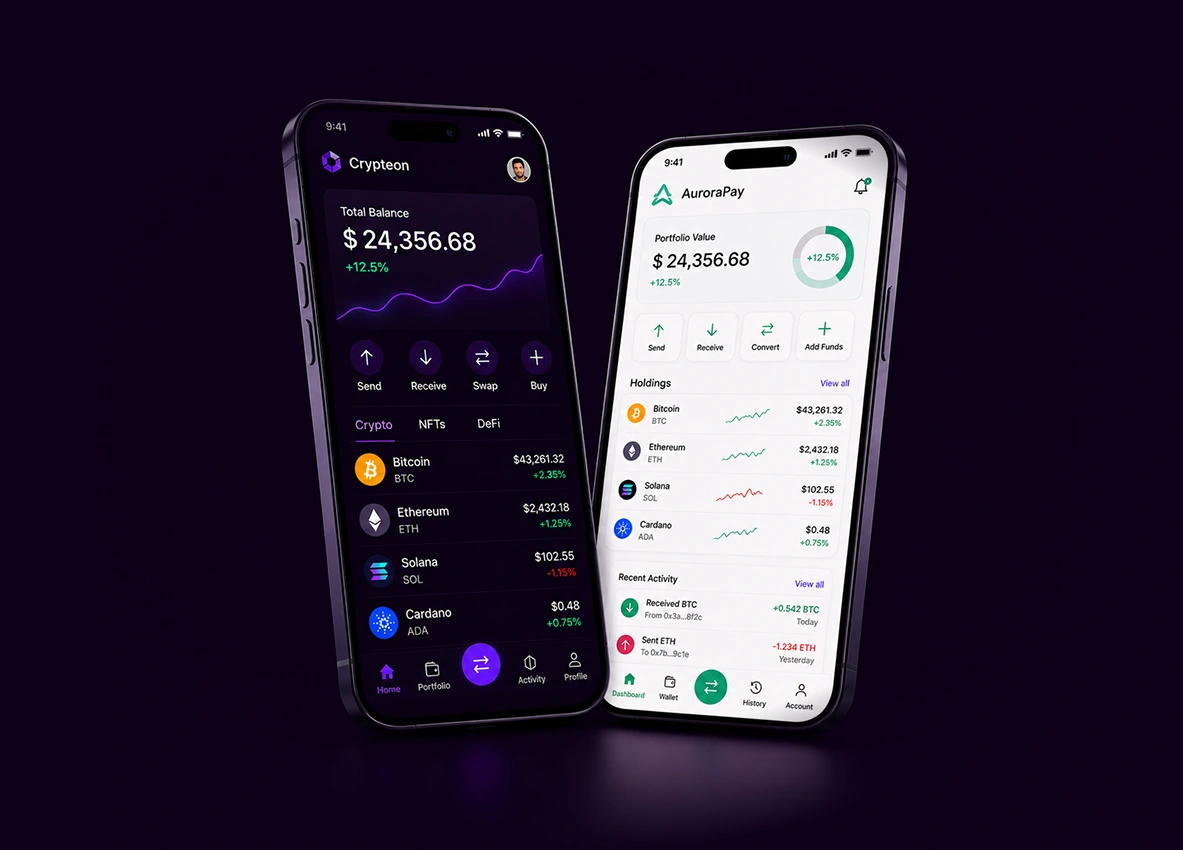
A white-label crypto wallet gives businesses ready-to-deploy Web3 infrastructure to launch their own branded wallet without building the entire wallet ecosystem from scratch. As a white label crypto wallet development company, we provide customizable wallet software, branded UI/UX, multi-chain blockchain connectivity, API integrations, and security-ready transaction workflows. Our solutions help exchanges, DeFi platforms, fintech businesses, and Web3 ventures launch faster with a scalable wallet experience while supporting advanced capabilities such as predictive analytics for transaction insights and smart contract auditing for security validation.
- Ready-to-Launch Codebase
- Wallet-as-a-Service
- Development Kit
- White-Label Customization
150+
White Label Wallet Projects Delivered
12+
Years of Experience in Blockchain & Web3
100+
Blockchain & Wallet Development Experts
98%
Client Retention Across Global Web3 Projects
Web3 Wallet
A next-generation Web3 wallet infrastructure that simplifies blockchain interactions through seamless onboarding, secure key management, and intuitive transaction experiences.
- Passwordless wallet onboarding
- Simplified key management
- Seamless cross-chain transactions

Why Businesses Need a White Label Crypto Wallet
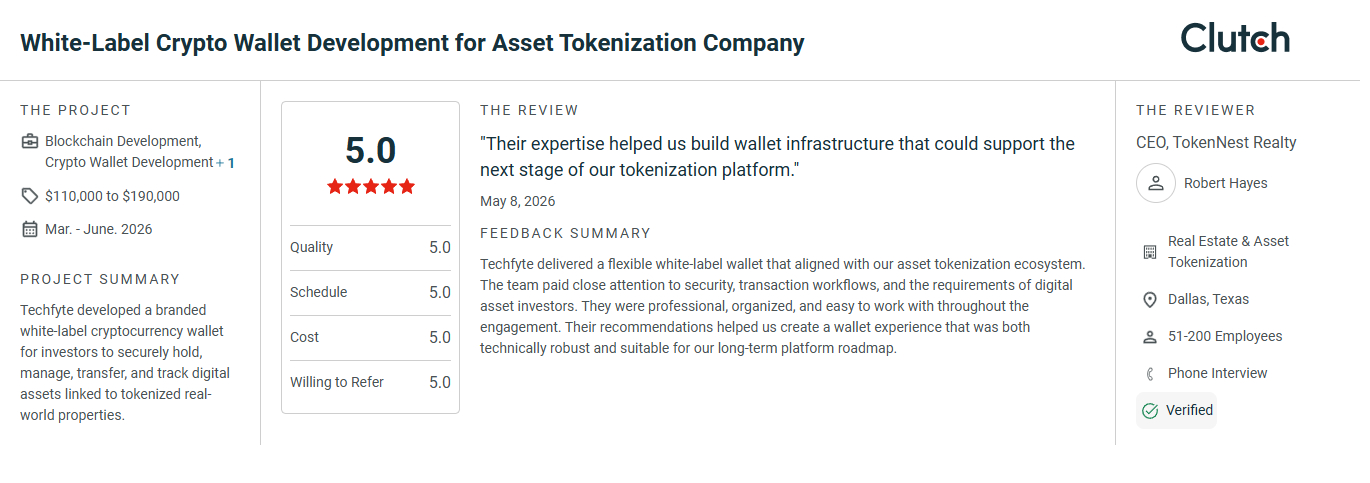
The process of building a wallet from scratch is technically challenging, time-consuming and expensive, as it requires the participation of blockchain engineers, mobile developers, backend architects, security auditors and infrastructure specialists working together across multiple chains. White-label wallets help businesses cut down on the cost of white label crypto wallet platform development, avoid months of infrastructure setup and get their secure branded wallet experiences to market faster. This is true for all sorts of platforms, including real estate tokenization platforms requiring compliant investor onboarding and agentic process automation for wallet orchestration.

12+ Month Builds
To launch a production-ready wallet, you need to hire dedicated blockchain engineers, mobile teams, backend architects, and multi-chain experts for custom wallet development.

$500k+ Cost Pressure
Additionally, security audits, multi-chain compatibility, dApp integrations, custody logic, and compliance procedures can all greatly increase the development costs of white-label wallets, often exceeding initial budgets.

Maintenance Never Stops
Teams building a white-label crypto wallet are trapped in an endless loop of RPC maintenance, network upgrades, chain compatibility, dependency patches and security patches.

Brand Trust Matters
A branded wallet experience improves long-term product engagement, retention and loyalty, while generic third-party wallets compromise user ownership.

Market Windows Close
Every month that you spend building infrastructure, is a month that you’re not launching crypto wallets, and that reduces your first-mover advantage and your ability to launch crypto wallets faster than your competitors.
Create Your Own MetaMask Clone Wallet Platform
Schedule a Free Product DemoKey Benefits of White Label Crypto Wallet Development
A white label crypto wallet development company enables businesses to launch secure, branded digital asset management solutions without building wallet infrastructure from the ground up. These solutions support AI-powered financial platforms, Web3 applications, and security tokenization ecosystems that require reliable wallet infrastructure and investor self-custody capabilities.

80% Faster Launch
Launch within 4-6 weeks as opposed to dedicating 12-18 months to the development of a custom wallet architecture, security logic, and multi-chain integrations.

70% Lower Cost
Instead of investing $500k+ in full custom engineering, wallet development expenses can be reduced through subscription or license-based deployment.

50+ Chain Support
Enhance the registration experience for Web3 users by incorporating pre-integrated support for Bitcoin, Ethereum, Solana, BSC, Polygon, and other significant blockchain networks.

Built-In dApp Browser
Allow users to access over 1,000 dApps through WalletConnect without abandoning your branded wallet environment.

Non-Custodial Access
By default, users have control over private keys, which assists your platform in preventing direct custody exposure and promoting secure asset ownership.

Biometric Authentication
FaceID and TouchID make transaction signing faster, safer, and more convenient for consumers across mobile wallet experiences.
Understanding How White-Label Wallets Work
A modular architecture that integrates ML pipeline development for transaction analytics and wallet infrastructure for secure blockchain connectivity is the foundation for comprehending the operation of white-label wallets.
Choose WaaS or WDK
Depending on the method of constructing a white-label wallet within your product hierarchy, choose between an API-based Wallet-as-a-Service model or an SDK-based Wallet Development Kit.
Brand UI Customization
Define the manner in which white-label wallets are customized under your brand by configuring the logo, colors, domain, app layout, onboarding screens, and interface flows.
Multi-Chain Configuration
Through pre-integrated chain modules and RPC connectivity, enable Bitcoin, Ethereum, Solana, BSC, Polygon, and over 50 other blockchain networks.
WalletConnect Integration
Utilize the built-in dApp browser support and WalletConnect to establish the integration of white-label wallets with dApps in the DeFi, NFT, gaming, and Web3 ecosystems.
Security & MPC Setup
Implement advanced transaction security by implementing non-custodial key management, encrypted recovery flows, biometric access, and optional MPC signature.
Deploy & Launch
Publish the wallet to iOS, Android, or web environments under your brand, with production-ready integrations, monitoring, and upgrade support.
Our White-Label Crypto Wallet Development Services
Our white label crypto wallet development services help businesses build secure, scalable, and fully branded wallet ecosystems. We combine advanced AI development and Web3 development services to deliver customizable wallet solutions designed for seamless blockchain connectivity, enhanced security, and long-term business growth.

White-Label Wallet Platform
Use your own branded Web3 wallet with custom UI, chain support, asset management, and modular feature controls. This wallet will be available on web, iOS and Android platforms.

Wallet-as-a-Service
Embed API-powered wallet infrastructure for account creation, asset transfers, signing transactions and connecting to the blockchain, without having to build backend infrastructure from scratch.

MPC Wallet Security
Protect user keys with institutional-grade security architecture, biometric access, encrypted signing protocols and multi-party computation.
dApp Browser Integration
You can enable WalletConnect-powered access to 1,000+ dApps, DeFi protocols, NFT marketplaces, and Web3 platforms right in the wallet.

DeFi Staking & Swap
Add DeFi wallet features to your branded wallet, such as portfolio tracking, yield aggregation, access to liquidity, staking, token swaps.

Fiat On-Ramp Integration
Let consumers buy crypto with third-party on-ramp providers, Apple Pay, Google Pay, bank transfers and credit cards.

NFT Gallery Management
Should be able to support the main blockchain networks for viewing NFTs, transferring them, viewing collections, displaying metadata and managing multi-chain NFTs.

Custom Compliance Tools
Partner with white-label wallet developers to build KYC/AML modules, transaction monitoring, risk assessment and compliance workflows for regulated markets.

Multi-Chain Asset Support
Manage digital assets, stablecoins, NFTs, and tokens on Ethereum, Solana, BSC, Polygon, Bitcoin and other major blockchain networks.
White Label Wallet Solutions by Crypto Wallet Infrastructure Use Case
As a white label crypto wallet provider, we facilitate a wide range of Web3 asset operations, including securities tokenization compliance and cross-chain smart contract interoperability.

Exchange-Branded Hot Wallet
Implement a non-custodial wallet within your exchange platform to enable users to manage assets with branded self-custody.
- Seamless login
- Multi-chain support
- Withdrawal aggregation
DeFi Protocol Wallet Extension
Launch a browser extension wallet that is branded and connected to your DeFi interface. This wallet will include native yield and protocol interaction features.
- Browser extension
- Yield dashboard
- One-click investing

Gaming Wallet with NFT Focus
Facilitate the storage, transfer, and trading of game assets by participants through an NFT-ready wallet that is integrated with marketplace systems.
- NFT management
- Gas optimization
- In-game currency

Enterprise Treasury Wallet
Ensure the security of corporate digital asset operations by implementing multi-signature controls based on MPC for treasury management and transaction approvals.
- Policy controls
- Approval workflows
- Audit trails

Tokenized Asset Investor Portal
Offer security token holders a compliant wallet experience that includes regulated asset access, investor verification, and restricted transfers.
- Whitelist only
- KYC integration
- Transfer rules

Embedded Fintech Wallet
For seamless access to digital assets, integrate crypto wallet functionality into fintech applications, neobanks, and payment platforms.
- Fiat on-ramp
- Stablecoin payments
- API integration
Launch your branded, non-custodial wallet with white label crypto wallet development solutions and multi-chain Web3 infrastructure
Industries We Serve with Crypto Wallet White-Label Solution
Our Crypto Wallet White-Label Solution is capable of supporting a wide range of digital asset ecosystems, from commodity tokenization platforms that require investor wallets to enterprise AI assistants that monitor transactions.

Cryptocurrency Exchanges
Cryptocurrency exchanges may provide users with branded self-custody wallets that enable them to withdraw assets, administer portfolios, access DeFi protocols, and maintain connectivity to the exchange ecosystem following trading activity.
- User retention
- Self-custody option
- DeFi gateway

DeFi Protocols & DAOs
Native wallets can be provided by DeFi protocols and DAOs to facilitate governance voting, yield monitoring, treasury visibility, staking access, liquidity participation, and a more seamless interaction with protocol-owned financial products.
- Governance UI
- Treasury view
- Yield dashboard

Gaming & Metaverse Platforms
Players can store NFTs, manage in-game currencies, transfer assets, claim rewards, and trade collectibles through a branded wallet that is connected to marketplace systems on gaming and metaverse platforms.
- Asset visibility
- Fast transfers
- Marketplace access

Token Issuers & RWA Platforms
Token issuers and RWA platforms can provide investors with secure purses for tokenized securities, real estate, commodities, and regulated assets that necessitate identity checks, transfer controls, and compliant ownership records.
- Compliance checks
- Transfer rules
- Investor portal

Fintech & NeoBanks
Fintech platforms and neobanks have the ability to integrate crypto self-custody into their existing fiat banking applications. This enables users to purchase, retain, transfer, and monitor digital assets from a single, unified financial interface.
- Fiat integration
- One-click buy
- Unified balance

Enterprise Blockchain Solutions
Enterprise blockchain teams have the ability to implement white-label wallets for crypto payroll, vendor payments, treasury operations, employee incentives, and internal asset movement. These wallets are compatible with policy-based approvals and auditable transaction procedures.
- Mass payouts
- Approval workflows
- Audit trails
Cryptocurrency Exchanges
Cryptocurrency exchanges may provide users with branded self-custody wallets that enable them to withdraw assets, administer portfolios, access DeFi protocols, and maintain connectivity to the exchange ecosystem following trading activity.
- User retention
- Self-custody option
- DeFi gateway
DeFi Protocols & DAOs
Native wallets can be provided by DeFi protocols and DAOs to facilitate governance voting, yield monitoring, treasury visibility, staking access, liquidity participation, and a more seamless interaction with protocol-owned financial products.
- Governance UI
- Treasury view
- Yield dashboard
Gaming & Metaverse Platforms
Players can store NFTs, manage in-game currencies, transfer assets, claim rewards, and trade collectibles through a branded wallet that is connected to marketplace systems on gaming and metaverse platforms.
- Asset visibility
- Fast transfers
- Marketplace access
Token Issuers & RWA Platforms
Token issuers and RWA platforms can provide investors with secure purses for tokenized securities, real estate, commodities, and regulated assets that necessitate identity checks, transfer controls, and compliant ownership records.
- Compliance checks
- Transfer rules
- Investor portal
Fintech & NeoBanks
Fintech platforms and neobanks have the ability to integrate crypto self-custody into their existing fiat banking applications. This enables users to purchase, retain, transfer, and monitor digital assets from a single, unified financial interface.
- Fiat integration
- One-click buy
- Unified balance
Enterprise Blockchain Solutions
Enterprise blockchain teams have the ability to implement white-label wallets for crypto payroll, vendor payments, treasury operations, employee incentives, and internal asset movement. These wallets are compatible with policy-based approvals and auditable transaction procedures.
- Mass payouts
- Approval workflows
- Audit trails
Launch Your Branded Wallet Without Infrastructure Delays
Build Your Web3 WalletOur White Label Crypto Wallet Development Process
Our white label crypto wallet development process combines secure wallet infrastructure, customizable branding, and cross-chain smart contract patterns to help businesses launch production-ready wallets efficiently. We follow a structured methodology focused on security, scalability, seamless blockchain connectivity, and reliable performance across Web3 ecosystems.

Brand & Requirements
Before configuration commences, establish the logo, colors, domain, target chains, user roles, and essential wallet features.
UI Customization
Configure multi-chain RPC endpoints, enable WalletConnect-powered dApp access, and apply branding through the dashboard.


Security & Compliance
Configure KYC/AML workflows, enable fiat on-ramp, implement secure transaction approval policies, and implement MPC key management.
Testing & Launch
Completion of a security audit, production testing, app store preparation, and iOS/Android submission with post-launch support.

Why Choose Techfyte for White-Label Crypto Wallet Development
Choose a white label crypto wallet development company with proven Web3 and wallet expertise to accelerate the launch of secure, branded, and multi-chain wallet platforms. Our experienced team combines deep blockchain knowledge with scalable wallet infrastructure to help businesses deliver reliable digital asset experiences faster.

50+ Blockchain Support
Broad asset accessibility is guaranteed by pre-integrated support for Bitcoin, Ethereum, Solana, BSC, Polygon, Arbitrum, Base, and other digital assets.

Enterprise-Grade MPC Security
Non-custodial key management with optional multi-signature, policy controls, and secure transaction approval workflows in place.

Fiat On-Ramp Included
Allow for the purchase of cryptocurrency through Apple Pay, Google Pay, bank transfers, and credit cards without the need for additional integration.
What Clients Say