Blockchain Governance Frameworks for Enterprise Control
We design secure, auditable governance structures that help enterprises use blockchain for governance, reduce risk, clarify accountability, and support compliant decentralized governance solutions.
- Clear decision rights defined
- On-chain policy enforcement enabled
- Audit-ready compliance controls built











What Is Blockchain Governance?
Blockchain governance frameworks shape how organizations agree, act, and adapt on shared networks. Instead of decisions moving through slow approval chains, a decentralized governance system embeds authority directly into the network, allowing stakeholders to participate through clearly defined, enforceable rules. Traditional governance often depends on centralized control, manual processes, and limited visibility. With governance smart contracts, blockchain based decision making becomes predictable and traceable, reducing ambiguity around who approved what and why. This approach supports organizational transparency with blockchain by ensuring policies are executed consistently and recorded immutably, while still aligning with enterprise risk and compliance expectations.
- Automated decision execution
- Shared governance accountability
- On-chain policy enforcement
Get Your Governance Model Designed
Start Governance Design SessionWhy Organizations Need Blockchain Governance?
As blockchain networks grow, governance often becomes the hidden friction point. Decisions still depend on emails, spreadsheets, and approval chains that sit outside the system itself. This creates gaps between how rules are defined and how they are enforced. When transparency is limited and audit trails are incomplete, teams spend more time explaining decisions than moving the business forward. Centralized control adds another layer of strain. A small group becomes responsible for approvals, slowing progress and increasing operational risk. Decision cycles stretch, partners lose visibility, and compliance teams struggle to prove consistency across environments. Blockchain governance brings structure back into focus by making rules clear, actions traceable, and accountability shared.

Manual Process Overhead
Governance tasks handled off-chain increase delays, introduce errors, and make it harder to maintain consistency as networks and participants scale.

Limited Decision Visibility
Without on-chain records, stakeholders lack clarity into approvals, changes, and accountability across teams, partners, and operational environments.

Centralized Control Risks
Overreliance on central authorities creates bottlenecks, increases trust dependency, and weakens resilience in distributed business ecosystems.

Compliance Execution Gaps
Policies enforced manually are difficult to validate, making regulatory alignment harder as rules, jurisdictions, and reporting requirements evolve.
How Blockchain Governance Frameworks Works?
Blockchain governance frameworks translate defined rules, roles, and decision structures into coordinated execution across enterprise networks with transparency, consistency, and controlled participation.
Governance Rules Setup
Organizations define decision rules, approval thresholds, and responsibility boundaries before network participation begins, ensuring clear structure for all governance activities across systems.
Role Assignment Structure
Participants are assigned specific governance roles like voters, approvers, and auditors, ensuring responsibilities are clearly distributed across the enterprise network environment.
Proposal Submission Flow
Stakeholders submit governance proposals through predefined channels where each request follows a structured path for review, validation, and consideration.
Consensus Decision Process
Decisions are finalized through voting or defined approval logic, ensuring outcomes reflect agreed governance rules rather than informal or manual coordination methods.
Automated Execution Layer
Once approved, governance outcomes trigger automated system actions, ensuring decisions are executed without delays, manual steps, or coordination gaps between teams.
Audit Trail Recording
Every governance action is recorded permanently, creating a transparent and verifiable history that supports accountability, compliance checks, and enterprise oversight requirements.
Core Features of Blockchain Governance Frameworks
Blockchain governance frameworks help enterprises structure decision-making and accountability while ensuring transparent, compliant coordination across decentralized systems without relying on fragmented manual approval processes.

Permissioned Decision Access
Defines governance roles such as voters, approvers, and auditors so only authorized stakeholders can participate in decisions across enterprise blockchain governance systems.

Smart Governance Rules
Implements predefined rules for voting, approvals, and quorum requirements ensuring governance decisions execute consistently without manual interpretation or process delays.

Immutable Decision Records
Stores every governance action permanently, giving enterprises a reliable and tamper-proof history of approvals, changes, and decision outcomes across networks.

Stake Based Voting Models
Aligns voting power with stakeholder roles or participation levels, ensuring governance reflects influence while maintaining transparent and balanced decision-making structures.

Automated Governance Workflows
Triggers predefined actions automatically after governance decisions are approved, reducing coordination delays and ensuring faster execution across distributed enterprise environments.

Embedded Compliance Controls
Integrates compliance rules directly into governance processes, ensuring policies are consistently applied and regulatory requirements are met without manual enforcement steps.
Our Blockchain Governance Framework Services
A structured set of services designed to help enterprises implement blockchain governance frameworks that align decision-making and accountability with transparent, compliant execution across decentralized systems.
Governance Strategy Design
Enterprise workflows, stakeholder structures, and decision pathways are mapped to establish governance models that reflect operational reality and compliance expectations across the organization.

Decision Rights Modeling
Authority distribution is defined across stakeholders to ensure voting power, approval rights, and oversight responsibilities remain clear, structured, and consistently enforceable.

Smart Contract Governance
Governance rules are encoded into smart contracts, enabling automated execution of voting logic, quorum conditions, and approval workflows with predictable and tamper-resistant outcomes.

Platform Integration Setup
Governance frameworks are integrated with enterprise systems such as ERP, CRM, and APIs to ensure seamless data flow and aligned execution across operational environments.

Identity Access Management
Secure identity controls are implemented to regulate governance participation, ensuring only verified roles can initiate, approve, or audit decision-making activities.

Audit Trail Architecture
Immutable logging structures are established to record every governance action, enabling transparent tracking, verification, and audit-ready reporting across enterprise systems.

Compliance Framework Alignment
Regulatory requirements are embedded into governance structures to ensure consistent enforcement, cross-jurisdiction alignment, and continuous compliance across enterprise operations.

Workflow Automation Design
Governance outcomes are converted into automated workflows that execute across systems without manual coordination, improving speed, consistency, and operational efficiency.

Deployment Lifecycle Support
Governance frameworks are deployed, monitored, and optimized for long-term stability, security, and adaptability as enterprise requirements evolve.
Industry Specific Applications for Blockchain Governance Frameworks
Blockchain governance frameworks are applied across industries where decisions, compliance, and accountability must remain transparent, structured, and verifiable across multiple stakeholders and operational environments.

Corporate Board Decisions
Boardrooms use blockchain-based governance to formalize high-impact decisions such as approvals, restructures, and policy changes, ensuring every resolution is permanently recorded and traceable across leadership and audit layers.
- Immutable resolution records
- Verified board voting logs
- Audit-ready decision history
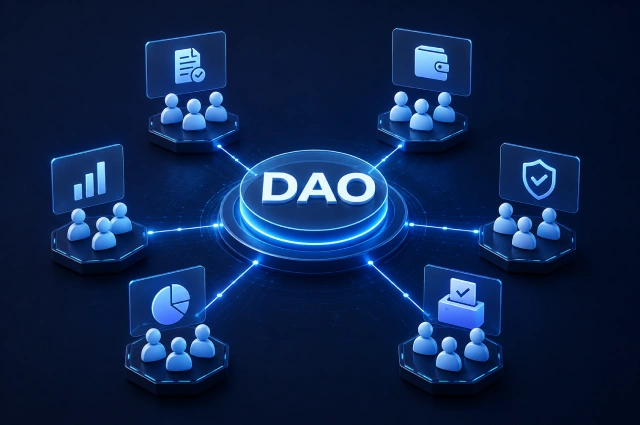
DAO Governance Execution
Decentralized organizations coordinate collective decisions through token-based governance, where proposals move from community discussion to automated execution without central oversight or manual enforcement layers.
- Token-driven voting rights
- Automated proposal execution
- Transparent community governance

NGO Funding Allocation
Non-profits manage donor contributions and fund distribution through structured governance systems that ensure allocation decisions are transparent, verifiable, and aligned with donor intent and compliance requirements.
- Traceable donation flow
- Verified fund usage
- Transparent allocation records

Government Policy Voting
Public sector governance uses blockchain systems to structure policy approvals and voting processes, reducing ambiguity in execution while maintaining secure, auditable records of every administrative decision.
- Secure policy approvals
- Tamper-resistant voting records
- Public audit transparency

Supply Chain Enforcement
Distributed supply chain networks apply governance rules to enforce procurement standards, logistics policies, and partner compliance, ensuring every operational decision remains traceable across organizations and jurisdictions.
- Supplier compliance enforcement
- End-to-end traceability logs
- Verified logistics decisions

Consortium Decision Networks
Industry consortia coordinate shared governance across competing or collaborating organizations, where decisions on standards, operations, and partnerships are executed through structured and jointly controlled governance frameworks.
- Multi-entity decision alignment
- Shared governance authority
- Structured consortium voting
Corporate Board Decisions
Boardrooms use blockchain-based governance to formalize high-impact decisions such as approvals, restructures, and policy changes, ensuring every resolution is permanently recorded and traceable across leadership and audit layers.
- Immutable resolution records
- Verified board voting logs
- Audit-ready decision history
DAO Governance Execution
Decentralized organizations coordinate collective decisions through token-based governance, where proposals move from community discussion to automated execution without central oversight or manual enforcement layers.
- Token-driven voting rights
- Automated proposal execution
- Transparent community governance
NGO Funding Allocation
Non-profits manage donor contributions and fund distribution through structured governance systems that ensure allocation decisions are transparent, verifiable, and aligned with donor intent and compliance requirements.
- Traceable donation flow
- Verified fund usage
- Transparent allocation records
Government Policy Voting
Public sector governance uses blockchain systems to structure policy approvals and voting processes, reducing ambiguity in execution while maintaining secure, auditable records of every administrative decision.
- Secure policy approvals
- Tamper-resistant voting records
- Public audit transparency
Supply Chain Enforcement
Distributed supply chain networks apply governance rules to enforce procurement standards, logistics policies, and partner compliance, ensuring every operational decision remains traceable across organizations and jurisdictions.
- Supplier compliance enforcement
- End-to-end traceability logs
- Verified logistics decisions
Consortium Decision Networks
Industry consortia coordinate shared governance across competing or collaborating organizations, where decisions on standards, operations, and partnerships are executed through structured and jointly controlled governance frameworks.
- Multi-entity decision alignment
- Shared governance authority
- Structured consortium voting
Explore Governance Use Cases Today
Request Industry ConsultationGovernance Framework Implementation Flow
A controlled execution flow that translates governance requirements into structured blockchain systems with precision design, secure implementation, and lifecycle-managed deployment across enterprise environments.

Governance Blueprint Design
Stakeholder roles, decision logic, and compliance requirements are mapped into a structured governance blueprint that defines how the system will operate before development begins.
Smart Contract Buildout
Governance rules are encoded into smart contracts and connected with enterprise systems, enabling deterministic execution of decisions without manual intervention or operational ambiguity.


System Deployment Control
The finalized governance framework is deployed with validation layers, security checks, and continuous oversight to ensure stable performance and controlled system evolution over time.
Why Choose Us as Governance Blockchain Platform?
A governance-first blockchain platform approach built for enterprises that need structured decision systems, embedded compliance, and audit-ready control operating at protocol level with long-term adaptability.
Protocol-Level Governance Design
Governance logic is engineered directly at Layer 1 protocol depth, enabling precise control over decision execution, system behavior, and enterprise-scale operational consistency.

Compliance by Architecture
Regulatory frameworks such as GDPR, SOC2, and ISO are embedded into the system design itself, ensuring compliance is continuously enforced rather than externally managed.

Audit-Grade Transparency
Every governance action is captured through verifiable, tamper-resistant records, creating a transparent operational layer that supports enterprise audits and accountability at scale.