



Key Takeaways
- Multichain wallets unify multiple blockchain networks into a single interface, allowing users to manage assets, transactions, and dApps without constantly switching wallets or chains.
- A well-designed multichain wallet improves user retention and engagement by reducing friction, simplifying onboarding, and delivering a seamless Web3 experience.
- Key features of enterprise-grade multichain wallets include native multi-chain support, secure key management, smart contract integration, and cross-chain transaction handling.
- Choosing the right development partner is critical, with expertise in wallet architecture, security auditing, regulatory compliance, and post-launch maintenance being major evaluation factors.
- Multichain wallets play a central role in DeFi, NFT, gaming, and marketplace ecosystems, enabling users to access services across multiple blockchains from a single dashboard.
- The future of wallet development is being shaped by chain abstraction, account abstraction (ERC-4337), and compliance-ready infrastructure, making wallets more secure, user-friendly, and scalable for global adoption.
Introduction
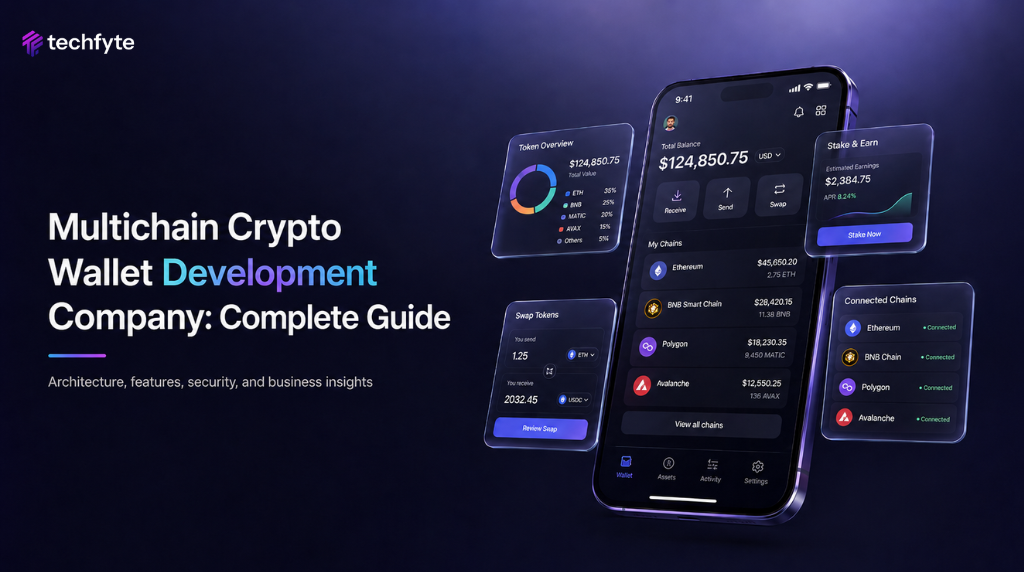
A multichain crypto wallet development company specializes in creating wallet solutions that enable users and enterprises to interact with multiple blockchain networks through a single interface. By designing seamless multichain wallet architecture, these companies unify fragmented Web3 experiences, allowing users to manage, store, and transact digital assets across diverse networks without switching between separate wallets. Their core value proposition lies in enhancing accessibility, reducing friction, and providing a secure, scalable platform for multi-network crypto management. For a deeper dive into comprehensive service offerings, explore our complete guide.
What Is Multichain Crypto Wallet Development?
Multichain crypto wallet development is the process of creating digital wallets that can operate with multiple blockchains and multiple assets. With traditional single-chain wallets (like the original Ethereum-only mode of MetaMask), users can only interact with one blockchain at a time. But multichain wallets allow users to interact with multiple networks at once like Ethereum, Binance Smart Chain, Solana, and Polygon all in one screen.
That’s different from a cross-chain bridge. Bridges facilitate asset transfer between blockchains but do not offer a single user interface or complete control of all assets. The primary goal of multichain wallet development is to merge different chains into one experience, so users and businesses can check their balances, transact and interact with decentralized apps without any glitches.
This is especially useful for organizations that depend on enterprise blockchain solutions, as it allows for easy management of digital assets across networks without compromising their security or usability. Businesses looking to build secure and scalable wallet ecosystems often partner with experienced providers offering crypto wallet development services tailored for multichain asset management, DeFi integration, and enterprise-grade security.
A multichain crypto wallet is a single digital wallet that works across multiple blockchain networks. That means users can keep, send and receive assets across many chains. It brings multi-chain asset management into a single, secure platform for people and companies to use.
Why Choose a Multichain Wallet for Web3 Products
Implementing a multichain wallet delivers measurable benefits for Web3 products and platforms:
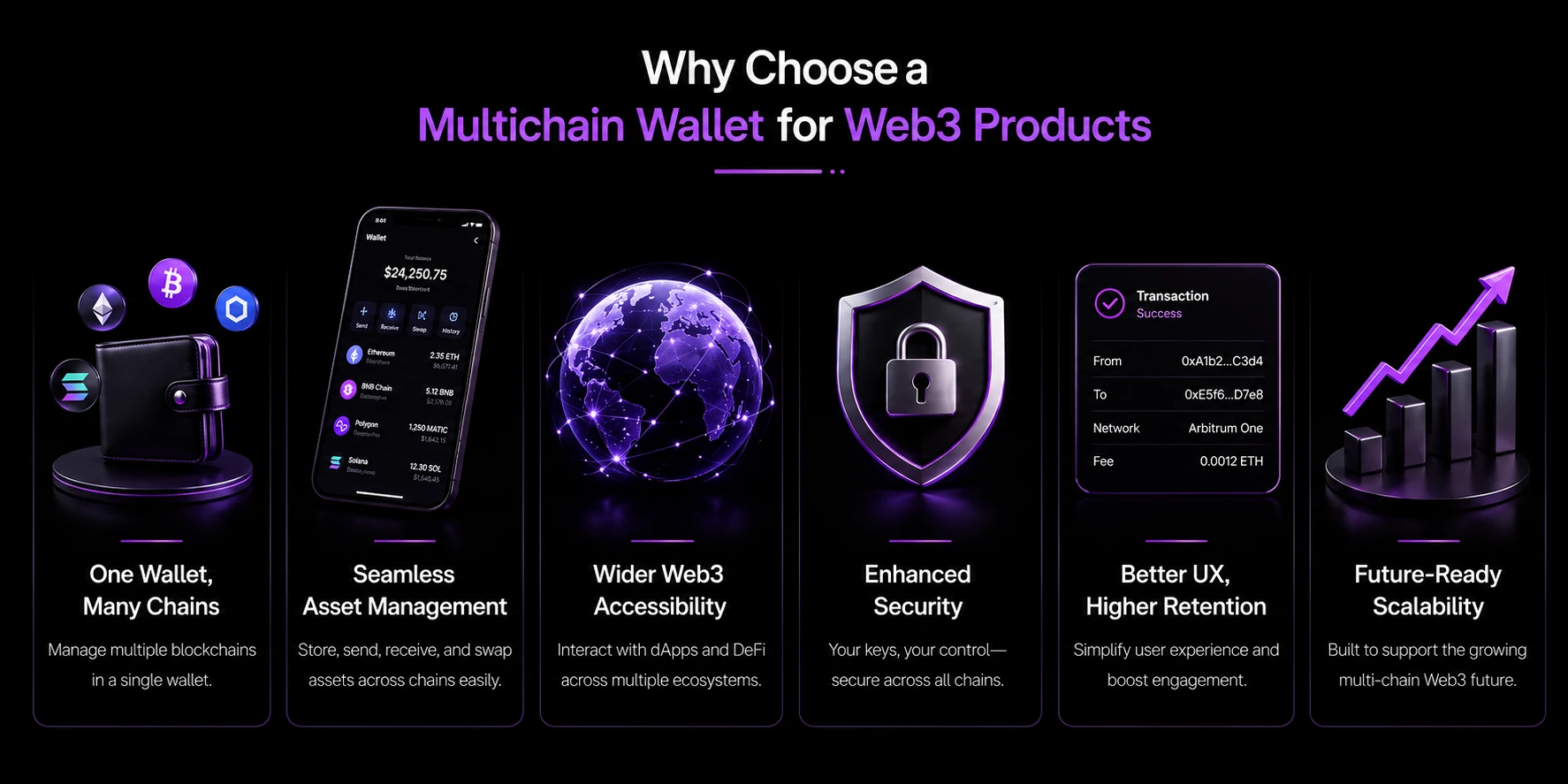
- Boost User Retention – A seamless wallet experience reduces fragmentation and onboarding times, a known blocker for most people to adopt multi-chain Web3 environments.
- Expand Your Addressable Market – Multi-chain support including Ethereum, Solana and BNB Chain allows you to reach more users over a wider set of ecosystems.
- Seamless UX with Wallet Interoperability Design – No more manual chain switching, users can connect to dApps on multiple networks. That solves one of the big UX problems in Web3.
- Simplified Cross‑Chain Transaction Handling – With built-in interoperability, users can maintain and transfer assets across chains without the need for any additional tools or links from a third party. This is in line with the trend of integrated multi-chain tools. Advanced wallets often leverage cross-chain smart contract development to securely coordinate transactions and asset interactions across multiple blockchain networks.
- Greater Engagement Across Ecosystems – Multichain wallets democratize access to DeFi, NFTs, Games and other decentralized services across chains by hiding the complexity of chains.
Core Services Offered by Multichain Wallet Dev Companies
The best companies developing multichain wallets offer a full range of services to meet the needs of businesses, including:
- Discovery & architecture design: Set goals, find supported chains, architect a strong multichain wallet that can handle a lot of users.
- UX/UI Design: Create intuitive interfaces that abstract away the complexities of network IDs, gas fees, and chain details, delivering a seamless user experience. Research shows multi-chain engagement is highly affected by wallet design with the user in the center.
- Full-Stack Development: The backend handles node interaction, RPC connections and safe key management. The frontend displays balances and transaction flows in real time. For enhanced security and user experience, many organizations adopt MPC wallet development to eliminate single points of failure associated with traditional seed phrase management.
- Smart Contract Security & Auditing: Ensure that the wallet’s logic and interfaces are compliant with industry standards and are not breakable. Partnering with a trusted smart contract audit company helps identify vulnerabilities before deployment and strengthens wallet security across supported networks.
- Updating & Maintenance: We continuously help you with updates of your wallet, so it always has the latest chains, protocols and security improvements.
- White‑Label & Custom Development: These services help create wallets that are usable and brandable for the masses. They offer custom builds and enterprise level crypto wallet solutions.
How to Choose the Right Development Company
The right partner is the key to creating a secure, scalable, and user-friendly solution for multichain wallet development.
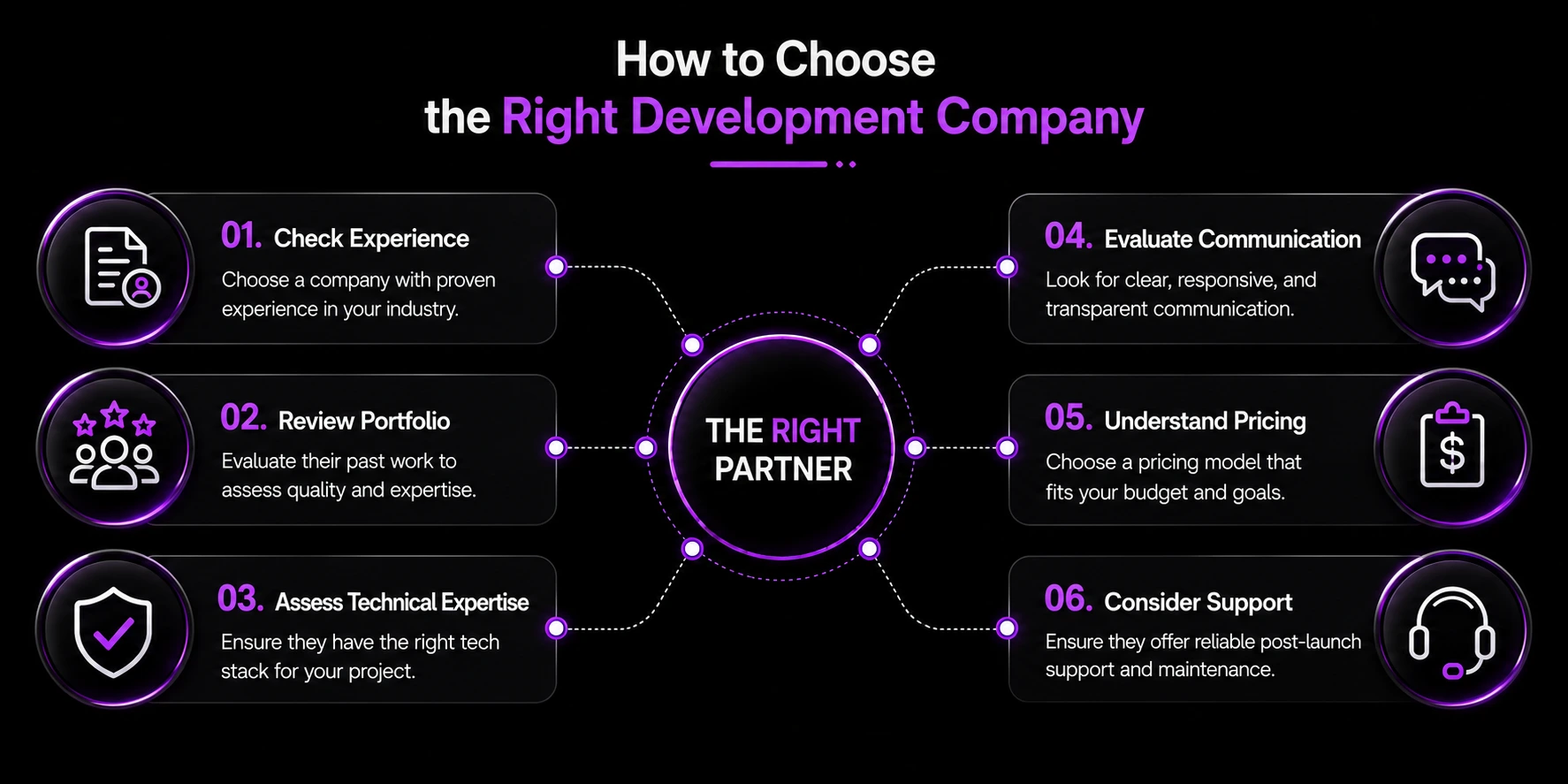
If you are looking for potential vendors, consider:
- Expertise in Multichain Wallet Architecture: Ensure the company is well versed in the design of multichain wallets including node management, transaction routing and the ability to integrate with other blockchains. Wallets that can’t handle complex cross-chain transactions are likely to be unreliable if people only know the basics or depend on open-source forks.
- Cross‑Chain Transaction Handling: Be aware of companies that only turn regular wallets into ones that work on multiple chains. Cross-chain activities need to be handled carefully for multichain solutions to work well. This includes managing gas efficiently, ensuring the network can fail over, and keeping all blockchains in the same state.
- Post-Launch Support & Maintenance: To always have an up-to-date strong wallet you should add new chains, fix security holes, and keep up with changing protocols. Post-launch support is vital to ensuring speed, reliability and compliance.
- Regulation Awareness (GEO): KYC/AML rules for crypto wallets can be different depending on the region. If you work with a company that knows these law details, your wallet will work fine where you want it to.
A reliable development partner should also have experience in chain abstraction development, enabling users to interact across networks without manually switching blockchains.
Multichain Wallet Providers: Feature Comparison
| Feature | Standard Wallet Fork | Custom Multichain Development (Techfyte) |
| Architecture | Monolithic (Single chain adapted) | Microservices (True multichain interoperability design) |
| Key Management | Standard Seed Phrase | Advanced MPC / Account Abstraction |
| UI/UX | Generic Template | Custom multichain crypto wallet UI/UX |
| Asset Support | Limited bridging | Native multi-chain asset support |
| Integration | Basic WalletConnect | Deep smart contract integration for wallets |
Use Cases: Successful Multichain Wallet Launches
With unified multichain wallets, Techfyte has helped businesses in a wide range of fields fix fragmented user experiences. Take a look at these possible but fictional use cases:
- Fintech Startup: A FinTech website had trouble with users who held assets on both Ethereum and Binance Smart Chain. Techfyte created a multichain wallet architecture that lets users manage all of their assets from a single interface. This makes retention and engagement much higher.
- Blockchain Gaming Platform: A game company needed to support assets that worked with both Solana and EVM so that players could buy things in games and interact with NFTs. Techfyte made a wallet interoperability design that supported multiple chains of assets. This made it easier to get started and made games smooth.
- Decentralized Marketplace: A marketplace had broken DeFi connections that made it hard for users to keep track of multiple wallets and bridges. The answer was a custom multichain wallet that could store assets on multiple chains and let users easily move between protocols.
The problem in all of them was that the user groups were broken up and the networks weren’t connected. The answer was always the same: a single, easy-to-use wallet interface that hides the complexity of the chain while keeping security and business blockchain solutions compliant.
Multichain Wallet Integration with DeFi & dApps
These days, multichain wallets let you get into the decentralized finance environment. Because they directly support smart contracts, these wallets let users:
- From a single dashboard, you can access complicated yield farming strategies and staking possibilities across many chains.
- You can use DeFi protocols on Ethereum, Solana, Polygon, and Binance Smart Chain without having to move networks or wallets.
- By running atomic transactions across chains, you can keep assets in sync and minimize the need for human intervention.
It is very important for businesses to be able to connect wallets and dApps while keeping the user experience the same. Wallets can be the core of cross-chain DeFi tactics when smart contracts are integrated into them. This gives users real-time control over liquidity, lending, and staking positions without having to switch between different platforms.
See How We Build Secure Crypto Wallets in Real Projects.
Enterprises often combine wallet infrastructure with DeFi staking platform development to offer users seamless access to staking and yield-generating opportunities.
Future of Multichain Wallet Development (2026 & Beyond)
The next big thing in wallets is chain abstraction and account abstraction:
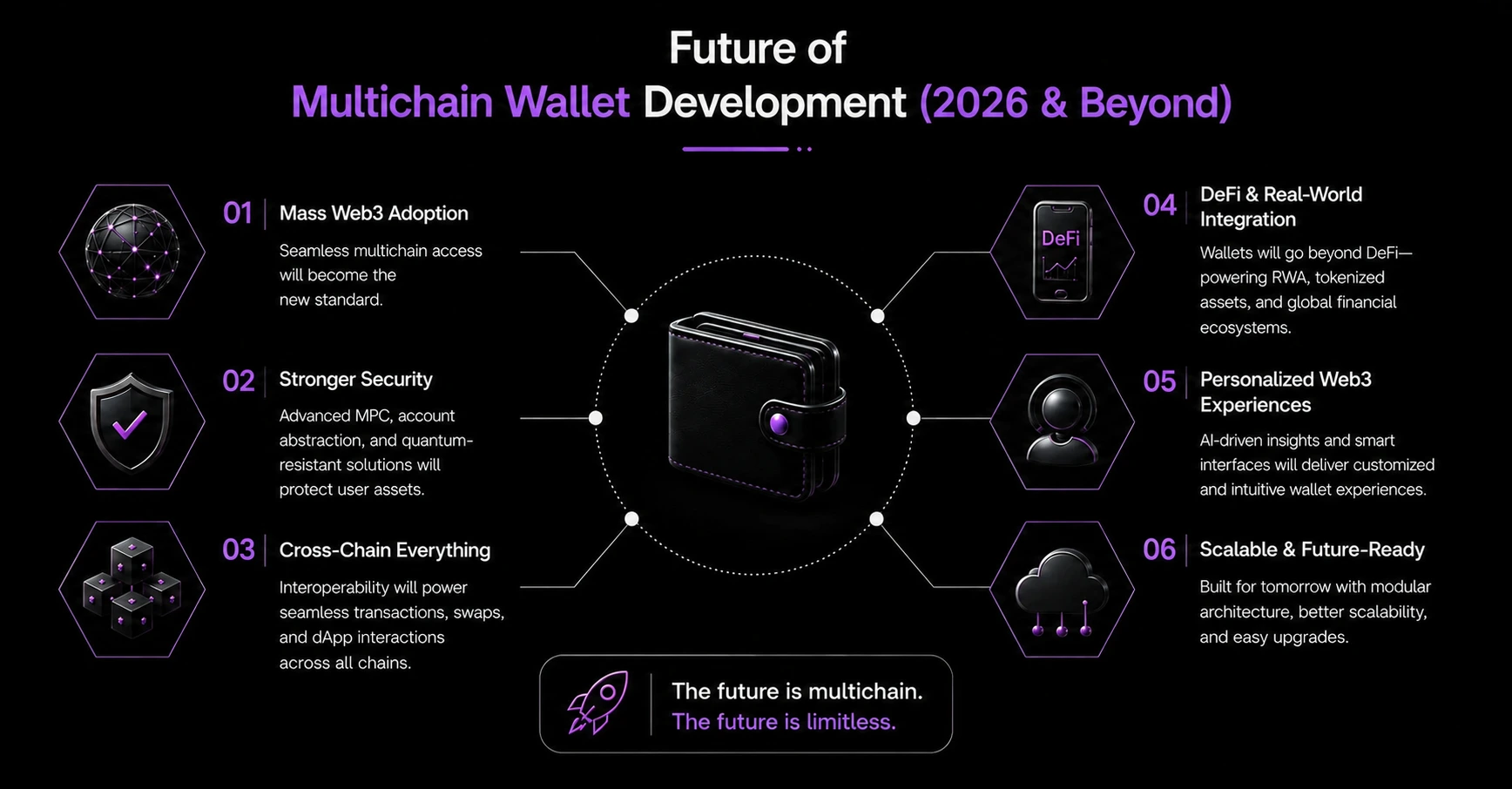
- Chain Abstraction: Wallets will abstract chains so that users will interact with assets, dApps and DeFi protocols without ever knowing what blockchain a transaction is touching.
- Account Abstraction (ERC-4337) Going Multichain: removing an account Going multichain: smart accounts with programmable logic will be the norm on multiple chains. This will result in better security and the ability to do batch transactions and gasless processes.
Enterprise operations around the globe will be driven by regulatory issues. MiCA brings more clarity for the EU, but US frameworks are still evolving. Enterprise-grade crypto wallet solutions will need compliance tools in 2026. Businesses will require technically advanced wallets that are also rules aware, enabling their use cross borders.
Chainalysis notes that global usage trends are accelerating and businesses are showing more interest in multichain assets. This demonstrates the need for wallets that are secure, scalable and compliant.
Organizations exploring intelligent financial applications can further enhance wallet functionality through integrated AI blockchain solutions that automate decision-making and transaction workflows.
Concluding Note
Multichain wallets are now a must-have for businesses, companies and Web3 products aiming to deliver a seamless, secure and scalable experience across multiple blockchains. The right infrastructure ensures more users, a bigger market and future-proof growth, from making sure wallets can talk to each other to making sure cross-chain transactions are dealt with safely.
Partnering with a reputed company like Techfyte gets you complete support in creating a custom multichain wallet, designing the user interface and user experience (UI/UX), integrating smart contracts, and making sure that the company follows all the rules. Techfyte can help your company set up a secure and user-friendly multichain wallet that fits your users’ needs and your business goals. Discover our complete range of enterprise blockchain solutions.
FAQs About Multichain Crypto Wallet Development
1. What is a multichain crypto wallet development company?
A multichain crypto wallet development company builds wallets that support multiple blockchains through a single interface, enabling seamless asset management, cross-chain transactions, and integrated dApp interactions.
2. What features should a multichain wallet have?
Core features include multi-chain asset support, cross-chain transaction handling, smart contract integration, secure key management, wallet interoperability, and a user-friendly UI/UX.
3. How much does multichain wallet development cost?
Development costs vary based on complexity, supported chains, security features, and integrations, typically ranging from $50,000 to $250,000+ for enterprise-grade solutions.
4. Which blockchains can a multichain wallet support?
Most wallets support Ethereum, Solana, Binance Smart Chain, Polygon, Avalanche, and other EVM-compatible and high-performance networks. Custom wallets can add additional chains based on business needs.
5. How long does it take to develop a multichain wallet?
Timeline depends on scope, features, and integrations, generally ranging from 4–6 months for a minimum viable product to 8–12 months for full enterprise-grade solutions.
6. How do multichain wallets handle security?
Security is managed through advanced key management (MPC, account abstraction), encryption, two-factor authentication, and secure backend integration with blockchain nodes.
7. Can multichain wallets integrate with DeFi apps?
Yes. Multichain wallets can connect to DeFi protocols, enabling staking, yield farming, lending, and other DeFi functionalities across multiple blockchains.
8. What makes a good multichain wallet?
A good wallet combines intuitive UI/UX, strong security, seamless cross-chain functionality, wide blockchain support, and responsive post-launch maintenance.
9. What is the difference between cross-chain and multichain wallets?
Cross-chain tools transfer assets between chains but usually require separate wallets, whereas multichain wallets natively manage multiple chains through a unified interface.
10. Why is multichain wallet architecture important for scalability?
Proper multichain wallet architecture enables simultaneous network interactions, reduces transaction latency, supports future chain integrations, and ensures smooth performance as user and asset volume grows.
