Hybrid Crypto Exchange Development Company
Combine the speed of centralized exchanges with the security of decentralized systems to deliver the best trading experience.
- CEX Speed + DEX Security
- High Liquidity Access
- Self-Custody Trading
- Multi-Chain Support










What is a Hybrid Crypto Exchange?
A Hybrid Crypto Exchange (HCEX) has both the speed and ease of use of a controlled exchange (CEX) and the safety and openness of a decentralized exchange (DEX). Hybrid exchanges use blockchain technology and smart contracts to make trades go quickly and handle assets without keeping them. Hybrid exchanges combine predictive analytics for market data with Securities Tokenization to issue assets. This makes them the perfect mix of controlled speed and decentralized security.
- Off-Chain Matching
- On-Chain Settlement
- Non-Custodial Trading
- Liquidity Aggregation
Why Choose a Hybrid Exchange Over Pure CEX or DEX?
There are security risks with pure controlled exchanges (CEX), and decentralized exchanges (DEX) have trouble with liquidity and transaction speed. Hybrid exchanges take the best parts of both and offer scalable options that fix these problems well. Hybrid exchanges solve the problem that pure CEXs and DEXs have with balancing security and liquidity. They do this by using agent-based process automation for deal execution and self-custody Wallet Infrastructure.

No Exchange Custody Risk
Users keep their funds in wallets, so there is no chance of exchange hacks or assets being frozen, which is a typical flaw in CEXs.

CEX-Like Speed
Hybrid platforms can process more than 1,000 orders per second thanks to off-chain matching. This gives high-frequency traders the speed they need while keeping decentralized security.

Better Liquidity
By combining liquidity from both CEX order books and DEX pools, hybrid exchanges provide better market depth and cut down on downtime.

Regulatory Flexibility
Hybrid exchanges offer some KYC options, which is a big plus over totally decentralized platforms because it strikes a balance between following the rules and protecting users’ privacy.

Lower Trading Fees
Because hybrid architecture lowers running costs, exchanges can offer lower trading fees than pure CEXs. This means that users can save money by using exchanges.
Accelerate Your Hybrid Exchange Development
Discuss Your ProjectPopular Benefits of Hybrid Exchange
Hybrid exchange systems take the best parts of both centralized and decentralized exchanges and combine them into one seamless, safe, and fast trading experience.

Sub-Second Trade Execution
The centralized matching engine makes it as fast as the CEX, making sure that orders are filled in less than two seconds. This lets trade happen faster and creates more liquidity.

Zero Counterparty Risk
The "not your keys" risk is gone with non-custodial payment, giving users full control over their assets and lowering counterparty risk.

Cross-Chain Trading
With Cross-Chain Smart Contract integration, you can trade assets across multiple blockchains without any problems. This will give you more options for tokens and better pricing.

Smart Contract Security
Audited contracts make sure that everyone is treated fairly, so there is no need for middlemen in deals.

Transparent Order Book
An optional on-chain order book provides public verification, which makes the trade environment more transparent and trustworthy.

Institutional-Grade Security
Hybrid exchanges are safe for both individual and business traders because they use multi-factor authentication and integrate cold wallets to keep user funds safe.
Understanding How Hybrid Exchange Architecture Works
To understand how Web3 hybrid exchanges work, you need to look at both controlled and decentralized parts. These parts work together to make trading smooth and easy, while also making trading safer and more compatible.
User Wallet Connection
Traders join a non-custodial wallet like MetaMask, Ledger, or Trust Wallet to keep control of their assets while using the hybrid exchange platform.
Order Submission
Orders are sent to the central matching engine with a cryptographic signature that checks the order's validity and makes sure the transaction is complete.
Off-Chain Matching
The central engine handles and matches buy and sell orders very quickly, in less than a second. This lets trades happen quickly and efficiently, with few delays.
Smart Contract Locking
When two orders are matched, a smart contract locks assets to make sure that both parties are committed to the trade before it goes through. This process includes ML Pipeline Development for predicting prices.
On-Chain Settlement
An atomic swap between wallets is carried out by the smart contract. This makes sure that assets are moved safely and clearly, and the transaction is completed on the blockchain.
Liquidity Aggregation
The hybrid exchange aggregates liquidity from both CEX order books and DEX liquidity sources, offering deeper liquidity pools for better price discovery and reduced slippage.
Our Hybrid Exchange Development Services
Our Web3 Development Services for decentralized infrastructure and AI Development Services for market prediction work together to make hybrid exchange systems that are ready for use.

Custom Hybrid Exchange Platform
Complete creation of a custom hybrid exchange platform with a centralized matching engine and a smart contract settlement layer to make trade safe and smooth.

Centralized Matching Engine
A high-performance order book that can handle 1M+ orders per second, making sure that trades are executed quickly and smoothly for a better user experience.

Smart Contract Settlement Layer
Smart contracts for atomic swaps and escrow that have been checked out, so there is no need for middlemen and payment is safe and trustless.

Liquidity Aggregation Module
It links to CEX order books and DEX liquidity pools, which ensures deep liquidity and cuts down on slippage for better deal execution.

Multi-Chain Bridge Integration
Allow trading between blockchains using advanced bridge protocols like Wormhole, LayerZero, or CCIP. This will make it easy to do business between blockchain environments.

KYC/AML Compliance Module
Optional name verification with tiers of access that protects privacy and user control while still following the rules.

Admin Dashboard & Analytics
An easy-to-use admin dashboard lets you keep an eye on trade volume, user activity, and fees in real time, which gives you more control over the platform and helps it work better.

Wallet Connectivity Suite
Supports MetaMask, WalletConnect, Ledger, and more than 50 other wallets, making sure that all trades can use it easily and without any problems.

Scalable Infrastructure Solutions
Build a strong, scalable exchange architecture that can handle a lot of traffic. This will ensure that there is little downtime and the best performance even during busy trade times.
Hybrid Exchange Solutions by Use Case
Our Hybrid Exchange with DeFi integration has complete answers for many uses. It combines decentralized and centralized parts to create safe, effective, and expandable trading systems.

Centralized Matching + DEX Settlement
The CEX-speed order book and non-custodial smart contract settlement make deals safe, quick, and clear.
- Off-chain matching
- On-chain custody
- Atomic swaps

AMM + Central Limit Order Book
Automated market makers (AMMs) and a traditional order book make up a dual liquidity model that gives traders a lot of trading choices.
- AMM pools
- Limit orders
- Hybrid liquidity
Cross-Chain Trading Bridge
Allow trade between Ethereum, BSC, Solana, and Polygon from a single interface, which will make it easier for assets to work together.
- Multi-chain support
- Cross-chain swaps
- Unified balance

Institutional Custody Integration
Dynamic order routing between CEXs and DEXs to get the best performance and reduce slippage as much as possible.
- MPC wallets
- Cold storage
- Institutional API

AI-Powered Liquidity Routing
Dynamic order routing across CEXs and DEXs to ensure the best execution and minimize slippage.
- Best execution
- Slippage reduction
- Smart routing

Regulatory Compliance & KYC/AML
KYC and AML compliance features that work well together to make sure safe onboarding and dealing of regulated assets.
- Tiered KYC levels
- AML compliance
- Regulatory reporting
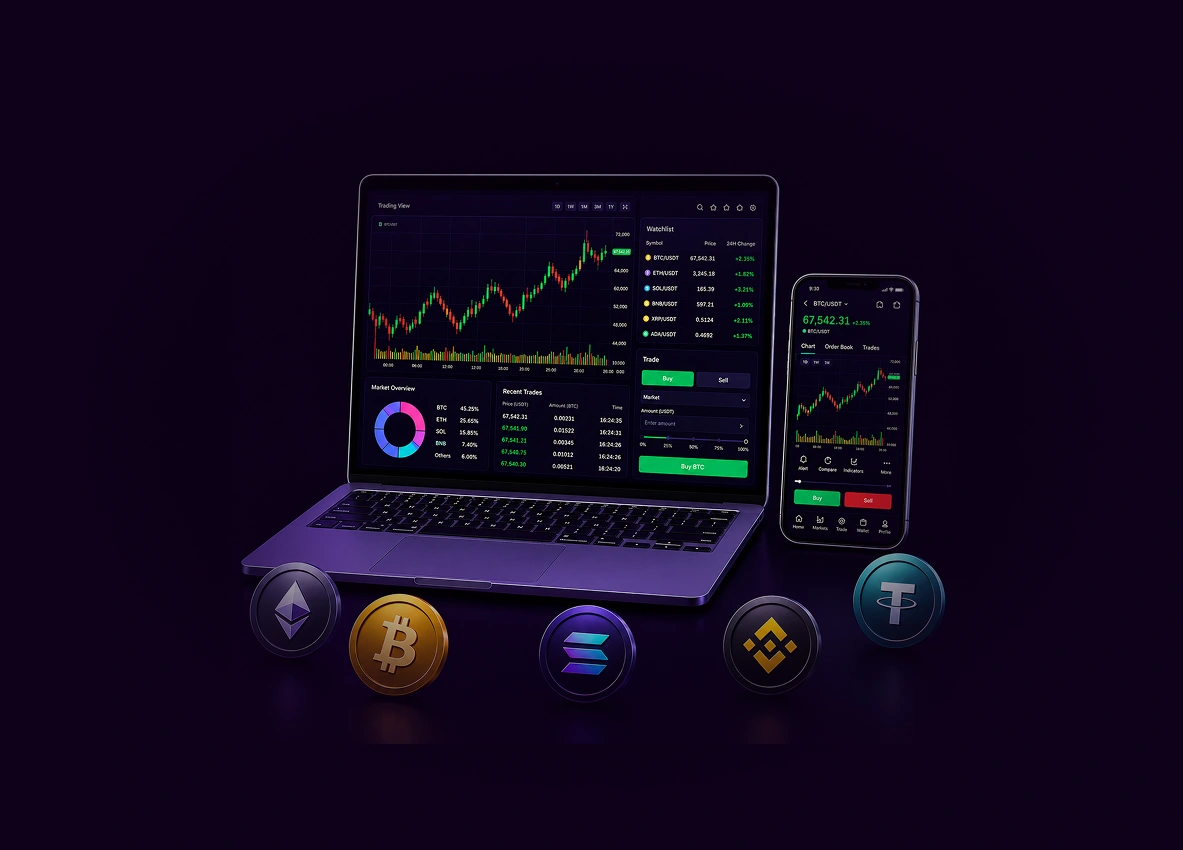
Crypto Exchange Platform
A powerful cryptocurrency trading platform designed for secure transactions, real-time market data, and seamless digital asset exchange.
- Real-time trading charts and analytics
- Fast and reliable order execution
- Simple and intuitive trading interface

Industries Our Hybrid Exchange Development Serve
Our Enterprise Hybrid Exchange deployment offers custom solutions for many different industries, meeting the specific needs of each market participant with safe, flexible, and effective trading systems.

Cryptocurrency Exchanges
To make trading easier for high-volume traders, release hybrid systems that are made for institutions and have CEX speed and DEX security.
- High liquidity
- Self-custody
- Regulatory compliance

DeFi Protocols & DAOs
Make current AMM-based DEX platforms more liquid and give traders more options by adding order book trading.
- Dual liquidity
- Cross-chain trades
- Governance integration

Institutional Asset Managers
Provide a safe and legal trading environment with MPC wallet custody to give institutional buyers peace of mind and safety.
- Institutional API
- Cold storage
- Audit Trails

Fintech Payment Platforms
Add the ability to trade crypto for crypto and fiat for crypto to the payment tool to make it more useful and reach more people.
- Fiat on-ramp
- Instant settlement
- Wallet support

Tokenized Asset Issuers
Make it easier to trade security tokens and RWA assets on the secondary market, and make sure that all legal rules are followed.
- Compliance rules
- Transfer restrictions
- Audit trails

Retail Trading Platforms
Make hybrid exchanges that are easy for regular investors and day traders to use and offer a smooth, cheap, and clear experience.
- Mobile app
- Low fees
- Easy onboarding
Cryptocurrency Exchanges
To make trading easier for high-volume traders, release hybrid systems that are made for institutions and have CEX speed and DEX security.
- High liquidity
- Self-custody
- Regulatory compliance
DeFi Protocols & DAOs
Make current AMM-based DEX platforms more liquid and give traders more options by adding order book trading.
- Dual liquidity
- Cross-chain trades
- Governance integration
Institutional Asset Managers
Provide a safe and legal trading environment with MPC wallet custody to give institutional buyers peace of mind and safety.
- Institutional API
- Cold storage
- Audit Trails
Fintech Payment Platforms
Add the ability to trade crypto for crypto and fiat for crypto to the payment tool to make it more useful and reach more people.
- Fiat on-ramp
- Instant settlement
- Wallet support
Tokenized Asset Issuers
Make it easier to trade security tokens and RWA assets on the secondary market, and make sure that all legal rules are followed.
- Compliance rules
- Transfer restrictions
- Audit trails
Retail Trading Platforms
Make hybrid exchanges that are easy for regular investors and day traders to use and offer a smooth, cheap, and clear experience.
- Mobile app
- Low fees
- Easy onboarding
Future-Proof Your Exchange with Scalable Solutions
Launch With UsHow Our Hybrid Exchange Development Process Works
Our development process is organized to make sure that we build safe, fast, and expandable hybrid exchanges that are perfect for your business. These exchanges include cross-chain interoperability and multi-chain wallet infrastructure to make dealing easy.

Requirements & Liquidity Strategy
To build a strong exchange, the team decides on trading pairs, order types, a fee plan, and sources of liquidity.
Matching Engine & Smart Contract Dev
Make sure trades are executed quickly and safely by setting up a high-performance order book and audited payment contracts.


Wallet & Bridge Integration
Cross-chain links and non-custodial wallets can be linked to safely move assets between different blockchains.
Compliance & Production Launch
Make sure the platform meets regulatory standards and is ready to go live by implementing KYC/AML, a security audit, and the mainnet deployment.

Why Choose Techfyte for Hybrid Exchange Development
As the top source of Hybrid Exchange technology, we offer unbeatable performance, security, and knowledge, making sure that all market participants can trade easily and on a large scale.

High-Performance Matching Engine
Supporting more than 1 million orders per second, sub-second order matching makes buying quick and safe.
Audited Smart Contract Settlement
Atomic swap contracts that have been through a lot of testing and have been inspected by a third party ensure safe and trustless transactions.

Multi-Chain & Cross-Chain Expertise
Set up bridges to Ethereum, BSC, Solana, Polygon, and Avalanche to allow trade and liquidity across chains.