


Voice Interaction Barriers Impacting Experience and Growth
Despite advances in digital channels, voice remains the most trusted and immediate way customers interact with businesses. Yet, for most organizations, voice operations are still constrained by structural limitations
Limited Availability Across Time Zones
Human-led voice support is bound by shifts and business hours. Missed calls after hours, long wait times during peak periods, and inconsistent coverage lead directly to lost revenue and frustrated customers.
Rigid and Frustrating IVR Systems
Traditional IVRs rely on scripted menus and keyword matching. They struggle to understand intent, lack conversational flow, and often force customers through repetitive loops that degrade experience and trust.
High Operational and Staffing Costs
Scaling voice operations requires recruiting, training, and managing call center teams. Seasonal spikes and global expansion dramatically increase costs while reducing operational flexibility.
Global and Multilingual Complexity
Supporting multiple languages, accents, and regions requires specialized staffing and infrastructure, making global voice operations difficult to scale reliably.
The result?
The end result is a voice experience that demands immediacy, clarity, and natural conversation but is still constrained by rigid IVRs, limited agent availability, and fragmented systems. Instead of fluid interactions, customers face menus, wait times, and repeated explanations that slow resolution and weaken trust.
When Voice Operations Reach a Breaking Point
As businesses rely more heavily on voice interactions for support, sales, and service, the pressure on existing voice operations continues to grow. Rising call volumes, higher customer expectations, and global availability demands expose the limitations of human-led call handling and traditional IVR systems. What once worked at a smaller scale begins to break down as complexity increases.
Missed Calls and Delayed Responses
High call volumes during marketing campaigns, peak hours and after business hours overwhelm human agents. Queues build up, calls go unanswered and clients walk away before being helped. These delays have a direct impact on customer happiness, lead conversion, and brand perception.
Poor Self-Service Experience
When trying to address difficulties through IVRs, customers often come across inflexible menus that cannot understand natural speech or intent. Swift resolution is sacrificed in favor of pointless alternatives and repeated prompts that push callers through. This is frustrating, which increases the number of repeat calls and returns more volume to live agents.
Rising Cost Per Interaction
Every voice engagement handled by a human agent means higher operational costs. Scaling voice assistance, particularly during peak times, requires hiring, training and managing additional staff. The costs increase as the call volume increases, which restricts the company’s ability to scale efficiently.
Lack of Conversation Intelligence
Voice conversations contain valuable signals about customer needs, sentiment, and recurring issues, yet many organizations lack centralized visibility into this data. Without analytics, quality monitoring, or sentiment tracking, teams struggle to identify patterns, improve performance, or optimize customer journeys.
Inefficient Escalation to Human Agents
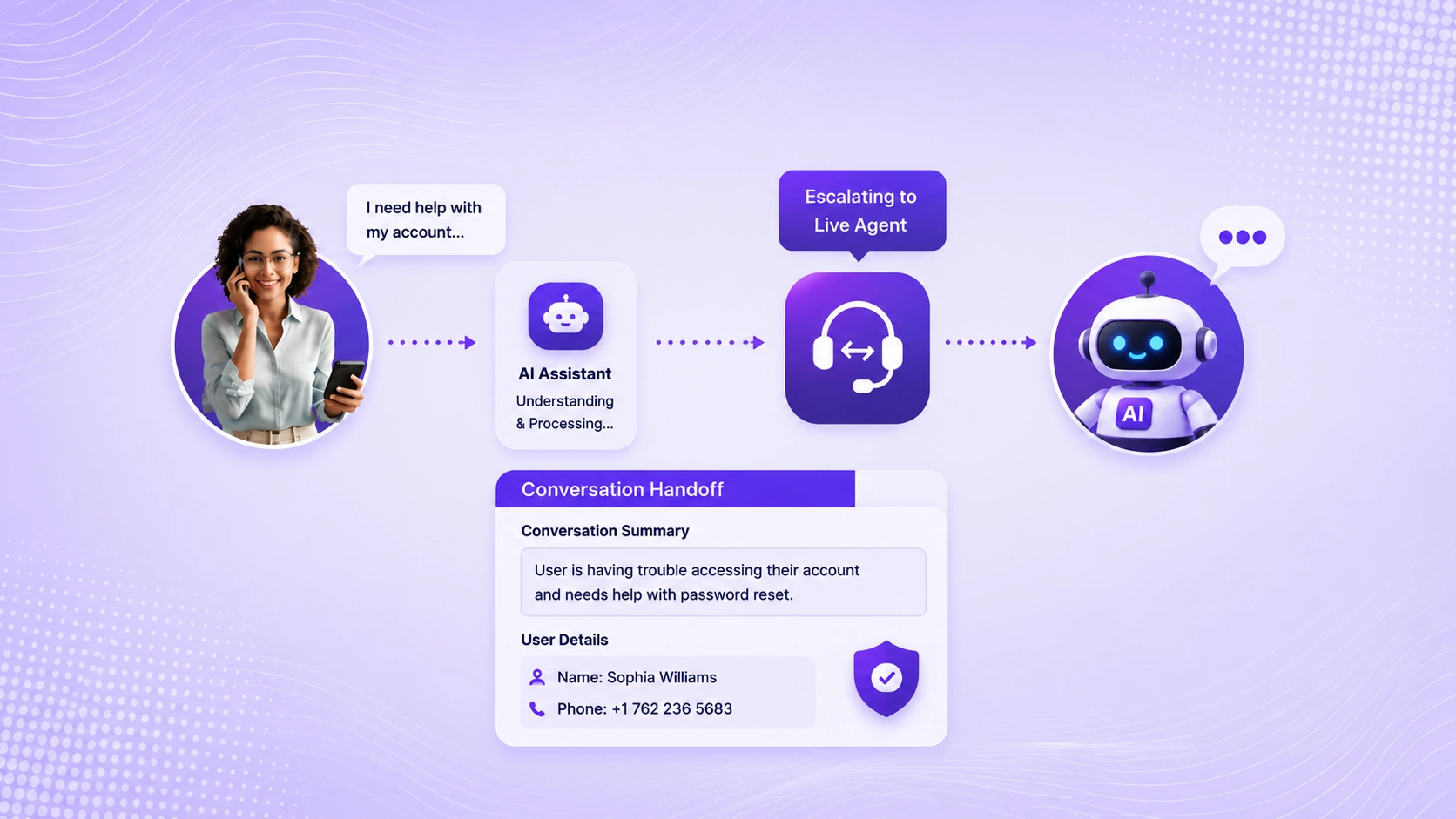
Often the context is lost when the conversation is transferred from the automated system to a human. Consumers have to repeat themselves because there is no conversation history with agents, which slows down resolution. These disconnected handoffs weaken the overall client experience and reduce efficiency.
The bottom line
These challenges, together, limit the success of businesses in scaling voice interactions. The more calls, the more costs, the worse the service and the more friction in the customer experience, if left unchecked.
The Solution: Reimagining Voice Engagement with Scalable AI Automation
Maica was built to replace fragmented voice operations with a unified and AI-based automation platform that manages interactions end-to-end. It provides intelligent, consistent voice interactions at scale, while maintaining a natural, human-like experience across customer touchpoints and business use cases.
Step 1
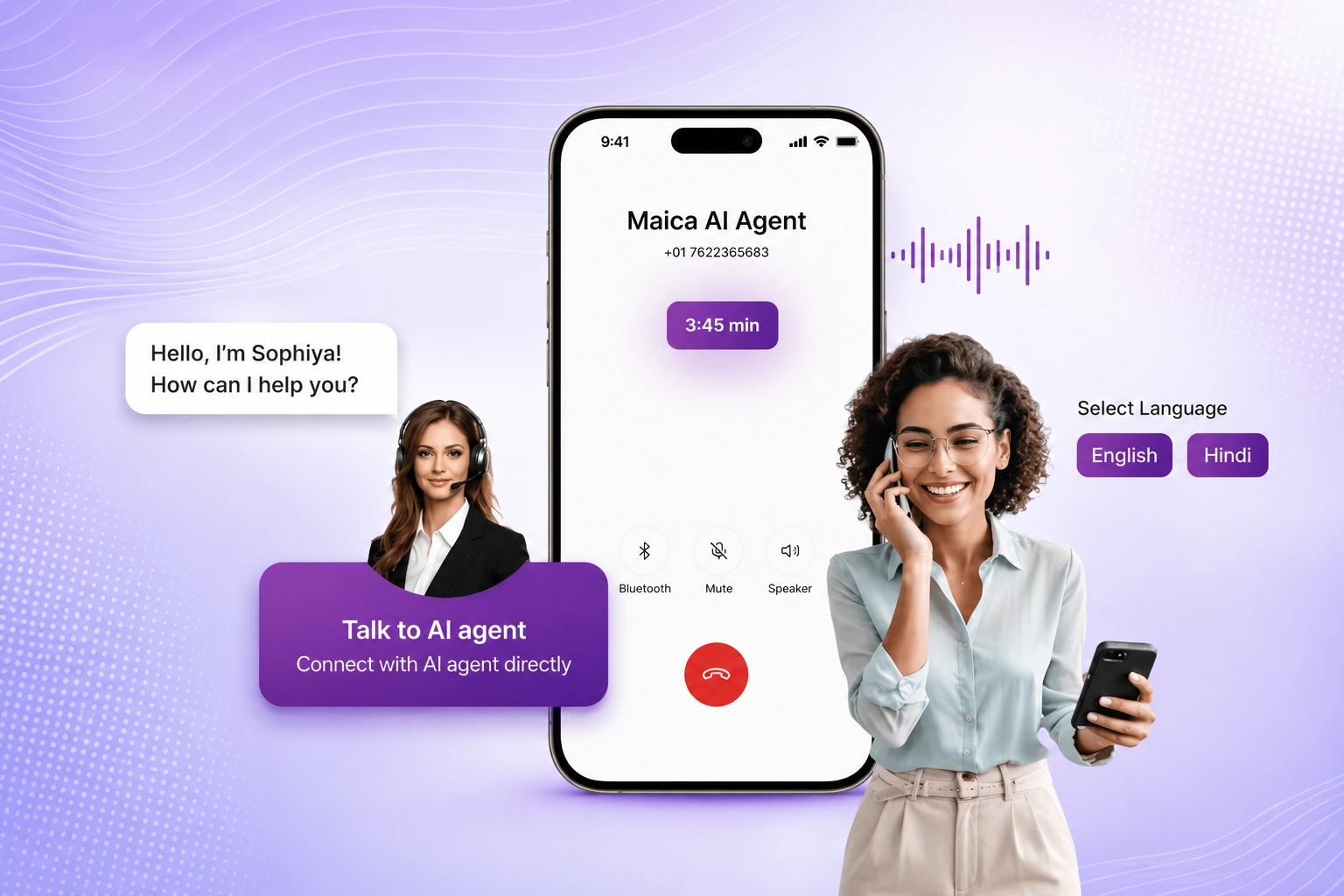
Instant Call Handling
Every incoming customer call is answered instantly by an AI voice agent, eliminating missed calls, long wait times, and abandoned interactions across all business hours and call volumes.

Step 2
Natural Language Understanding
Maica’s voice AI understands the intent, context and nuance of speech, allowing conversations to flow naturally rather than feel rigid or scripted.
Step 3
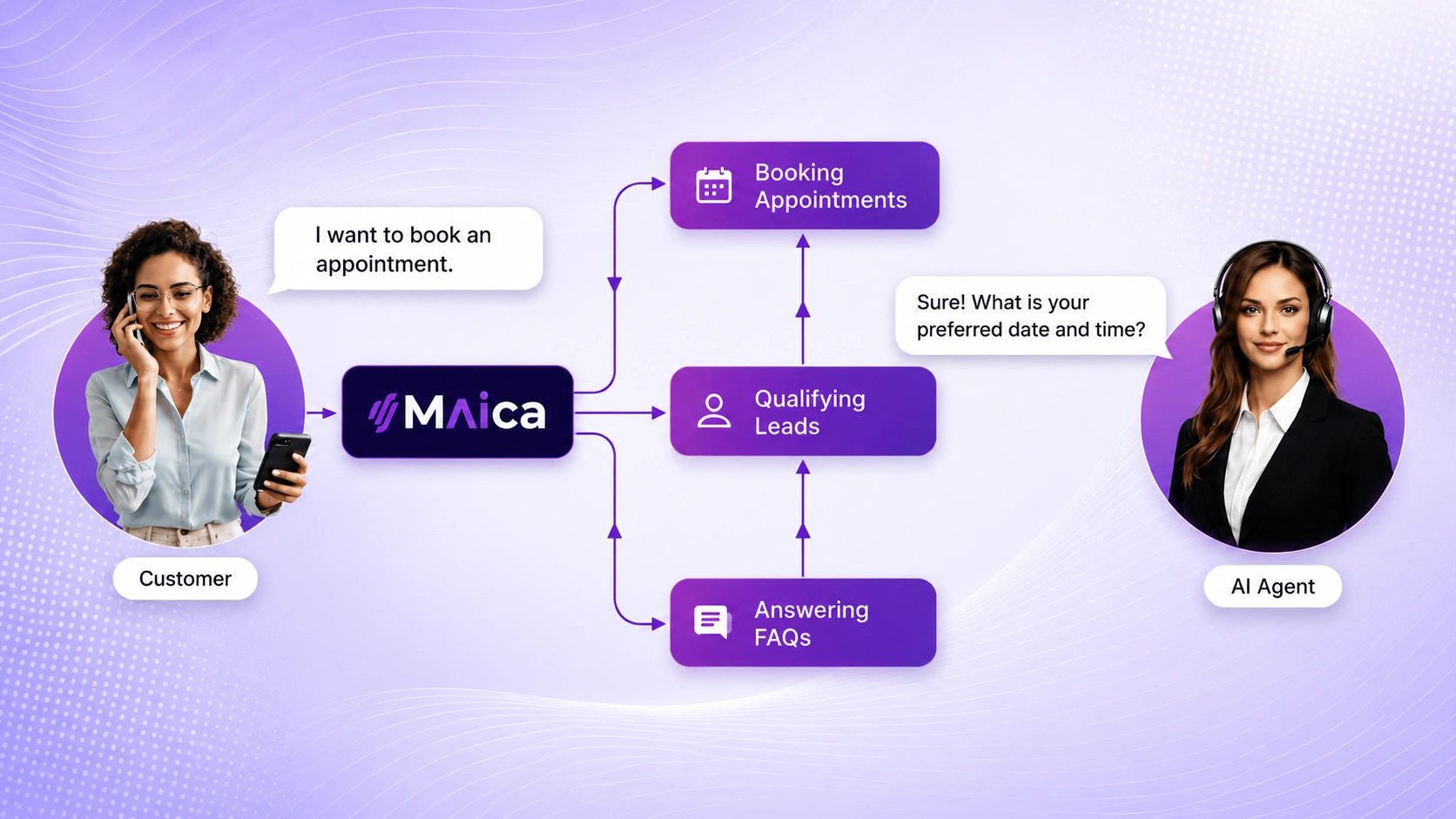
Automated Task Execution
The platform automates common tasks like booking appointments, qualifying leads, answering FAQs, confirming and updating records all without human involvement.
Step 4
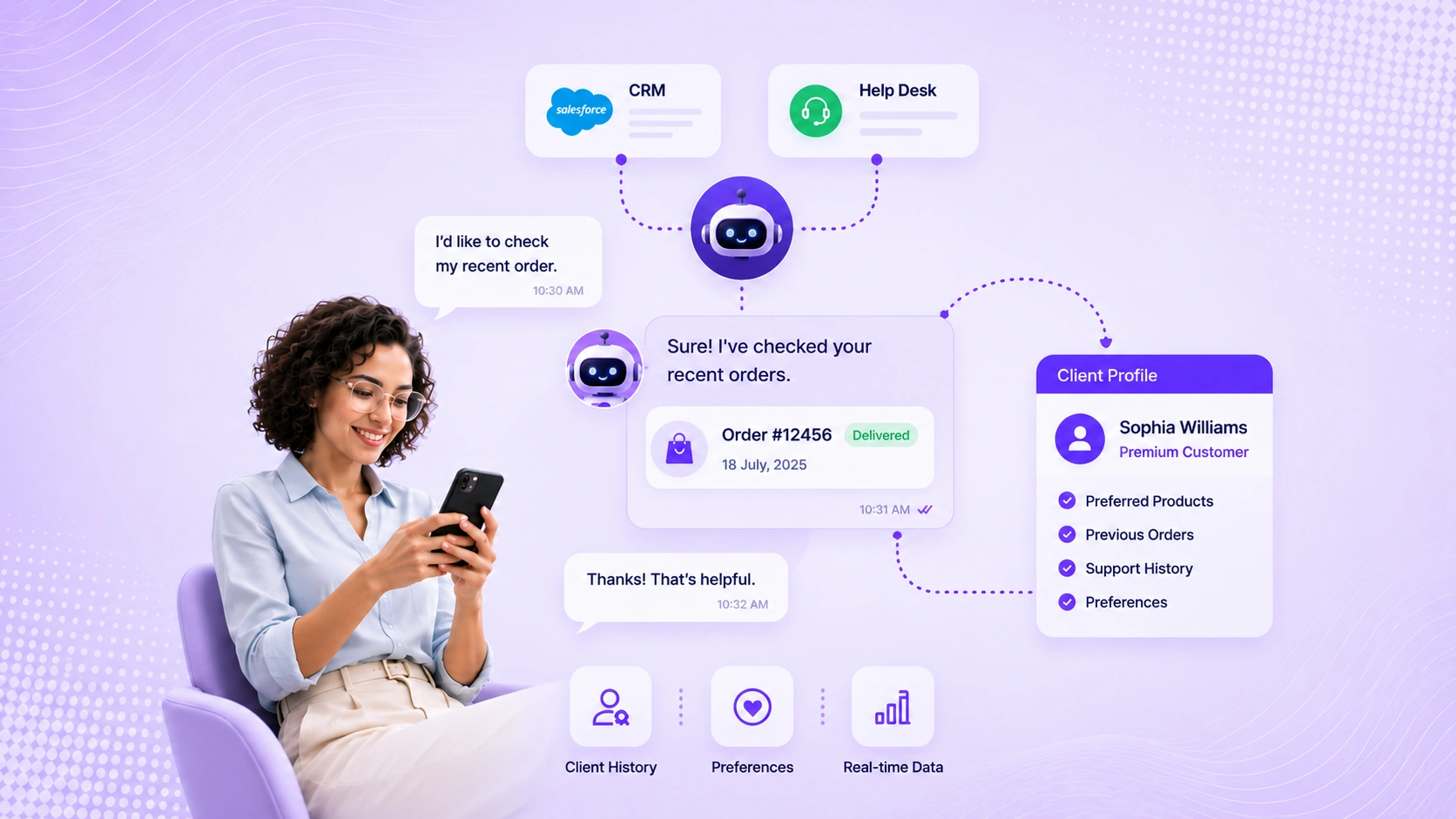
Context-Aware Conversations
Maica integrates with CRM and help desk systems to get client history and preferences, and real-time data, to make discussions more relevant and effective.
Step 5
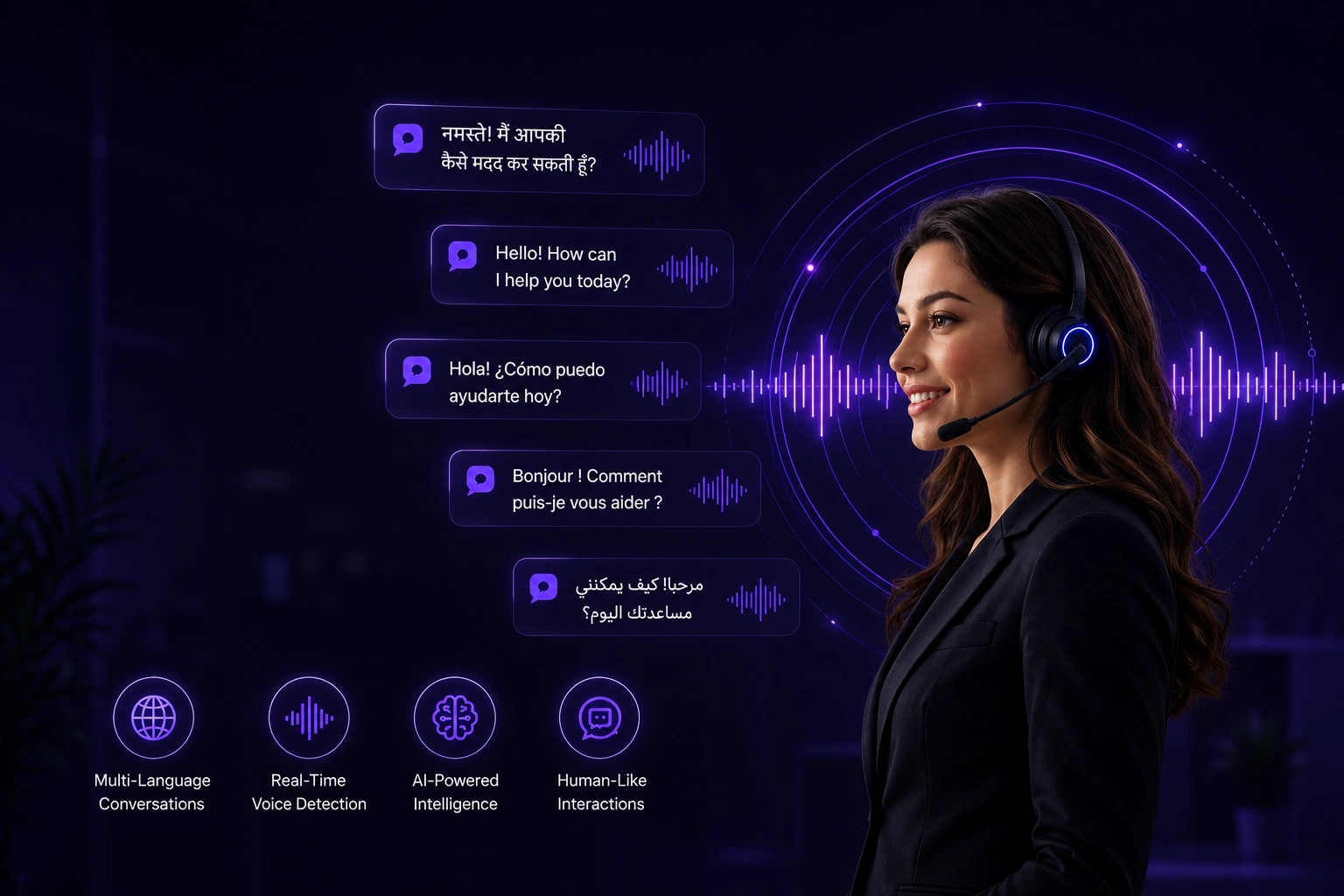
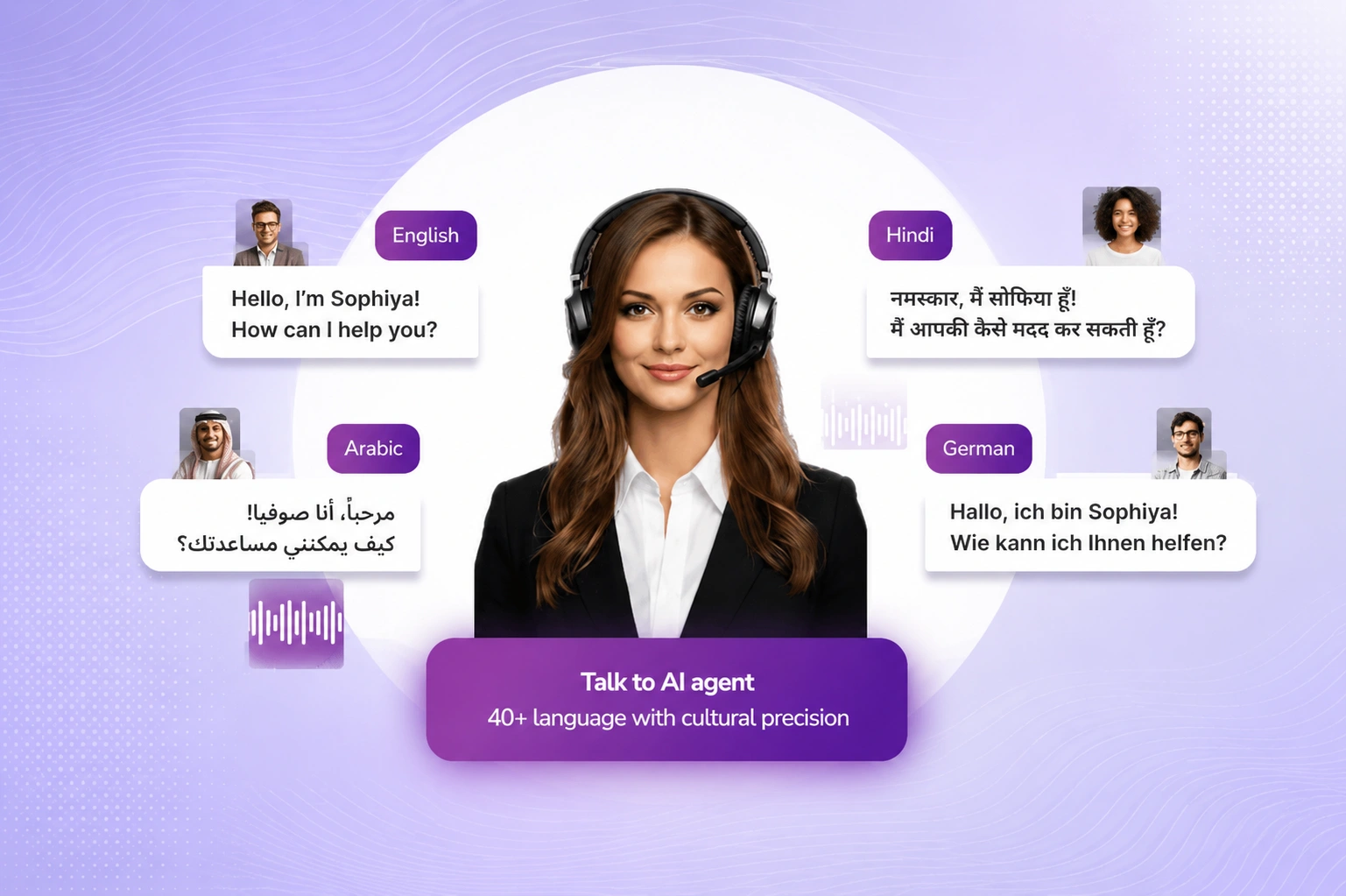
Multilingual Voice Support
Maica supports over 20 languages and regional accents, enabling businesses to provide callers worldwide with natural-sounding, culturally accepted and localized voice experiences.
Step 6
Intelligent Human Handoff
When advanced assistance is needed, the system escalates calls to live agents, ensuring the entire context of the conversation is preserved for a more seamless experience and faster resolution.
Step 7
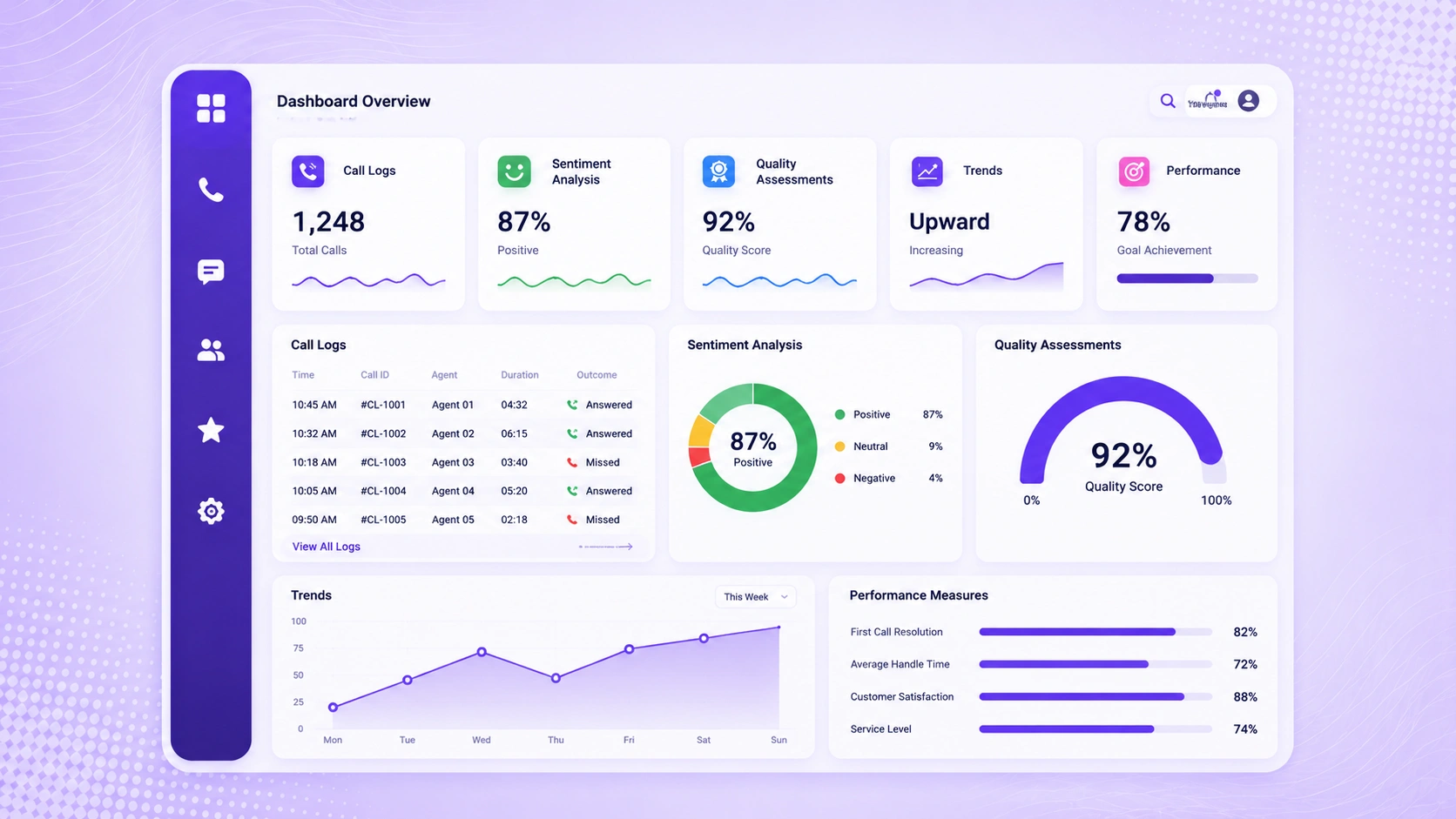
Centralized Monitoring & Insights
Supervisors and managers can view a single dashboard with call logs, sentiment analysis, quality assessments, trends, and performance measures to help them run their operations and keep customers happy.
Step 8
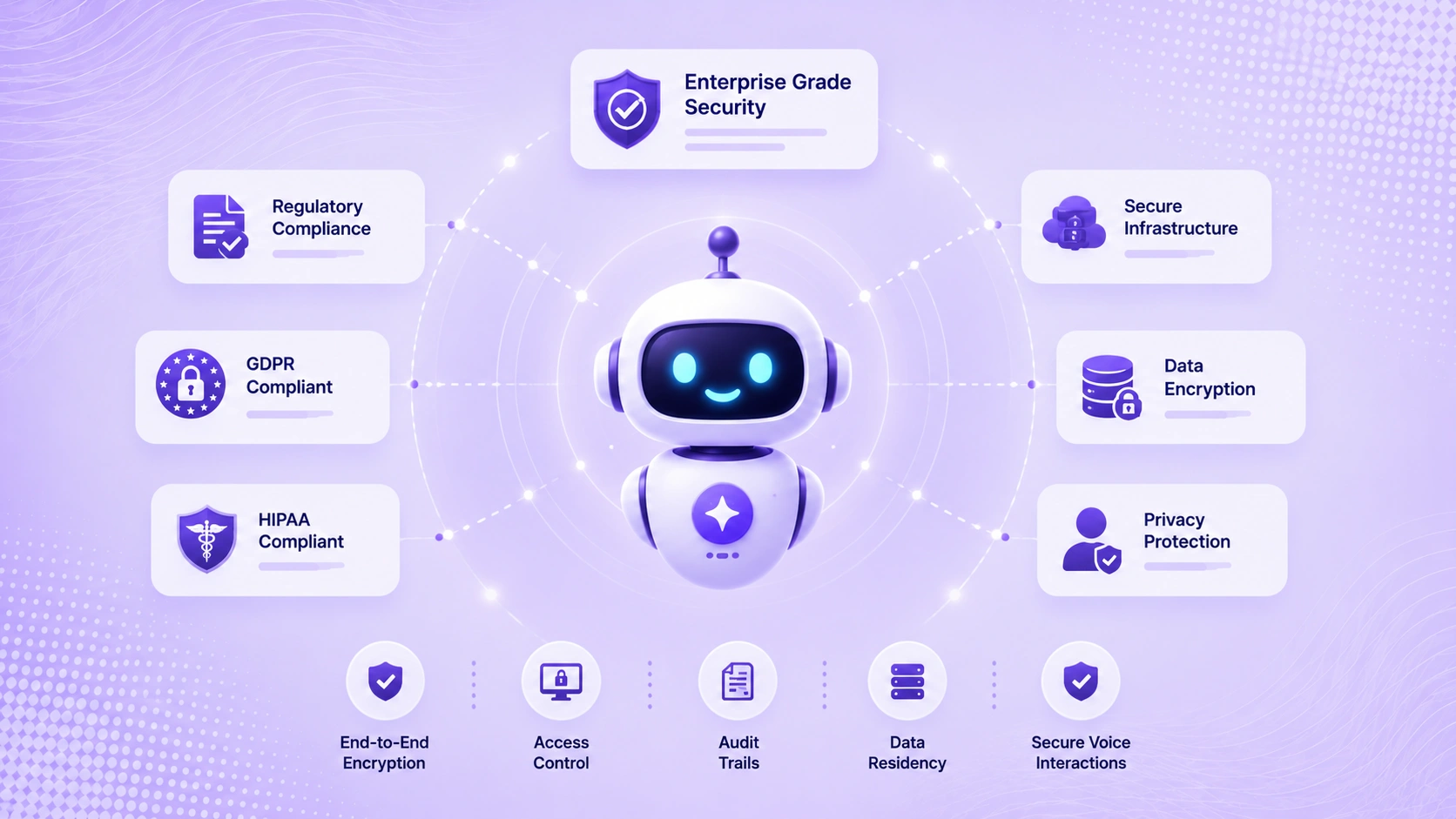
Secure Enterprise-Ready Operations
Maica was built for regulated environments and therefore ensures enterprise-grade compliance, robust data protection, secure infrastructure and privacy standards for all voice interactions and stored records.
Architecture & Development Framework
Maica is built on a scalable, cloud-native architecture designed for real-time voice AI processing, high availability, enterprise reliability, and seamless performance under fluctuating call volumes.

Figma
UI/UX Design

React
Frontend

Node.js
App Layer

Python
Backend

PostgreSQL
Databases

AWS
Cloud Infrastructure
Advanced conversational AI models
Voice AI & NLP

Google Speech API
Speech-to-Text

Google Cloud Text-to-Speech
Text-to-Speech

Selenium
QA & Testing
Tangible Outcomes Across Voice Engagement
Maica’s impact was calculated by equating voice operations before and after the deployment of AI-driven, end-to-end voice automation across customer-facing and internal call workflows.
Unlocking Business Value Through AI-Driven Voice Experiences
Maica is designed to deliver clear value across teams and roles by turning voice interactions into a scalable, reliable, and insight-driven business function. It reduces operational friction while improving the experience for both internal teams and end users.
Lower Load. Faster Resolution.
Support teams spend less time handling repetitive calls and queues. Routine inquiries are resolved instantly, allowing agents to focus on complex, high-value conversations while maintaining consistent service quality.
Visibility and Control.
Leaders gain centralized insight into call volumes, customer sentiment, resolution trends, and performance metrics. This visibility enables data-driven decisions, better forecasting, and continuous optimization of voice operations.
Better Leads. Higher Conversions.
Sales teams benefit from automated lead qualification, timely follow-ups, and consistent engagement. Every inbound call becomes an opportunity, captured, routed, and nurtured without manual intervention.
Built to Scale.
Organizations can expand across regions, languages, and peak demand periods without adding headcount. Voice capacity scales automatically, removing growth constraints tied to hiring and staffing.
Closing Thoughts
Maica modifies voice interactions from a resource-intensive support function into a scalable, intelligent, and customer-centric communication platform that enables businesses to deliver faster service, stronger engagement, and better operational efficiency.
Powered by advanced conversational AI, natural language understanding, multilingual support, seamless integrations, intelligent call routing, and real-time analytics, Maica helps businesses to:
-
 Answer every customer call instantly without increasing staffing.
-
Deliver natural, context-aware conversations across multiple use cases.
-
Reduce operational costs by automating repetitive voice interactions.
-
Scale voice operations across languages, regions, and peak demand periods.
-
Gain actionable insights through centralized analytics and conversation intelligence.