



Key Takeaways
- XRP Ledger RWA tokenization will expand across real estate, securities, treasury assets, and private credit as enterprises adopt digital asset infrastructure.
- Successful RWA Tokenization Platform Development combines blockchain, compliance, custody, identity, and legal frameworks into one scalable ecosystem.
- Native features like issued tokens, trust lines, escrow, and fast settlement support efficient and compliance-focused digital asset platforms.
- Next-generation RWA solutions will focus on interoperability, automated workflows, liquidity, and global asset accessibility.
Introduction
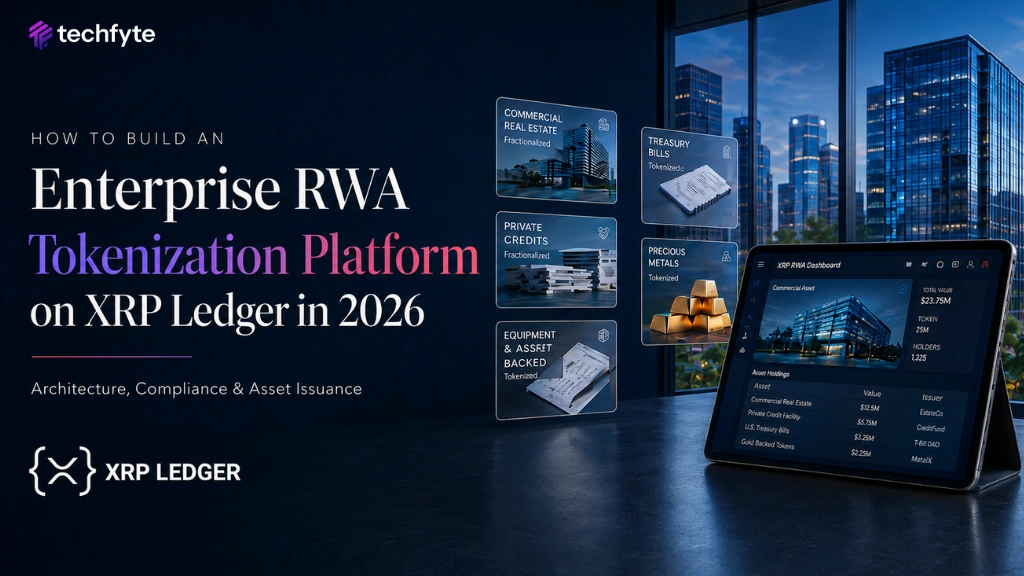
Real-world asset (RWA) tokenization is evolving how enterprises issue, manage and trade physical and financial assets. It converts ownership rights to assets such as real estate, treasury bills, private credit, commodities and bonds into blockchain-based digital tokens.
As blockchain adoption grows, the XRP Ledger is gaining attention for RWA tokenization. Unlike traditional blockchain networks relying heavily on smart contracts audits, the XRP Ledger (XRPL) offers native capabilities for issuing digital assets, managing trust lines, supporting compliance controls and improving low cost, high speed transactions.
Businesses building regulated tokenization platforms require these features and at the same time Ripple RWA tokenization initiatives continue to strengthen the ecosystem by supporting institutional use cases, financial partnerships and infrastructure development. In this blog explore how to build an enterprise RWA tokenization platform on the XRP Ledger in 2026.
Components Highlighting XRP Ledger Tokenization Growth in 2026
The XPR Ledger tokenization growth is tied to increasing adoption of tokenized real-world assets by financial institutions, asset managers and enterprises.
Organizations seek to modernize capital markets, which requires blockchain infrastructure that offers security, scalability and regulatory flexibility. The XRP Ledger meets these requirements through native tokenization capabilities for enterprise-grade RWA platforms.
Several factors are accelerating the adoption of XRP Ledger RWA tokenization in 2026:
- Rising institutional demand: Financial institutions including banks, investment companies, and asset management firms are tokenizing commodities, real estate, treasuries and private credit to enhance their liquidity and facilitate fractional ownership.
- Native XRPL features: Built-in features enables issue tokens, trust lines, escrow, multi-signature accounts and decentralized exchange development frameworks eliminates the need for advanced smart contracts.
- Fast transaction settlement: Transactions on the XRPL settle within just a few seconds hence allowing near-real time asset transfers.
- Low transaction costs: The platform does not charge high fees hence making it affordable for frequent asset issuing and transferring.
- Compliance-friendly architecture: Features like issuer controls, account permissions and transfer restrictions can be used by businesses to develop compliant platforms.
Enterprise Architecture of an XRP Ledger RWA Tokenization Platform
Successful XRP Ledger RWA tokenization development extends beyond issuing digital tokens. The enterprise-level solution implies the implementation of a modular system, which combines the blockchain technology with the legal, compliance, custody, and operations aspects. Every single layer plays a unique part in securing the tokenized asset.
The six essential layers of an enterprise RWA tokenization platform include:
- Asset Layer: Defines and verifies the underlying asset including real estate, treasury bonds, private credit, commodity, and equity. The layer will manage the asset valuations, documentation, and ownership.
- Legal & Compliance Layer: Sets the legal structure by SPV, trust or regulated entity. This layer also defines eligibility criteria for investors and transfer restrictions with compliance to the KYC, AML, and other jurisdictional regulations.
- Custody Layer: Provides security for both underlying assets and the blockchain credential. Custody layer will integrate the qualified custodians, escrow, HSM, reserve verification.
- Identity & KYC Layer: Verifies the identity of investors, performs AML screening, on-boarding, and access control for regulatory-compliant token design.
- XRPL Tokenization Layer: Uses native functionality of the XRP Ledger to create tokens, trust lines, issuer account, escrow and manage asset transfers in a secure manner at a very low fee and fast settlement.
- Trading & Reporting Layer: Integrates the platform with the XRPL DEX or permissioned marketplace and provides portfolio reports, audit logs, corporate actions, and regulatory reports.
Build a Compliant XRP Ledger RWA Tokenization Platform
How to Build an Enterprise RWA Tokenization Platform on XRP Ledger
Successful RWA Tokenization Platform Development requires more than token issuance. Enterprises must combine blockchain infrastructure with legal governance, compliance, custody, and operational processes to create a secure and scalable ecosystem.
Below are the 8 key steps to build an enterprise-grade RWA tokenization platform on the XRP Ledger.
Step 1. Select and Validate the Asset
The initial step is choosing the tangible asset that can be tokenized. The asset must have clear ownership records, measurable value, and legal documentation before it can be represented on the blockchain. Choose assets such as real estate, treasury bills, commodities, or private credit.
- Confirm asset ownership and necessary documents.
- Assess asset value and risks.
- Decide whether fractional ownership is allowed for the chosen asset.
Step 2. Create the Legal Ownership Structure
Blockchain tokens should represent legally enforceable ownership rights. Establishing a legal structure ensures that token holders have recognized claims over the underlying asset and helps meet regulatory obligations.
- Form SPV, trust, or regulated entity.
- Define Investor rights and ownership.
- Set up Policies for transferring and redeeming tokens.
- Securities regulation compliance is ensured.
Step 3. Configure XRPL Issuer Accounts
Issuer accounts serve as the foundation for token creation and management on the XRP Ledger. These accounts should be secured using enterprise-grade access controls to minimize operational risks.
- Issuer and operational accounts should be set up.
- Multi-signature should be used.
- Hardware Security Modules (HSMs) should be used to safeguard private keys.
Step 4. Issue Native XRPL Tokens
Once the issuer account is configured, create native tokens that digitally represent the underlying asset. XRPL’s built-in token issuance capabilities simplify deployment without relying heavily on custom smart contracts.
- Define token supply and asset metadata.
- Issue tokens from the authorized issuer account.
- Configure trust line requirements where applicable.
- Test issuance before production deployment.
Step 5. Implement KYC, Trust Lines, and Transfer Controls
Identity verification is essential for regulated asset tokenization. Combining off-chain KYC processes with XRPL trust lines and issuer controls helps restrict token ownership to approved investors.
- Verify investor identities through KYC and AML checks.
- Approve wallet onboarding before token allocation.
- Configure trust lines for eligible participants.
- Apply transfer restrictions and issuer controls when required.
Step 6. Integrate Custody and Oracle Systems
Enterprise platforms must securely manage both the underlying asset and the blockchain infrastructure. Oracle services also provide trusted external data required for pricing and corporate actions.
- Connect qualified custodians to safeguard assets.
- Integrate HSMs for secure key management.
- Use oracles for asset valuation and pricing updates.
- Synchronize off-chain records with on-chain tokens.
Step 7. Enable Secondary Trading and Liquidity
After issuance, investors need a secure way to transfer or trade tokenized assets. The trading model should align with both business objectives and regulatory requirements.
- Connect to the XRPL DEX or approved trading venues.
- Support peer-to-peer asset transfers.
- Enable liquidity using approved trading mechanisms.
- Monitor transactions for compliance and market activity.
Step 8. Monitor, Audit, and Manage Corporate Actions
Tokenization is an ongoing operational process. Continuous monitoring, auditing, and lifecycle management ensure transparency, regulatory compliance, and investor confidence throughout the asset’s lifespan.
- Maintain detailed transaction and audit logs.
- Automate dividend, interest, or redemption events.
- Perform regular compliance and security reviews.
- Generate reports for regulators, auditors, and stakeholders.
Ready to Turn Real-World Assets into Digital Opportunities?
Best Practices for XRP Ledger RWA Tokenization Development
Building an enterprise-grade platform requires more than technical expertise. Effective RWA tokenization development services help build a secure, compliant and scalable ecosystem. It involves combining blockchain technology with the legal and operational aspects. A compliant platform with best industry practices enables minimizing risks while implementing it.
- Leverage native XRPL capabilities: Utilize native XRPL features like issued tokens, trust lines, escrow, multi-signature accounts, and the decentralized exchange (DEX) rather than complex smart contracts where applicable.
- Design for compliance from the start: Include KYC, AML, investor verification, transfer limitations, and audit logging functionality directly into the platform architecture rather than considering them to be added as afterthoughts.
- Separate legal and blockchain layers: Use special purpose vehicles (SPVs), trusts, or regulated companies as issuers of blockchain tokens that will reflect ownership, while keeping off-chain legal agreements separated.
- Protect issuer accounts: Use multi-signature authentication, HSMs, RBAC, and periodic key management for issuer accounts protection to reduce exposure to security issues.
- Build modular integrations: Design the platform architecture to allow seamless integration of custody solutions, identity verification services, oracles, payments, and reporting services.
- Plan for enterprise scalability: Design the architecture that will be able to accommodate other asset classes, transaction volumes growth, changes in regulatory landscape, and further ecosystem integrations.
Conclusion
With the evolution of the tokenization market, businesses are opting for blockchain networks that offer technical efficiency along with compliance capabilities. With its native tokenization capability, predictable transaction costs, and high-speed settlement the XRP Ledger is gaining popularity among businesses looking to build robust RWA tokenization systems.
Partnering with Techfyte, one of the top companies for XRP Ledger RWA tokenization development enables building a platform that is reliable and scalable for businesses. We have a team of experts like developers, designers and managers providing high-quality RWA tokenization development services, meeting business requirements.
Frequently Asked Questions
1. What is XRP Ledger RWA tokenization?
XRP Ledger RWA tokenization converts real-world assets like real estate, bonds and commodities into blockchain-based tokens on XRPL. It combines legal ownership, custody, and compliance frameworks with digital asset issuance. RWA tokenization also improves transparency, liquidity, fractional ownership and settlement efficiency across various industries.
2. Why is XRP Ledger suitable for enterprise asset tokenization?
XRP Ledger supports enterprise tokenization. It includes features like issued tokens, trust lines, escrow and fast settlement. XRP Ledger RWA tokenization development enables secure, low-cost and scalable platforms.
3. Which real-world assets can be tokenized on XRP Ledger?
RWA tokenization development services includes tokenization in real estate, treasury bills, bonds, private credit, commodities and carbon credits.
4. How does XRP Ledger support compliance?
Compliance requirements are met in RWA tokenization platform development through issuer controls, trust lines, transfer restrictions and multi-signature security. It integrates KYC, AML and identity verification systems to manage approved investors and secure regulated asset transfers.
5. How long does RWA tokenization platform development take?
The timeline for RWA tokenization platform depends on asset complexity, compliance needs, integrations and platform features. The timeline varies depending on business requirements and goals. Some basic versions take a few weeks to months, while enterprise platforms require additional time for custody, security, trading and reporting systems.
6. What is the difference between Ripple RWA tokenization and XRP Ledger RWA tokenization?
Ripple RWA tokenization focuses on Ripple’s broader institutional ecosystem, partnerships, and solutions that support digital asset adoption. On the other hand, XRP Ledger tokenization growth reflects the increasing enterprise adoption of XRPL infrastructure for building secure, scalable, and compliance-focused tokenized asset platforms directly on the XRP Ledger.
Planning an Enterprise RWA Tokenization Platform?
