



Key Takeaways
- Launching a crypto exchange in the United States is primarily a regulatory challenge, with founders typically requiring 12 to 18 months to secure the necessary licenses before commencing operations.
- There is no single US crypto exchange license, requiring platforms to navigate a complex combination of FinCEN registration, SEC/CFTC oversight, and state-level Money Transmitter Licenses and BitLicenses.
- The exchange model chosen: spot, derivatives, P2P, or hybrid—directly determines the regulatory burden, compliance requirements, and overall cost structure.
- Compliance infrastructure, including KYC/AML systems, transaction monitoring, custody arrangements, and Travel Rule implementation, must be embedded into the platform architecture from day one.
- Choosing an experienced US-focused exchange development and compliance partner, whether through a custom or white-label approach, can significantly reduce time-to-market, regulatory risk, and long-term operational costs.
Introduction
The US is the most regulated and highest-rewarding market for cryptocurrencies in the world. Founders who expect a six-month construction cycle are often surprised to find that the licensing process alone can take 12 to 18 months before one trade is permitted. There is no single federal license that covers a crypto exchange platform in the USA end to end. Instead, founders will have to contend with FinCEN registration, likely SEC and CFTC oversight and state money transmitter laws all at once. This guide covers federal and state licensure, compliance infrastructure, technology stack choices and realistic cost estimates through 2026.
The US Regulatory Landscape: Federal and State Licensing Requirements
All US exchanges start with the FinCEN’s MSB registration requirement that imposes Bank Secrecy Act obligations including a documented AML program, a compliance officer, and suspicious activity reports. Registering itself does not authorize trading. It just puts you under federal AML watch.
You may need to be registered with the SEC or the CFTC, depending on what you list. Since the joint SEC-CFTC interpretation issued in March 2026, the majority of developed tokens are considered digital commodities under CFTC jurisdiction, while assets tied to equity, debt, or profit-sharing rights continue to be SEC-regulated investment contracts. An investment contract asset matching platform may need to register as a national securities exchange or comply with the SEC’s Alternative Trading System rules. Listing derivatives implies CFTC jurisdiction regardless of how the underlying cryptocurrency is classified.
Put the state law over the federal image . Every US transaction is governed by both regimes simultaneously . New York requires a BitLicense from the Department of Financial Services, which is one of the slowest state approval processes in the US . Most every other state requires a Money Transmitter License, and the rules are different enough that a 50-state rollout is an operation in itself. This is not possible without a robust fintech compliance plan built into the launch schedule from the get-go.
Choosing Your Exchange Model: Spot, Derivatives, P2P, or Hybrid
The single most important early decision you will make in shaping your regulatory path is the choice of which exchange model to adopt. The least federal burden today is on a spot exchange that trades only CFTC classified digital commodities, which are competing in the most crowded and price sensitive part of the market. A derivatives exchange offering futures or leveraged products is subject to CFTC designated contract market requirements which require better margins but a much higher compliance and capital burden from the start.
A P2P exchange that relies on escrow instead of a central order book can lower some licensing requirements, but banking partners still need to go through a rigorous process for fiat on- and off-ramps and friction is often the primary hurdle. A hybrid exchange of spot & derivatives makes the licensing more complex because you have to comply with both regimes at the same time. No matter which model you choose, the choices you make in the first week of crypto exchange platform development set the licensing path you will follow over the next 18 months. The CFTC’s 2026 guidance on digital commodity derivatives provides the current scope for what falls under their jurisdiction.
Compliance Infrastructure: What Regulators Actually Require
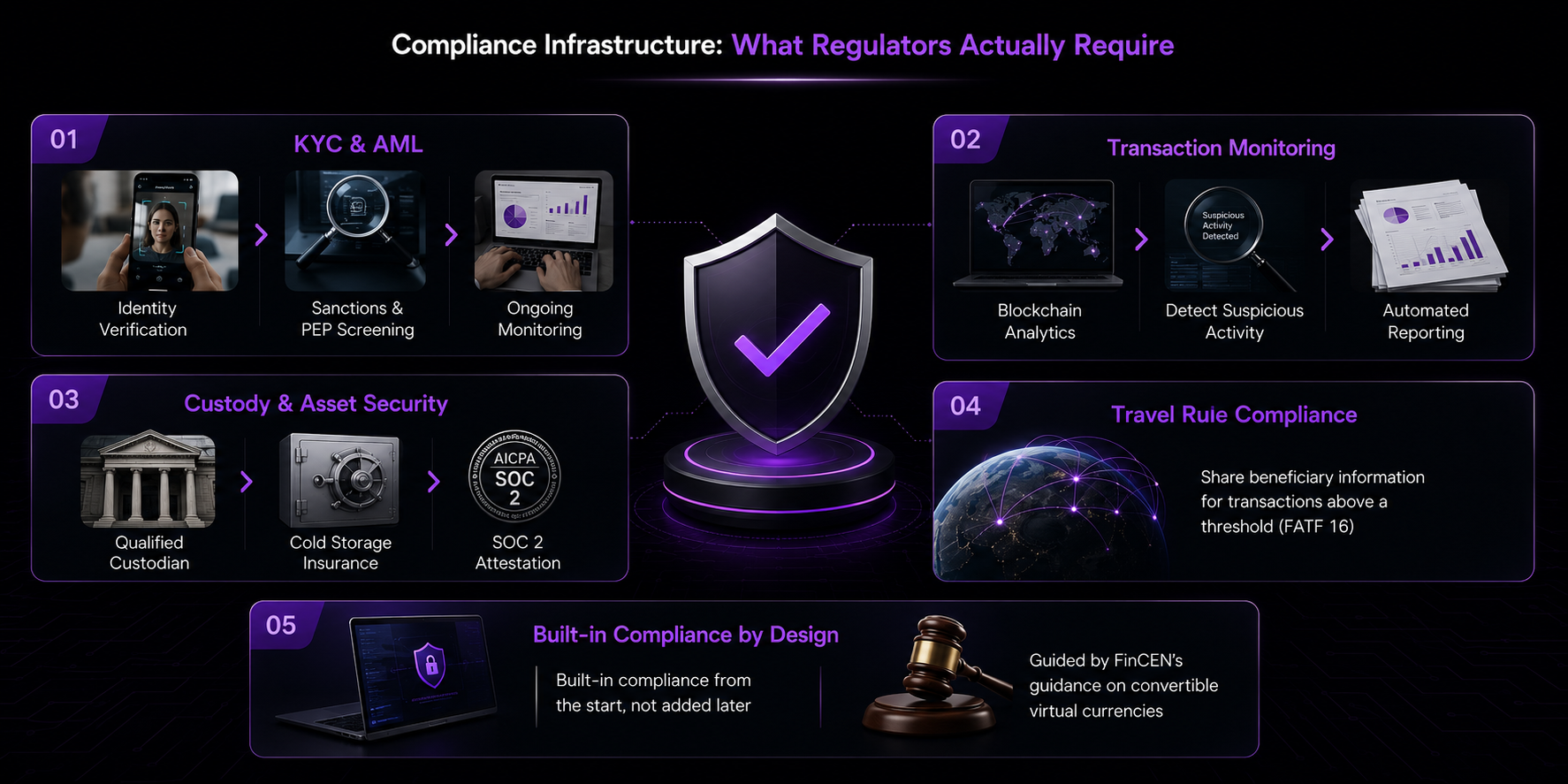
With accounts growing, regulators require KYC and AML programs that include identity verification, sanctions and PEP screening, and ongoing checks on investor onboarding. Transaction monitoring goes even further, with blockchain analytics that spot suspect wallet activity in near real time, feeding automated compliance reporting that authorities may audit on request.
Custody is another matter. Depending on the license type and mix of assets, you may need a qualified custodian arrangement, SOC 2 attestation, and cold-storage insurance rather than pure self-custody. Your architecture should enable the sharing of beneficiary information for transactions above a certain threshold, per FATF Recommendation 16, The Travel Rule. Fast moving exchanges through a crypto exchange development platform 2026 are built in design compliance from the start, rather than being added just before a licensing deadline. The practical application of these requirements continues to be guided by FinCEN’s guidance on convertible virtual currencies.
Technology Stack: Matching Engine, Liquidity, and Security
US traders expect good institutional execution. If you start showing performance gaps, you will quickly lose a lot of business to sharp, better-funded competitors in a very crowded field. Your matching engine needs low latency and fast throughput for a wide range of order types. Liquidity management, mixing market makers with external venues, keeps spreads tight rather than leaving order books thin in volatility.
The wallet architecture is usually divided into hot and cold storage and multi-signature rules for withdrawal levels. Before any code ever touches user cash, security scrutiny should include a formal smart contract audit and penetration testing appropriate for a regulated financial platform. A white-label exchange platform provides core trading infrastructure with separate licensing, a sequencing choice that can dramatically cut down build time for teams with limited time.
Cost to Build a Crypto Exchange Platform in the USA: 2026 Estimates
Costs are broken down into four categories: legal and licensing, compliance infrastructure, technological development, and ongoing operations. These estimates are illustrative planning ranges, not prices. Actual costs vary widely depending on product scope, state coverage and custodial architecture.
Legal and Licensing: The Largest Early Spend
The cost of legal and licensing fees for a multi-state launch can be between $150,000 and $500,000, and just the BitLicense requires $100,000 or more in outside counsel fees. The least expensive federal step is FinCEN MSB registration, but SEC or CFTC registration adds considerable legal complexity. The state MTL applications range from $3,000-$10,000 per state for the filing fees plus the surety bonds that vary by state and can be six figures for larger companies. The NY DFS BitLicense framework is still the most demanding state level process, setting a cost bar that other states are progressively adopting.
Technology and Compliance Infrastructure
A custom spot exchange with basic compliance controls usually costs in the mid-six figures, but can go over $1 million for a multi-product platform. A white-label exchange platform does reduce tech costs significantly, but you still have to integrate compliance, set up custody and have independent security audits. The one-time costs of the first year are significantly higher than in subsequent years, but entrepreneurs frequently underestimate ongoing line items like compliance staffing, state renewal fees and blockchain analytics subscriptions. Industry research on 2026 SEC-CFTC regulatory framework has found that, as sophistication requirements have gone up, compliance tooling costs have risen, pushing cost projections higher for building crypto exchange platforms across all types of exchange.
Build vs. White-Label: Choosing the Right Development Partner
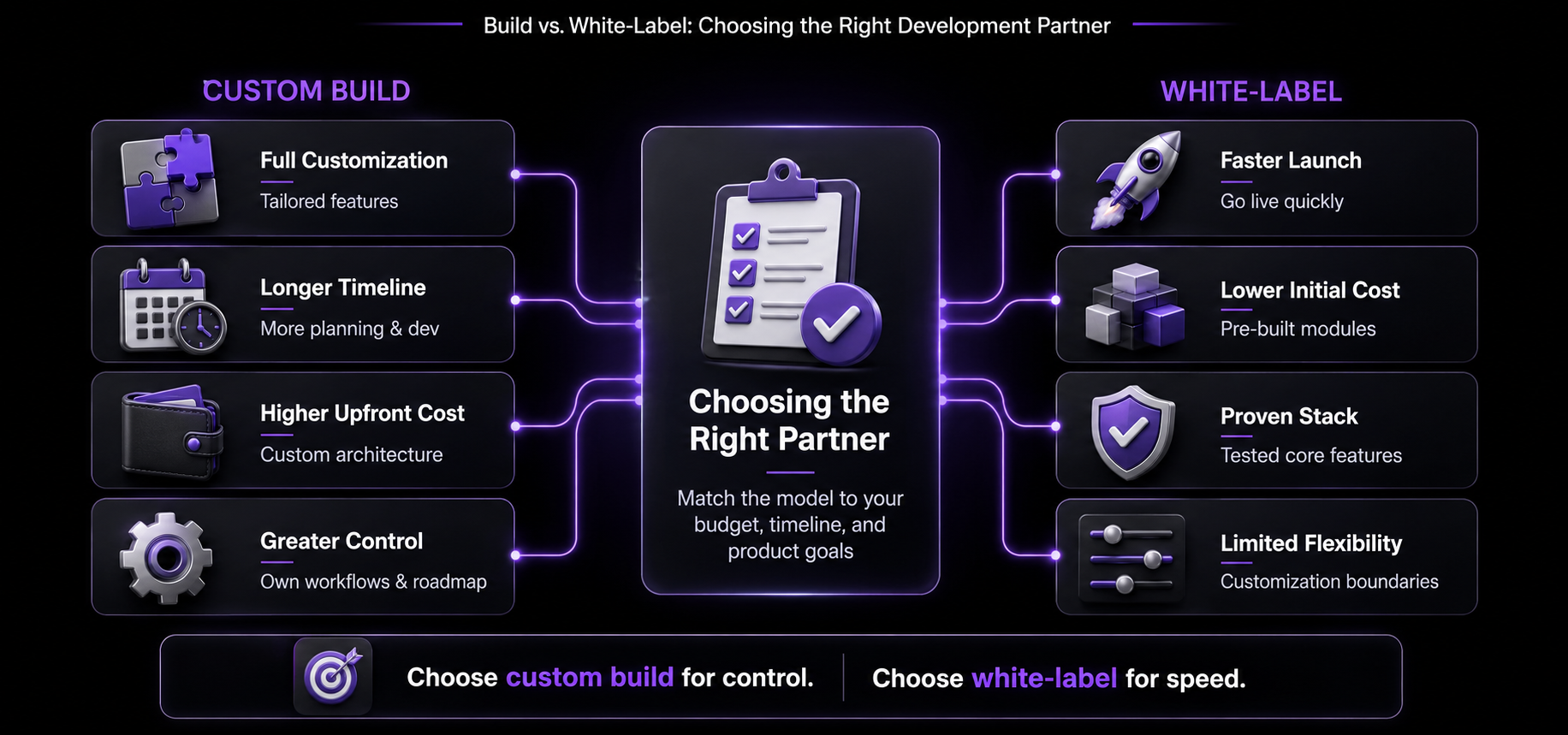
Every US exchange launch boils down to a fundamental choice: build your own proprietary platform from scratch, or adapt a white-label exchange platform with pre-built compliance features. It depends on how much you are offering, timing and how differentiated your trading model needs to be.
Custom Build: Full Control, Longer Road
A custom build gives you full control over the matching engine, liquidity design and user experience, making it a worthy investment for a truly differentiated platform. The downside is it takes longer and costs more upfront as everything from order matching to compliance reporting has to be built, audited and integrated. This is the ideal choice for teams launching a multi-product platform or for those operating in a niche market segment where off-the-shelf products cannot deliver the feature set you require.
White-Label: Speed with Proven Compliance
A white-label approach reduces time to market by pre-testing compliance modules against regulatory expectations. There’s not a lot of difference in core trading mechanics, but the price of customization is lowered. This approach can compress the build timetable by months and reduce the compliance engineering workload for a conventional spot exchange or platform entering a single-state market significantly. Don’t choose the most popular name. Choose the best crypto exchange platform in the USA that matches your product scope with the partner’s depth.
What Separates a Credible Development Partner
A reputable crypto exchange development company has a proven history of US compliance, references of working exchanges, and a dedicated compliance team in-house, not outsourced counsel on retainer. When looking for crypto exchange development services, make sure the partner has registered with FinCEN, state MTL and SEC or CFTC, in addition to doing the tech build. A spot-only launch and a multi-product derivatives platform need vastly different levels of regulatory expertise and the wrong partner choice can add months to an already lengthy licensing cycle.
Concluding Note
Launching a cryptocurrency exchange in the US is a compliance marathon, not a technology sprint. You have to wait 12 to 18 months of license work before you can legally start trading, so work your technology schedule accordingly. Through 2026, the laws will continue to evolve as SEC-CFTC coordination increases and Congress addresses market structure legislation. The best hedge against what happens next is a compliance-first foundation now, backed by the right crypto exchange platform in the USA development partner.
Frequently Asked Questions
1. How much does it cost to build a crypto exchange platform in the USA?
The cost to develop a cryptocurrency exchange in the USA can range from the mid-six figure range for a single-state spot exchange with minimal compliance to well over $1 million for a multi-product platform with full SEC/CFTC registration. Legal and licensing fees for a multi-state launch typically range from $150,000 to $500,000. A white label exchange platform brings down the cost of technology but you still have ongoing costs for compliance infrastructure, custody and periodic state renewal fees.
2. Which licenses are required to build an exchange platform in the USA?
If you are building an exchange platform in the US, the first step is to register as an MSB with FinCEN. Securities need to be registered with the SEC or operate under an ATS structure depending on the assets listed and derivatives need to be registered with the CFTC. In most states, the NY BitLicense and Money Transmitter Licenses are state requirements. There is no single license covering the whole platform.
3. How long does crypto exchange platform development take in 2026?
For 2026 crypto exchange development platforms, the timeframes are often 12 to 18 months for the license alone, with the technology development happening at the same time. While a white-label approach can shorten the technical schedule, the pace of regulatory approval is its own pace. Founders should budget 18-24 months from incorporation to first lawful transaction.
4. What makes the best crypto exchange platform in the USA different from global alternatives?
The best crypto exchange platform in the USA is defined by the depth of its compliance, not just its technological performance, with FinCEN, SEC and state-level regulatory integration baked into the design, not bolted on. US platforms face higher regulatory costs and longer licensing periods than offshore platforms, but also have access to the world’s largest institutional capital pools.
5. How do I choose a crypto exchange development company for a US launch?
Find a good crypto exchange development company with a US regulatory history, production exchange references, and in-house compliance staff. Make sure that the partner has registered with FinCEN, state MTL and SEC or CFTC. When looking at crypto exchange development services, check that the partner’s regulatory competence fits your product scope – spot and derivatives platforms need totally different skill sets.
