Algorithmic Governance Solutions for Autonomous, Scalable, and Trustless Decision Systems
Automate transparent, tamper-proof governance across decentralized organizations with intelligent, on-chain execution frameworks.
- Automated Rule Execution
- Tamper-Proof Execution
- AI-Enhanced Decision Making
- Scalable DAO Operations










What is Algorithmic Governance in Blockchain?
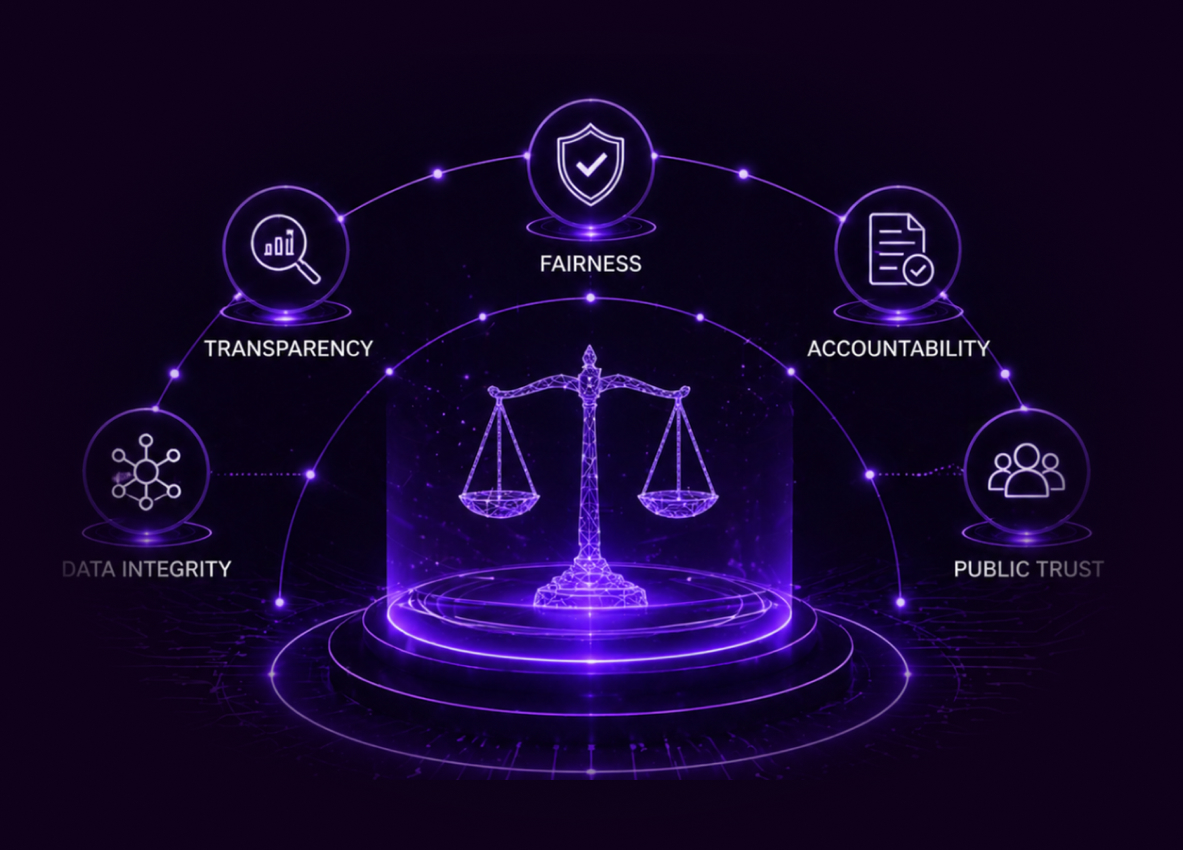
Algorithmic governance in blockchain is the process of encoding governance logic into autonomous systems that make decisions without human discretion. Built on strong DAO infrastructure and backed by rigorous smart contract audit, it brings transparent rule-based automation for decentralized decision making at scale. As decentralized ecosystems scale, the need for predictable and tamper-resistant governance becomes critical. Algorithmic governance addresses this by embedding governance logic into smart contracts that execute automatically when specific conditions are met.
- Smart Contract Enforcement
- Automated Proposal Flow
- Transparent Treasury
- Programmable Membership
Why Organizations Need Governance Automation for Decentralized Platforms
Traditional governance structures are not scalable, not fast and not transparent. This inefficiency stifles progress. Modern decentralized platforms require governance systems that can operate in real time, handle large volumes of participation, and maintain transparency without sacrificing efficiency. However, many organizations still rely on siloed DAO treasury management, disconnected tooling, and human-driven workflows where automation could significantly improve outcomes. The absence of intelligent systems, such as enterprise AI assistants, means that governance remains reactive rather than proactive, limiting the organization’s ability to adapt quickly to changing conditions.

Manual Proposal Overwhelm
Large DAOs receive hundreds of proposals and manual review processes cause significant delays, hampering scalable decentralized governance and slowing down automated decision-making pipelines.

Voter Apathy & Low Participation
It is the result of token holders rarely participating in governance procedures, leading to low quorum, poor decentralized decision making and increased risk of governance capture by a small group.

Slow Execution Cycles
Longer voting periods and manual validation stages hinder automated decisions and fast responses to market developments or protocol hazards by taking critical activities longer.

Administrative Bottlenecks
Treasury operations, payroll and grant distribution depend heavily on manual coordination, which adds operational complexity and defeats the purpose of reduced operational overhead.

Lack of Transparency
Decentralized platforms lack trust in governance automation because of opaque decision processes, off-chain talks and lack of action auditability.
Take the Next Step in Governance Automation
Book Free ConsultationBenefits of Algorithmic Governance
Whether it's custom LLM development that lets you analyze proposals intelligently or real estate tokenization that needs compliant processes, algorithmic governance makes things happen faster, more clearly, and on a larger scale.

Automated Proposal Processing
With AI-assisted triage and prioritization in automated decision-making pipelines, you may submit, vote and implement proposals in hours instead of weeks.

Liquid Voting Models
In such a case, token holders can outsource their voting power to domain experts, who can participate continuously and develop scalable decentralized governance without ongoing user input.

Real-Time Treasury Operations
On-chain consensus triggers automated grants, payroll and asset swaps quickly, enabling efficient treasury execution based on tamper-proof governance execution models.

Immutable Audit Trail
Every governance action is documented on chain forever, which creates transparent governance systems, enabling extensive retrospective analysis, regulatory compliance and organizational accountability.

Reduced Administrative Costs
Reduce operational overhead across governance workflows by automating manual coordination, proposal tracking and vote counting, drastically reducing the operational strain.

Cross-DAO Interoperability
Standardized governance frameworks make it easy for several DAOs to communicate with each other, unlocking scalable decentralized governance across interconnected ecosystems and protocols.
Understanding How Algorithmic Governance Works
Learning how algorithmic governance works shows a modular governance automation workflow that makes DAO decision-making quick and clear through a set smart contract governance flow.
Proposal Submission
Within the DAO decision-making process, any stakeholder can submit an on-chain proposal with an executable payload, such as treasury transfers, protocol improvements or governance parameter modifications.
Identity & Validation Layer
Wallet-based identity checks and authorization logic confirm proposer eligibility and proposal structure, frequently accompanied by multi-chain wallet development for cross-chain governance participation.
AI-Assisted Triage
Proposals are automatically filtered, categorized, prioritized and summarized using systems driven by ML pipeline development to prevent spam and increase the efficiency of governance automation workflow.
Token-Weighted Voting
In the DAO decision process, stakeholders vote using ERC-20 or ERC-721 tokens using adjustable techniques such as delegation, quadratic voting or time-weighted voting.
Quorum & Consensus Check
Smart contracts may automatically verify if quorum thresholds, voting results and approval requirements are met, which means that decisions are made according to the set governance rules in the smart contract governance flow.
Autonomous Execution
Smart contracts automate the execution of approved proposals with configurable timelocks and protections for secure and predictable execution in the governance automation workflow.
Our Algorithmic Governance Services For You
We are building algorithmic governance software with leading AI development services and scalable web3 development services to create production-ready governance systems for DAOs, DeFi protocols and enterprise ecosystems.
Custom DAO Framework
We craft custom DAO governance development services including voting systems, tokenomics and execution logic based on your community’s operational and governance needs.
AI Proposal Triage
LLM-powered AI blockchain governance systems automatically filter, categorize and summarize ideas, enhancing decision quality and reducing governance noise at scale.

Multi-Token Voting
Create customizable smart contract governance with weighted voting on ERC-20, ERC-721 and ERC-1155 coins, including delegation and sophisticated voting tactics.

Treasury Automation
Decentralized governance platform development best practices Automate grants, payroll, and treasury flows utilizing secure, rule-based execution.

Governance Analytics
Use live data on voter turnout, proposal success metrics, and treasury health through innovative dashboards designed for scalable optimization of governance.

Cross-DAO Interoperability
Standardize communication and asset transfer layers so DAOs can coordinate in a single development ecosystem for decentralized governance platforms seamlessly.

Timelock & Security
Implement governance safeguards such as timelocks, multi-signature overrides and emergency pause mechanisms to enable secure and compliant smart contract governance development.

Governance Migration
Seamless transition and complete backward compatibility from legacy governance systems to current on-chain algorithmic governance.

Compliance & Audit Layer
Governance workflows should include regulatory logic, audit trails and automated compliance checks to ensure transparent, verifiable activities that meet organizational and jurisdictional standards.
Algorithmic Governance Solutions by Use Case: AI-Driven Governance Models
From compliant voting for securities tokenization to scalable DAO infrastructure, AI-driven governance models underpin the decision-making across today’s digital companies.

Grant Program Management
Simplify grant lifecycles with community applications, AI filtering and ranking, DAO voting, and treasury automated distributions.
- AI application triage
- Milestone verification
- Automated payouts

Emergency Response Committee
Implement time-locked multi-sig governance layers to enable fast intervention, veto malicious proposals, and secure protocol integrity.
- Multi-sig override
- Emergency pause
- Transparent delays
Parameter Optimization DAO
Deploy AI-powered governance models that suggest protocol parameter improvements and give token holders the ability to ratify changes that automatically execute on-chain.
- AI recommendations
- Parameter tuning
- Auto-upgrade

Cross-DAO Collaboration
Enable governance across several DAOs using common proposals, escrowed transfers of funds, and execution flows tied to milestones.
- Multi-DAO voting
- Escrow treasury
- Milestone automation

Reputation-Based Governance
Build fairer and Sybil resistant governance systems by adding contribution scores and verifiable skill attestations on top of token-only voting.
- Contribution scoring
- Skill attestations
- Sybil resistance
Industries We Serve
Algorithmic governance is favorable to several sectors including predictive analytics solutions for governance outcomes and real estate tokenization with compliant decision systems.
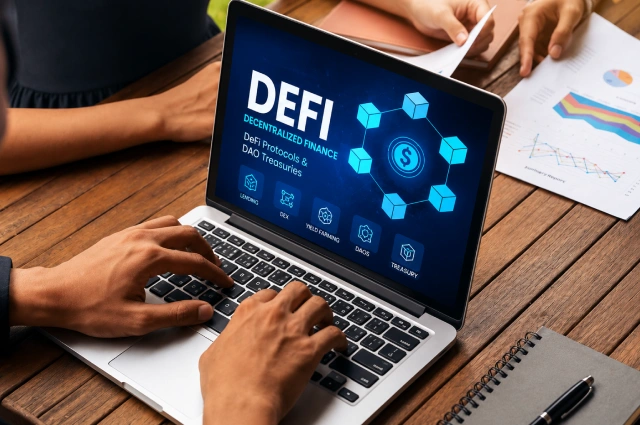
DeFi Protocols
Automate on-chain implementation of algorithmic governance for fee shifts, collateral parameters and protocol modifications.
- Fee parameter tuning
- Risk parameter voting
- Protocol upgrades
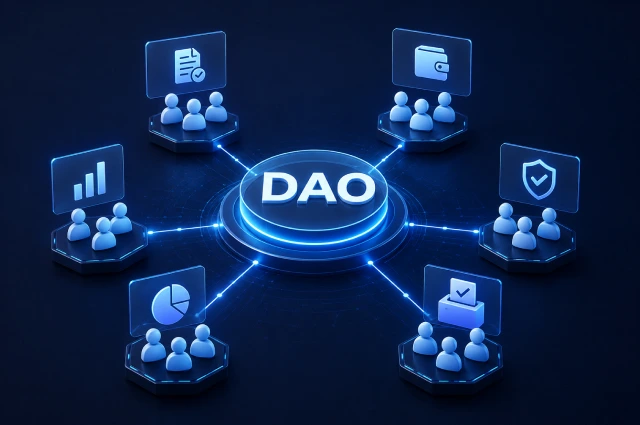
DAOs & Communities
Support decentralized communities with governance mechanisms for grant programs, treasury operations and coordinated member decision-making.
- Grant automation
- Treasury management
- Member voting
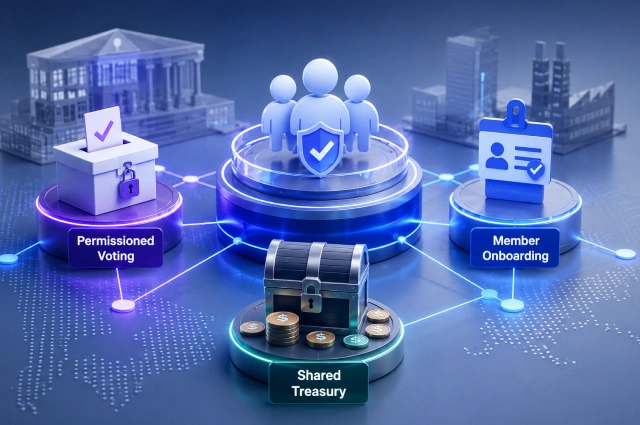
Enterprise Consortia
Implement permissioned governance models for supply chains, banking consortiums and industry alliances requiring regulated access and cooperative governance.
- Permissioned voting
- Member onboarding
- Shared treasury

Investment Syndicates
Automate governance for investment groups with standardized protocols for deal approvals, capital allocation and profit sharing.
- Deal voting
- Capital calls
- Profit distribution
DeFi Protocols
Automate on-chain implementation of algorithmic governance for fee shifts, collateral parameters and protocol modifications.
- Fee parameter tuning
- Risk parameter voting
- Protocol upgrades
DAOs & Communities
Support decentralized communities with governance mechanisms for grant programs, treasury operations and coordinated member decision-making.
- Grant automation
- Treasury management
- Member voting
Enterprise Consortia
Implement permissioned governance models for supply chains, banking consortiums and industry alliances requiring regulated access and cooperative governance.
- Permissioned voting
- Member onboarding
- Shared treasury
Investment Syndicates
Automate governance for investment groups with standardized protocols for deal approvals, capital allocation and profit sharing.
- Deal voting
- Capital calls
- Profit distribution
Accelerate Your Governance Transformation
Start Your ProjectOur Algorithmic Governance Development Process
We offer secure and scalable governance systems by developing ML pipelines for intelligent automation and strong cross-chain smart contract architectures.

Governance Design
We implement governance structures (voting strategies, quorum requirements, types of proposals, delegation models) appropriate to your environment.
Contract Development
We build basic governance logic including Governor contracts, timelocks, treasury modules, and automated proposal execution pipelines.


AI Integration
We embed AI technologies for proposal triage, spam filtering and real-time governance analytics to improve decision-making efficiency.
Audit & Deployment
We do the security audits, deploy on testnets, then go live on the mainnet with governance guardians so we can activate safely and in a regulated manner.

Why Choose Techfyte for Algorithmic Governance
Leverage our blockchain and AI expertise to build decentralized governance platforms trusted by DAOs and corporations for secure, scalable, and intelligent decision systems.

Governance & AI Experts
We design intelligent and automated governance systems using deep smart contract governance expertise alongside advanced AI models.

Production DAO Systems
We run and maintain live governance systems for DeFi protocols with large-scale treasury operations and real-world usage.

Security-First Approach
Governance security is our first priority with tiered protections, so every execution is safe, auditable and resilient to hostile acts.