Custody Provider Integration for Tokenization Platforms
Techfyte connects your chosen digital asset custodian to your tokenization platform. We integrate custody APIs, configure transaction approval workflows, and sync custody activity with your platform.
- API connectivity
- transfer approvals
- transaction tracking




Custody Integration for Tokenized Asset Platforms
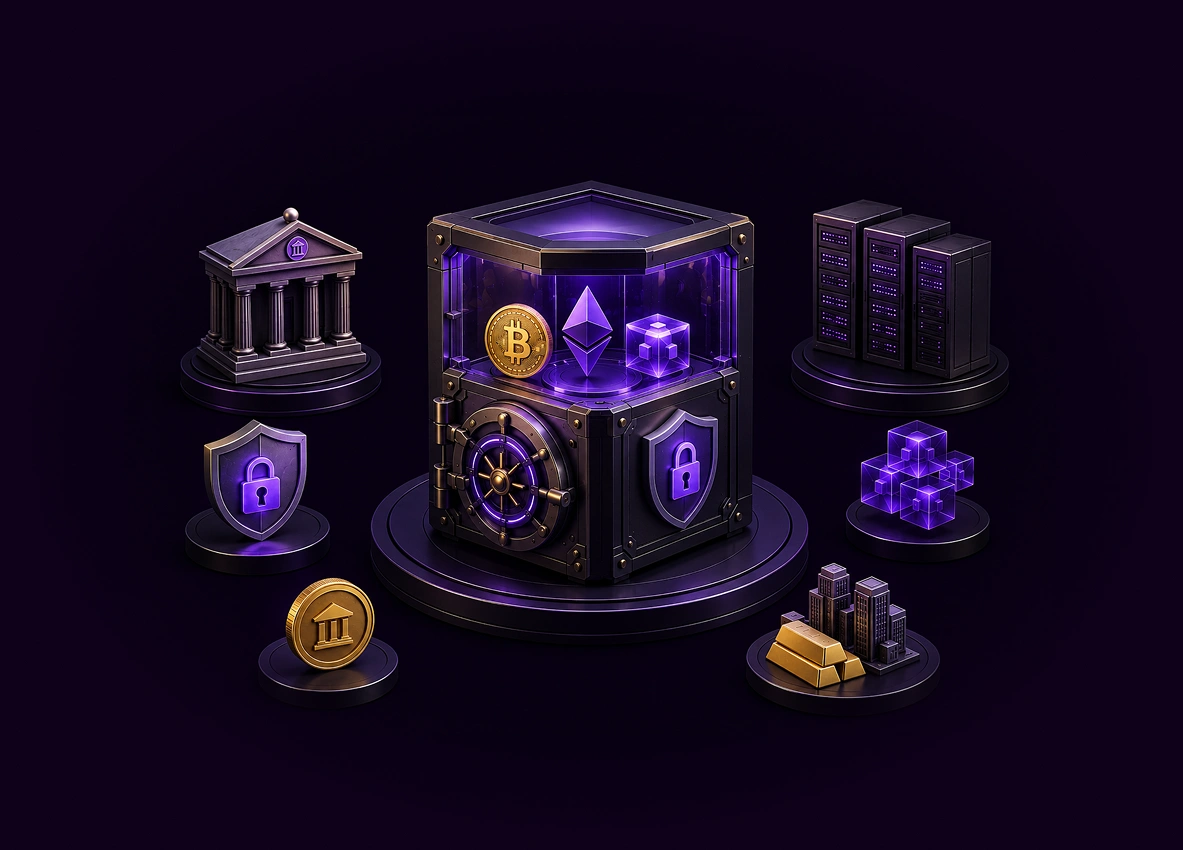
Custody provider integration connects an existing digital asset custodian to your tokenization platform through APIs and connected workflows. It lets the platform submit transaction requests, retrieve custody and approval updates, and keep records synchronized, so your team manages custody activity from the systems it already uses. Teams usually reach this point once the custodian is chosen and the tokenization platform has to work with it. Whether you are onboarding a new provider or tightening how transfers move today, Techfyte builds the integration layer that keeps balances, transfer requests, approvals, and custody records aligned. The result is less manual coordination, no need to build separate custody infrastructure, and room to add providers as your operational requirements evolve.
- Connect Custody APIs
- Map Accounts and Wallets
- Sync Transaction Status
When Your Tokenization Platform Needs Custody Provider Integration
Custody provider integration becomes necessary when your tokenization platform and your digital asset custodian need to operate as one workflow, rather than two systems reconciled by hand. That moment arrives in different ways: a custodian has been selected, the platform is expanding to support tokenized assets, or manual transfer coordination has started to slow your team down. Techfyte integrates the systems so asset balances, transfer requests, transaction approvals, and custody records stay synchronized. This gives your operations and finance teams centralized visibility and more automated transaction workflows, while keeping the flexibility to support additional providers as your requirements change. Below are the five situations that typically call for custody integration, and what the integration delivers in each.

Automated Transaction Workflows
Connect provider-supported APIs and approval policies to coordinate transfer requests, track execution, and manage updates with less effort.

Existing Custodian Selected
Connect your custodian’s APIs to the platform, linking custody accounts, wallet references, and supported transaction workflows.

Tokenization Platform Expansion
Extend your platform to support tokenized assets by tying custody services into asset management and tokenization workflows.

Manual Transfer Reduction
Bring transaction requests, approval steps, and status updates into one flow so your team stops coordinating transfers by hand.

Centralized Custody Visibility
Surface custody account data and transaction updates in your operations dashboard to monitor activity and simplify reconciliation.
Define Your Custody Boundary
Understand where platform responsibility should end and institutional custody should begin.
Outline Custody ScopeBenefits of Enterprise-Grade Custody Integration
Enterprise-grade custody integration closes the gaps between separate records. Teams re-key less data, approvals have clear owners, and every transfer can be traced from request to settlement.

Less Manual Data Entry
Synchronize asset and transaction data between systems to eliminate the need for your team to rekey data.

Clearer Approval Ownership
Track who is responsible for reviewing and approving each custody transaction request.

Better Transfer Visibility
Know the status of each asset transfer request as it moves through linked systems.

Easier Record Reconciliation
Compare custody records against platform transaction data and resolve discrepancies quickly.

Traceable Transaction History
Keep an accessible record of requests, approvals, status changes, and execution details.

Clearer Handling of Failed Transfers
Spot unsuccessful transfers through status updates, then investigate, correct, and retry them.
How Custody Provider Integration Works
Custody provider integration phases vary from API configuration to ongoing reconciliation. Each step corresponds to a control used by your compliance and operations teams.
Connect the Provider API
Integrate securely with authentication, permissions, webhooks, and endpoints exchanging data.
Map Accounts and Wallets
Map investor accounts, tokenized asset wallets, and custody accounts for them, if supported for segregation of assets and record of ownership.
Configure Supported Transfer Policies
Set transfer rules and approvals supported by the provider (e.g., whitelisting, relay signing, multisig).
Submit Transactions for Approval
If configurable, route transfer requests to approval workflows and role-based/multi-party authorizations before execution.
Track Settlement Status
Monitor pending, settled, rejected, and failed transactions with provider synchronization.
Reconcile Custody Records
Auto-reconcile custody balances, transaction references, and recorded transfer information in operating data.
Our Custody Provider Integration Services
Techfyte delivers custody provider integration services that connect institutional custody infrastructure to tokenization platforms. Each engagement is scoped around your provider’s capabilities and your platform’s operational requirements.

Custody API Integration
Connect third-party custodians to your platform through secure APIs for account data, transaction requests, and custody operations.

Account and Wallet Mapping
Tie platform users, investor accounts, and tokenized asset wallets to the right custodian accounts with accurate ownership references.

Wallet Provisioning Through the Custodian
Integrate custodian-supported provisioning so your platform can request new wallets and associate them with the relevant investor accounts.

Transfer Workflow Integration
Connect platform transfer requests to custody workflows for transaction submission, execution tracking, and status updates.

Approval and Policy Configuration
Configure authorization rules, transaction limits, address whitelisting, MPC signing, and multisignature approvals according to provider capabilities.

Webhook and Status Synchronization
Integrate provider webhooks and notifications to keep transaction updates, account changes, and settlement confirmations current.

Custody Reporting and Reconciliation
Synchronize balances, transaction references, and account records to support reporting and simplify reconciliation.

Transaction Exception Handling
Build workflows that flag rejected, failed, or delayed transactions so teams can investigate and act.

Custody Provider Migration Support
Map existing integrations, configure replacement APIs, and maintain continuity across supported custody workflows during a provider switch.
How Your Platform Connects to the Custodian
Custody provider integration connects your tokenization platform with the selected custodian through secure APIs and structured workflows. The platform manages asset tokenization operations, while the custodian handles supported custody, wallet, signing, and transaction functions.

Platform Controls
Manages investor accounts, token ownership, transfer requests, and business rules.

Custodian Handles
Manages custody accounts, wallets, key protection, transaction signing, and provider-supported approval policies.

Account Mapping
Links investor profiles and platform wallet references with corresponding custody accounts.

Transaction Coordination
Sends transfer requests to the custodian and receives approval, execution, rejection, and failure updates.

Record Synchronization
Syncs balances, transaction references, settlement details, and custody records for reporting and reconciliation.
Custody Integration Use Cases in Practice
Practical applications showing how custody systems operate within tokenized environments to manage asset control, execution flows, and structured ownership across different platform models.

Real World Asset Tokenization
Custody integration enables secure issuance and management of tokenized real world assets, ensuring ownership, transfer control, and compliance aligned settlement across platforms.
- Asset backed issuance flows
- Regulated ownership verification systems
- Controlled secondary market transfers
- Institutional settlement readiness

Fractional Ownership Platforms
Platforms offering fractional ownership use custody integration to divide, track, and protect shared asset holdings with clear governance and transparent execution rules.
- Shared asset custody structure
- Investor level asset segregation
- Controlled fractional transfer rules
- Transparent ownership tracking system

Institutional Trading Systems
Institutional trading systems rely on custody integration for secure execution, multi approval validation, and controlled movement of high value digital assets.
- Pre trade authorization checks
- Multi party approval workflows
- Secure execution routing layers
- Post trade reconciliation support

Token Issuance Platforms
Token issuance platforms use custody integration to manage lifecycle control, secure minting processes, and enforce governance rules on newly created digital assets.
- Controlled token minting logic
- Governance driven issuance policies
- Secure treasury asset handling
- Lifecycle based token control
See Custody in Real Systems
Explore how custody integration operates across tokenization, trading, and ownership platforms in real production environments.
View Integration ScenariosOur Custody Integration Delivery Process
Techfyte follows a structured process to connect tokenization platforms with digital asset custody providers. Each stage addresses a distinct risk, so the workflow is tested before production and documented.

Review Platform Architecture
Assess your architecture, custody requirements, and the provider's API capabilities to set scope and technical dependencies.
Verify Asset and Network Support
Confirm supported digital assets, blockchain networks, wallet types, and transaction operations against the selected custodian.


Configure Provider Connectivity
Check for transfer status updates and exception handling for pending, failed, rejected, and successful transfers.
Test Transaction Scenarios
Validate pending, failed, rejected, and completed transfers for accurate status updates and exception handling.


Validate Reconciliation and Records
Make sure execution, records synchronization, and balance reconciliation are reconciled with no discrepancies before production.
Deploy and Complete Handover
Launch the integration, verify production connectivity, and hand your team technical documentation and operational guidance.

Why Choose Us as Digital Asset Custody Integration Company?
In its role as a digital asset custody integrated company, Techfyte develops integration components that integrate with your platform. The result is controlled movement of assets, enforced approval rules, and ongoing records of actual volume of transactions.

Production Proven Delivery
Our custody integrations run in live tokenized environments where asset movement and system stability are already in production use.

Distributed Signing Expertise
We bring hands-on experience with MPC and multisignature systems that reduce centralized risk while keeping approvals structured and verifiable.

Platform Aligned Engineering
We design around your existing architecture, so custody capability fits your current systems without structural redesign or disruption.