BaaS Development Company
Build the future of banking. Partner with a BaaS development company that combines compliant, API-driven infrastructure with multi-chain wallet capabilities and AI development services to power next-generation financial experiences.
- API-First Core Banking
- Multi-Currency & Crypto Support
- Built-In Compliance Tools











What is Banking-as-a-Service in Web3?
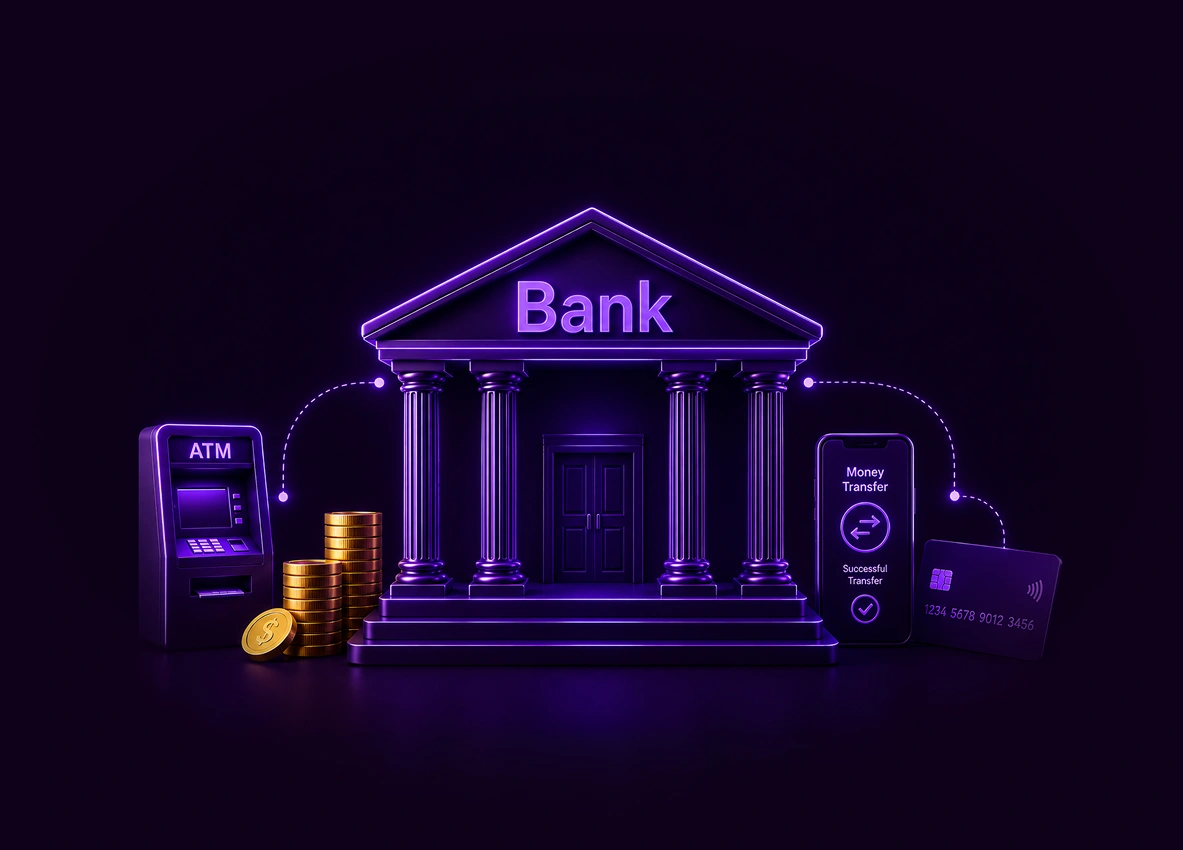
Banking-as-a-Service from a BaaS development company is a digital bank infrastructure model that allows fintechs, Web3 startups, crypto platforms and enterprises to embed regulated banking, payments, wallets, lending and account services into their products without having to build a full banking stack from scratch. Programmable payments, tokenized banking services and multi-currency user experiences supported by blockchain-backed banking pipelines and API-driven financial services for faster product launches. Web3 BaaS provides a scalable infrastructure for next-gen digital banking. It includes predictive analytics solutions for risk intelligence and DAO governance for decentralized treasury monitoring.
- Stablecoin-Powered BaaS
- API Banking Ecosystem
- Embedded Finance Web3
- Fiat & Crypto Hybrid Accounts
Why do Financial Institutions Need a BaaS?
Legacy systems were never built for on-chain activity, programmable assets, tokenized payments or real-time risk visibility. That’s why traditional banks have difficulty servicing crypto and Web3 companies. This is creating an ever-growing market gap, as exchanges, DeFi protocols, NFT platforms, fintech apps and digital asset businesses all need reliable banking access. But they are up against account closures, delays and poor financial infrastructure. BaaS helps financial institutions to modernize their operations, reduce risk and capture demand from the fast growing Web3 economy. This includes agentic process automation for compliance workflows and smart contract audit for transaction security.

Systemic De-Risking
Traditional banks often refuse to offer accounts, payments and treasury services to crypto businesses, leaving a large underserved market.

Legacy Compliance Frameworks
Risk models today cannot accurately assess automated compliance and KYC requirements, on-chain transaction flows and wallet behavior

Correspondent Banking Threats
Correspondent banks could apply pressure on banks that serve crypto clients because of worries about regulatory exposure and transaction risk.

High-Volume Transactions
Crypto businesses generate frequent, low value transfers that activate AML systems designed for slower, traditional banking activity.

Unbanked Web3 Sector
Crypto exchanges, DeFi protocols and NFT platforms need API integration to make sure that banking services work reliably and that transactions are settled in real time.
Build Banking Infrastructure for the Web3 Economy
Start Building BaaSBenefits of BaaS Development for Faster Time-to-Market Banking
BaaS development expedites the delivery of scalable, compliant banking services that necessitate cross-chain smart contract support and payment infrastructure for AI development services.

Launch in Weeks
Deploy digital banking infrastructure that is branded at a rate that is up to 80% quicker than traditional core banking builds.

60% Lower Cost
The cost of banking infrastructure is reduced by cloud-native, API-driven systems, which reduce development, maintenance, and operational overhead.

Programmable Compliance
Customer enrollment is enhanced through automated KYC/AML, sanctions checks, and on-chain monitoring, which simultaneously decreases the manual compliance workload.

Unified Fiat-Crypto Ledger
Enhance security and transparency across transactions by managing fiat IBANs, stablecoins, and digital assets in a single ledger.

Real-Time Settlement
Execute payments, transfers, and asset movements around the clock, without the constraints of banking hours or traditional settlement windows.

Built for Scale
Elastic cloud infrastructure facilitates the expansion of multi-market banking, high transaction volumes, and millions of users.
Understanding How BaaS Development Works
A BaaS Development Company uses API-led core banking, secure wallet infrastructure for digital assets, and ML pipeline development for risk intelligence.
Core Banking API Setup
Build a cloud-native ledger with multi-asset and multi-currency support for scalable banking operations and account management.
Wallet & Account Provisioning
Automate the issuance of IBANs, the creation of blockchain wallets, and the provisioning of wallets and accounts for fiat and crypto users.
KYC/KYB Automation
Pre-account activation. Automated KYC/AML checks, sanctions screening, business checks and AI-powered identity verification.
Payment Orchestration
Use one API layer for crypto, stablecoin, SWIFT & SEPA transfers with payment routing and ledger monitoring.
On-Chain Settlement
Smart contract automation is used to do atomic settlements across blockchains, reducing counterparty risk and cumbersome reconciliation.
Compliance & Monitoring
Support of real time transaction monitoring, suspicious activity detection, alert generation and regulatory reporting process.
Our BaaS Development Services at a Glance
Hire a BaaS development company that has experience in integrating AI development services and web3 development services to develop secure digital banking SaaS solutions.

White-Label Neobank Platform
White-label banking solutions (branded IBANs, cards, wallets, payments, user interfaces and admin controls).

Crypto-Fiat Payment Gateway
Unify one API for crypto settlements, stablecoins, SWIFT and SEPA across all global payment workflows.

Multi-Currency Account System
Consolidate 30+ fiat currencies and 100+ crypto assets on a single ledger with automated balance monitoring and reconciliation.

Automated KYC/AML Suite
Use AI to do identity checks, sanctions screening, wallet risk assessment and transaction monitoring to ensure compliance as part of the onboarding process.

Tokenized Deposit Platform
Build on-chain deposit products that are bank-compliant with transparent settlement records and regulation.

Stablecoin Issuance Infrastructure
Create stablecoins that comply with launch regulation, backed 1:1 with reserves, with controls on issuance, redemption and audit-ready reporting.

Corporate Treasury API
Provide virtual accounts, liquidity routing, cash management tools and mass disbursements via an enterprise banking API provider layer.

Banking License Support
Assist in development of technical documentation, compliance processes and platform readiness for EMI and full banking license applications.

Card Issuing Infrastructure
Enforce spend controls, transaction approvals, user limits and real-time reporting for virtual and physical card programs.
BaaS Development Solutions by Use Case
With our BaaS development services, we offer Cross-border payment APIs, full-stack banking infrastructure, securities tokenization compliance frameworks, and cross-chain smart contract patterns.

Stablecoin Cross-Border Payment API
Convert local fiat to stablecoin and foreign fiat for instant, programmable cross-border settlement.
- Instant settlement
- Last-mile FX
- Reduced friction

Multi-Asset Treasury Dashboard
Manage fiat, stablecoin, and crypto treasuries from one unified control layer.
- Hybrid treasuries
- Automated reconciliation
- Risk monitoring
On-Chain Compliance Engine
Simplify transaction monitoring with sanctions screening, wallet risk checks and suspicious activity reporting.
- Real-time scanning
- AML rules
- Audit trails

Programmable Smart Payments
Make conditional payments based on external triggers, milestones, escrow rules or delivery verification.
- Conditional logic
- Escrow settlement
- Automated workflows

Virtual Account Management
Create unique IBANs for customers, merchants, or business units from a single master account.
- Sub-accounts
- Reconciliation
- Payment routing

Card Issuing & Spend Controls
Issue virtual or physical cards linked to fiat, stablecoin, or crypto-funded accounts to facilitate management of user and business expenses.
- Virtual cards
- Spend limits
- Real-time controls
Industries We Serve for Web3 Banking Product Development
Sectors ranging from commodity tokenization platforms to enterprise AI assistants for compliance monitoring are supported by our BaaS Development Company.

Cryptocurrency Exchanges
IBANs, cards, fiat accounts, and integrated on/off-ramp services can be provided directly to retail and institutional consumers by cryptocurrency exchanges. This assists exchanges in the reduction of deposit friction, the enhancement of user retention, the facilitation of quicker withdrawals, and the development of a more comprehensive trading-to-banking experience within a single platform.
- User retention
- Fiat integration
- Compliance ready

DeFi Protocols & DAOs
DeFi protocols and DAOs have the capacity to automate contributor reimbursements, manage protocol treasuries, process vendor payments, and connect fiat ramps for operational spending. BaaS infrastructure enables decentralized organizations to connect on-chain capital with real-world banking requirements without relying on fragmented financial partners.
- Treasury automation
- Global payouts
- Operational banking

NFT & Gaming Platforms
In-app fiat wallets, marketplace settlements, creator royalties, and player payments can be facilitated by NFT marketplaces and gaming platforms for global digital asset economies. This enables platforms to facilitate compliant payment flows, faster withdrawals, cross-border earnings, and smoother purchases for creators and participants.
- Player payouts
- Wallet infrastructure
- Global access

Remittance & Payment Companies
Stablecoin-powered settlement rails can be employed by remittance and payment companies to expedite delivery, reduce cross-border transfer costs, and facilitate local currency disbursements. BaaS allows payment providers to modernize corridor infrastructure while simultaneously maintaining account, compliance, and reconciliation controls.
- Instant settlement
- Cost reduction
- Global reach

Fintech & Challenger Banks
Under their own license, fintech companies and challenger banks have the ability to introduce branded neobank experiences that include accounts, cards, payments, compliance protocols, and scalable infrastructure. This expedites market entry, simplifies the backend, and grants product teams greater control over client journeys.
- Rapid launch
- Brand ownership
- Scalable tech

Web3 Startups & Infrastructure
Web3 startups can access crypto-friendly corporate banking, payroll accounts, vendor payment tools, and treasury infrastructure without facing the delays of traditional banking onboarding. This provides founders with dependable financial operations for the purpose of managing vendors, planning runways, expanding globally, and paying their teams.
- Business banking
- Crypto-friendly
- Reliable access
Cryptocurrency Exchanges
IBANs, cards, fiat accounts, and integrated on/off-ramp services can be provided directly to retail and institutional consumers by cryptocurrency exchanges. This assists exchanges in the reduction of deposit friction, the enhancement of user retention, the facilitation of quicker withdrawals, and the development of a more comprehensive trading-to-banking experience within a single platform.
- User retention
- Fiat integration
- Compliance ready
DeFi Protocols & DAOs
DeFi protocols and DAOs have the capacity to automate contributor reimbursements, manage protocol treasuries, process vendor payments, and connect fiat ramps for operational spending. BaaS infrastructure enables decentralized organizations to connect on-chain capital with real-world banking requirements without relying on fragmented financial partners.
- Treasury automation
- Global payouts
- Operational banking
NFT & Gaming Platforms
In-app fiat wallets, marketplace settlements, creator royalties, and player payments can be facilitated by NFT marketplaces and gaming platforms for global digital asset economies. This enables platforms to facilitate compliant payment flows, faster withdrawals, cross-border earnings, and smoother purchases for creators and participants.
- Player payouts
- Wallet infrastructure
- Global access
Remittance & Payment Companies
Stablecoin-powered settlement rails can be employed by remittance and payment companies to expedite delivery, reduce cross-border transfer costs, and facilitate local currency disbursements. BaaS allows payment providers to modernize corridor infrastructure while simultaneously maintaining account, compliance, and reconciliation controls.
- Instant settlement
- Cost reduction
- Global reach
Fintech & Challenger Banks
Under their own license, fintech companies and challenger banks have the ability to introduce branded neobank experiences that include accounts, cards, payments, compliance protocols, and scalable infrastructure. This expedites market entry, simplifies the backend, and grants product teams greater control over client journeys.
- Rapid launch
- Brand ownership
- Scalable tech
Web3 Startups & Infrastructure
Web3 startups can access crypto-friendly corporate banking, payroll accounts, vendor payment tools, and treasury infrastructure without facing the delays of traditional banking onboarding. This provides founders with dependable financial operations for the purpose of managing vendors, planning runways, expanding globally, and paying their teams.
- Business banking
- Crypto-friendly
- Reliable access
Turn Financial Products Into Connected Banking Experiences
Get Expert AssistanceOur BaaS Development Process at a Glance
Our BaaS development process integrates secure wallet infrastructure with cross-chain smart contract settlement logic to facilitate compliant banking deployment.

Licensing & Regulatory Strategy
Before the platform development process commences, we ascertain the target jurisdictions, license requirements, compliance obligations, and operational controls.
Core Banking API Integration
We implement a cloud-native ledger that supports multi-currency, multi-asset, account, and transaction administration.


KYC/AML & Payment Rail Setup
Identity verification, transaction monitoring, risk assessment, and payment gateways are integrated to ensure that user onboarding is compliant.
Audit & Production Launch
We execute a security audit, regulatory sign-off, phased deployment, and production onboarding for live banking operations.

Why Choose Techfyte for BaaS Development
Techfyte serves as a BaaS Development Company for scalable, compliant Banking as a Service platforms, leveraging our fintech and blockchain expertise.

Banking & Crypto Experts
We integrate digital asset workflows, payment orchestration, and fiat-crypto ledgers for regulated banking products.

Production BaaS Deployments
We develop live platforms that are intended to handle millions of transactions for regulated fintech and Web3 clients.

Automated Compliance Infrastructure
Across onboarding and payment channels, we implement AI-powered KYC/KYB, transaction monitoring, and sanctions screening.