


The Invoice Management Challenges Slowing Down Finance Teams
Traditional invoice processing remains fairly labor intensive. It sits at the intersection of finance, operations, and vendor relationships; yet for most businesses, it remains stubbornly manual. Three structural realities define this space
Unstructured Data Everywhere
Invoices are inherently unstructured. Every vendor uses different formats, layouts, currencies, and naming conventions. Unlike standardized digital transactions, invoices arrive as PDFs, scans, images, and emails — each demanding human interpretation to extract meaning.
Accuracy Is Mission-Critical
Accuracy isn't optional — it's existential. A single miskeyed invoice number, wrong decimal place, or missed duplicate can cascade into payment errors, reconciliation nightmares, audit flags, and damaged vendor trust. The margin for error in financial operations is effectively zero.
Growing Workloads, Limited Resources
Volume grows faster than headcount. As businesses scale, invoice volumes multiply — more vendors, more transactions, more currencies — but finance teams rarely grow at the same pace. The gap between incoming work and available processing capacity widens over time.
Compliance and Audit Readiness Matter
Financial records must remain traceable, verifiable, and audit-ready. Missing documentation, inconsistent data capture, or poor record management can create compliance risks and increase the burden of financial reviews and audits.
The result?
A function that demands speed, perfect accuracy, and the ability to handle growing complexity is still largely powered by spreadsheets, manual keying, and human review. This isn't a failure of finance teams — it's a structural mismatch between the demands of modern invoice management and the tools available to meet them.
The Challenge
When Manual Invoice Processing Hits the Breaking Point: Five Operational Bottlenecks
As invoice volumes grow, manual and semi-automated workflows become increasingly difficult to manage. What once seemed manageable often turns into a source of delays, errors, and inefficiencies. Most organizations eventually encounter the same five operational bottlenecks that limit scalability and increase financial risk.
The Data Entry Bottleneck
Finance teams spend hours transcribing vendor names, invoice numbers, dates, line items, amounts, and tax details from documents into systems. This isn't just slow — it's cognitive drudgery that pulls skilled professionals away from analysis, strategy, and exception handling. As invoice volumes climb, the bottleneck tightens.
The Error Amplification Problem
Manual data entry introduces mistakes — transposed digits, misread amounts, wrong dates, incorrect vendor assignments. These errors don't stay contained. They ripple into payment processing, account reconciliation, tax filings, and financial reporting. By the time an error is caught, the cost of correction often exceeds the cost of the original transaction.
The Duplicate Blind Spot
Without automated cross-referencing across vendor names, invoice numbers, and amounts, duplicate invoices easily slip through. Whether caused by vendor re-billing or internal re-uploads, duplicates lead to overpayment — and discovering them after the fact is a painful, manual forensic exercise.
The Integration Disconnect
Invoice data captured in one system must often be manually transferred to accounting software. This re-entry step doubles the labour, introduces a second opportunity for errors, and creates a time lag between invoice receipt and financial visibility. The "last mile" of invoice processing remains stubbornly manual for many teams.
The Visibility Gap
Fragmented records across email, shared drives, spreadsheets, and accounting tools make it nearly impossible to answer strategic questions: Which vendors are we spending most with? Are there unusual spikes in billing? What's our month-over-month trend? Without centralized analytics, finance leaders operate with incomplete information.
The bottom line
These five bottlenecks don't just reduce efficiency; they impose a ceiling on how much invoice volume a team can handle without adding headcount, and they introduce financial risk that compounds with scale.
The Solution: Designing a Smarter Invoice Management Workflow
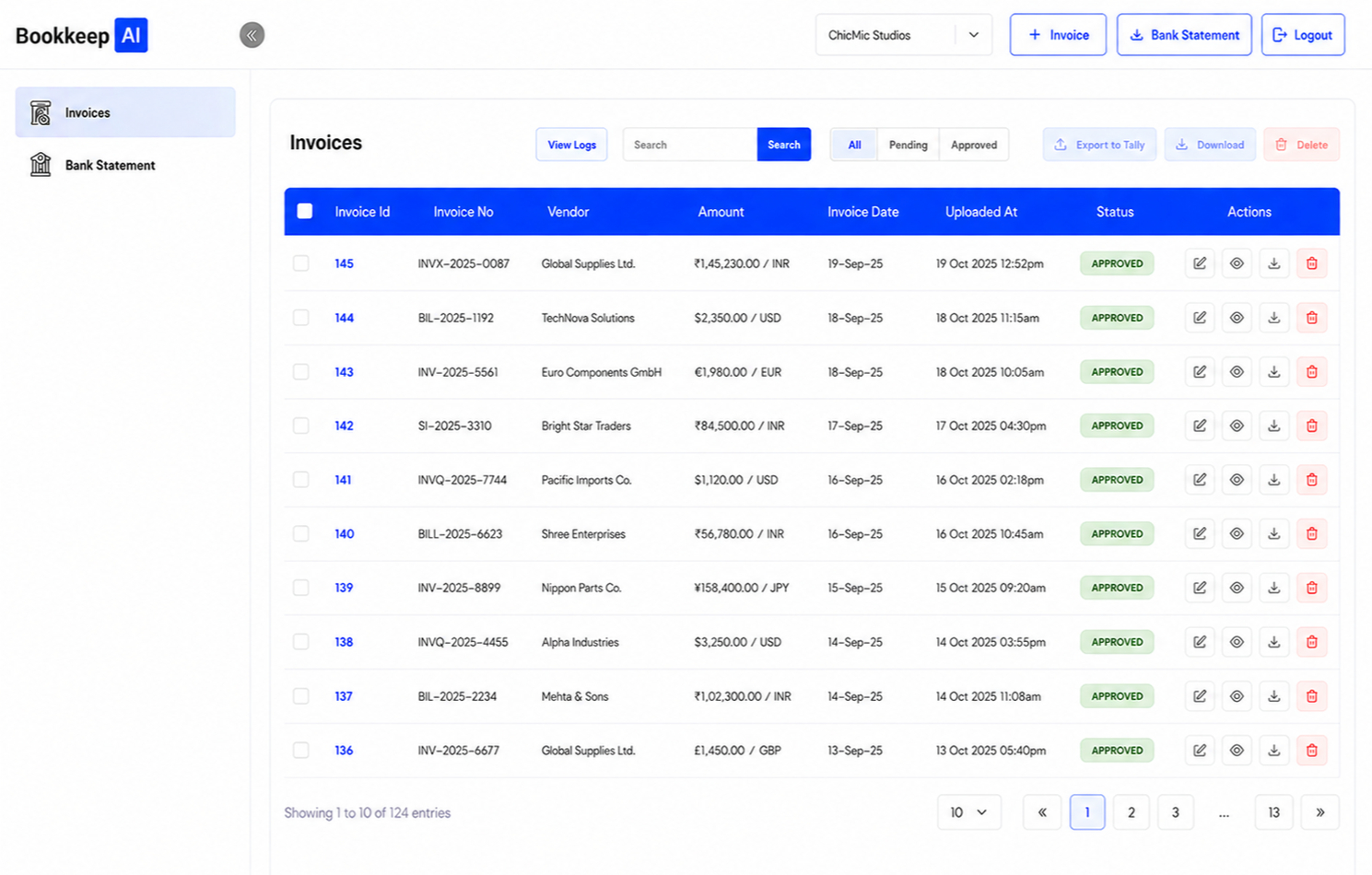
Techfyte developed Bookeep, an AI-enabled invoice management tool that automates the end-to-end invoice workflow, including upload, extraction, verification, duplicate detection, reporting and export. The solution was designed to eliminate manual work, increase accuracy and provide enterprises with a single system to operate their invoice data.
Step 1
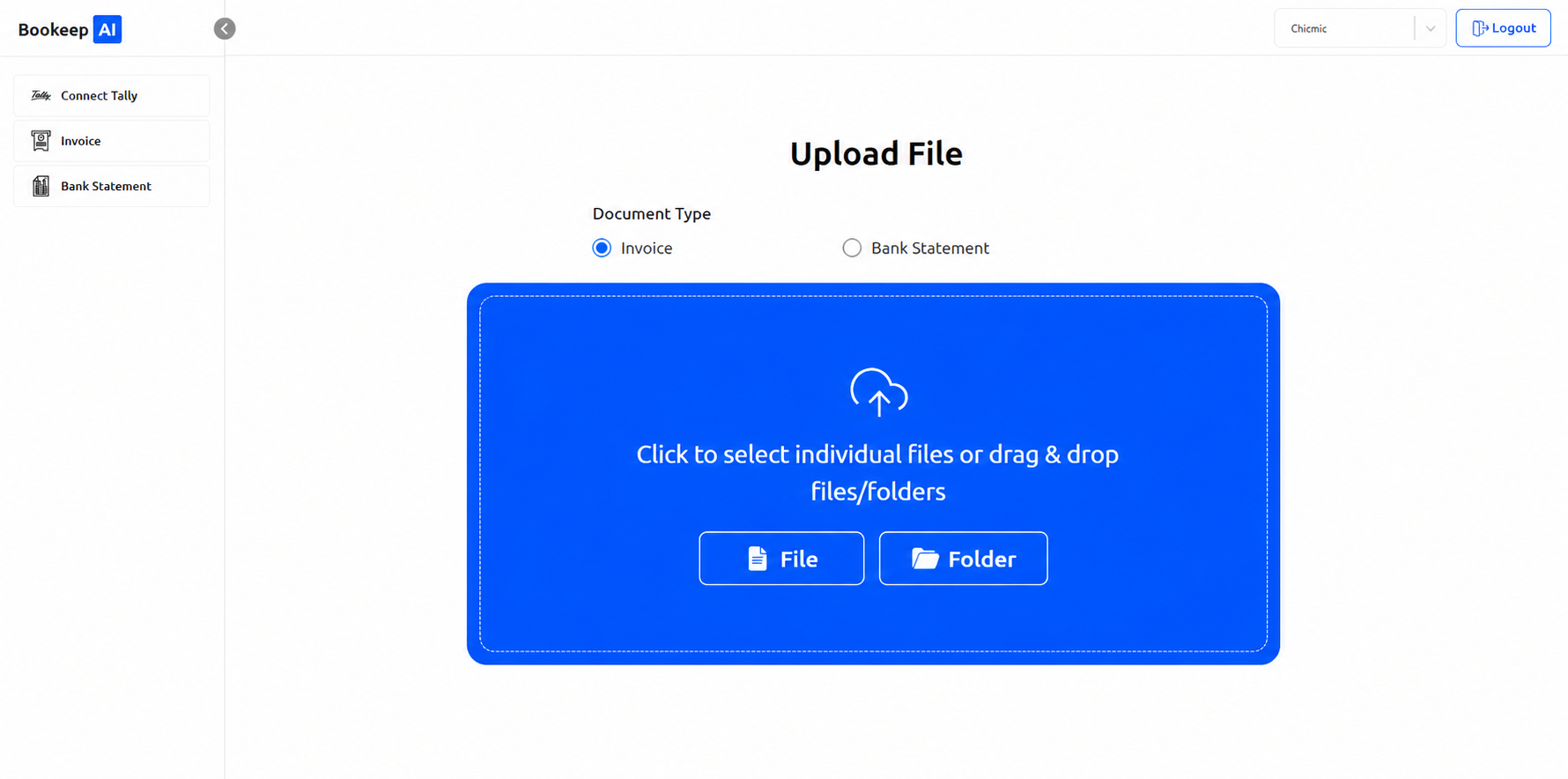
Instant Invoice Upload
Bookeep has a simple drag-and-drop interface to upload invoices. This gives finance teams a quick, intuitive and accessible procedure which is not technically complex.
Step 2
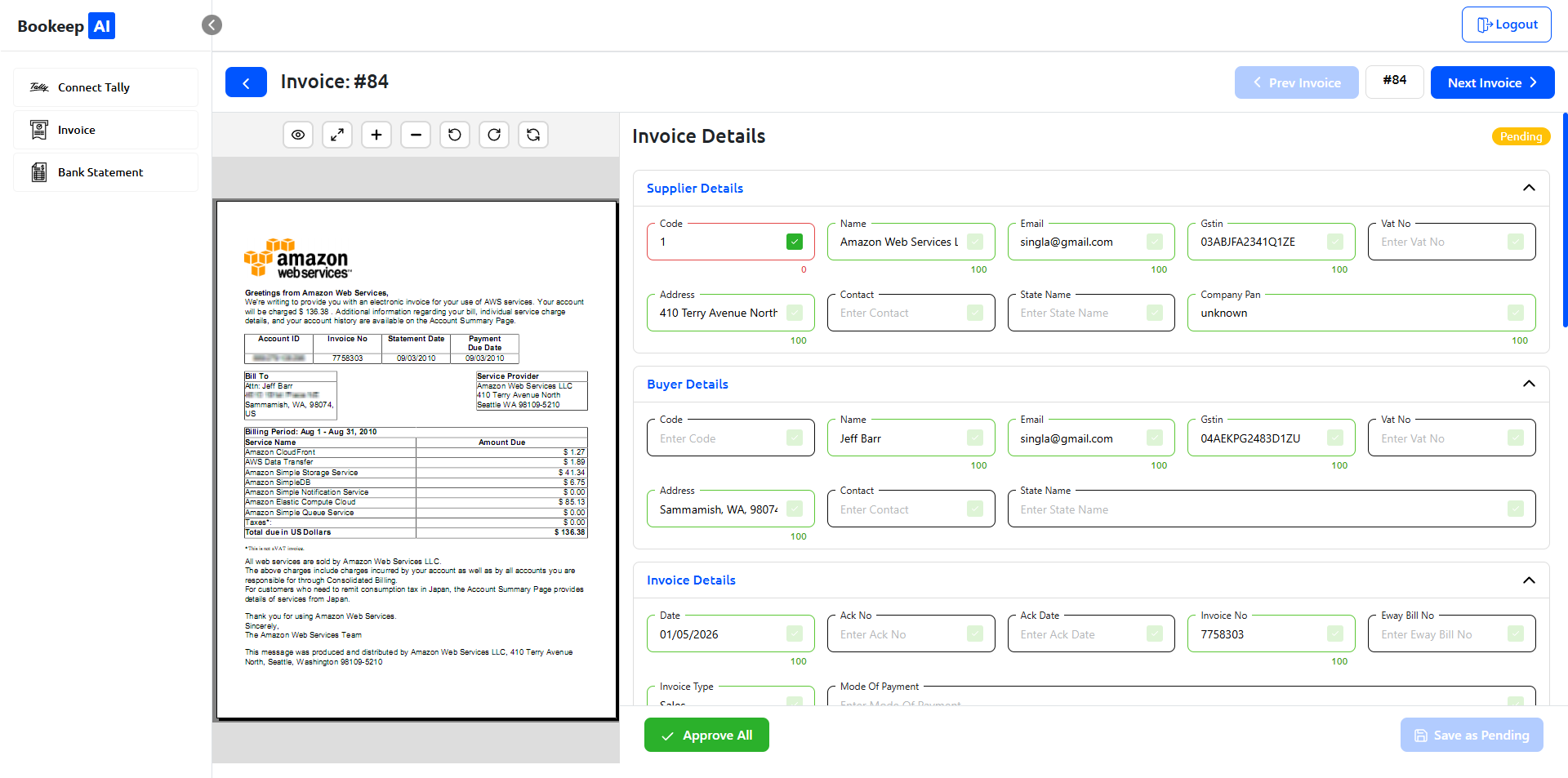
AI-Powered OCR Data Extraction
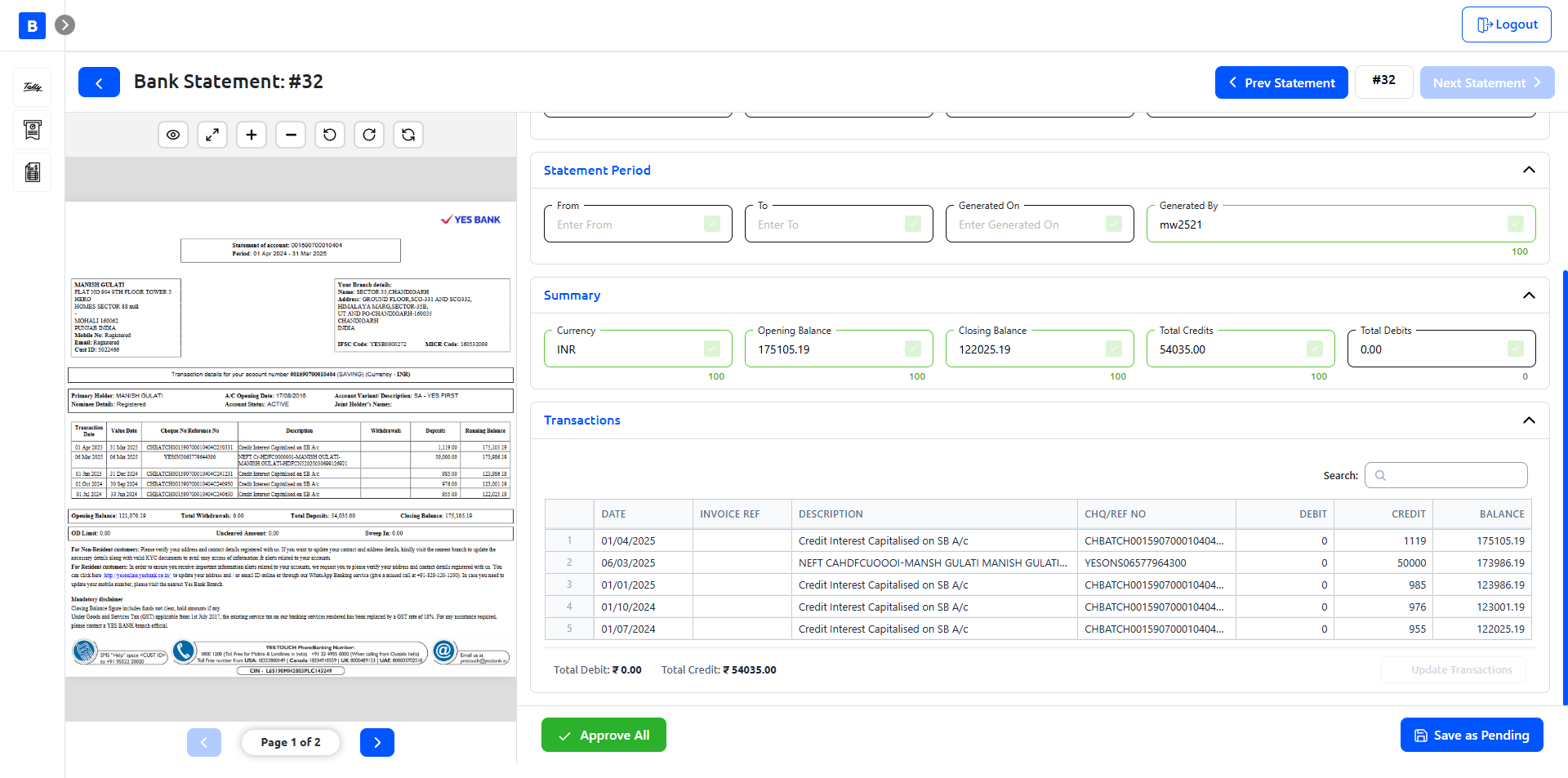
The system reads the invoice papers and extracts key details like vendor name, invoice number, invoice date, due date, amount, tax, currency and line items using advanced OCR and AI.
Step 3
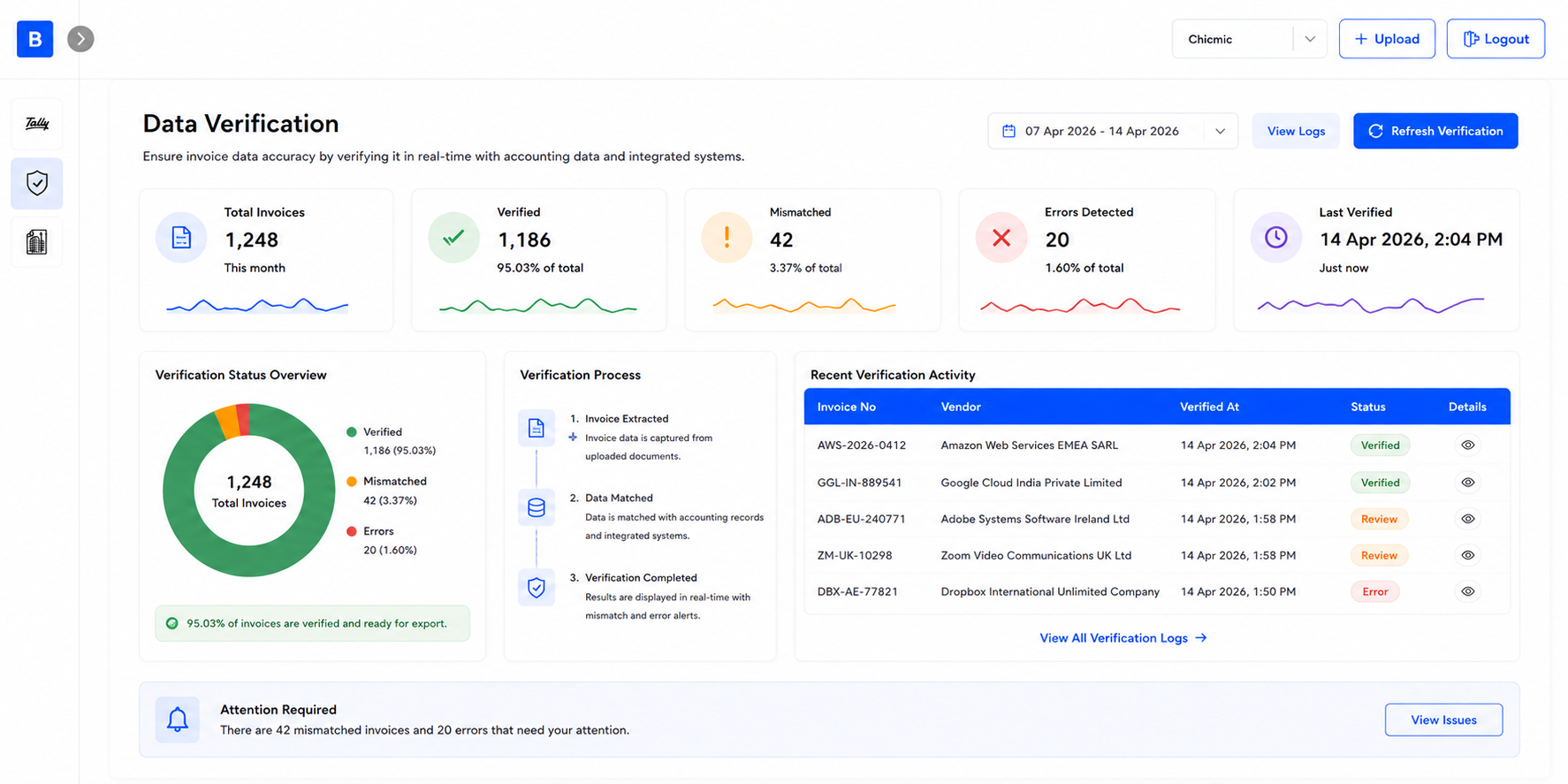
Real-Time Data Verification
To avoid any errors at the time of export, Bookeep verifies the consistency of the data extracted from invoices with accounting data and with other integrated systems.
Step 4
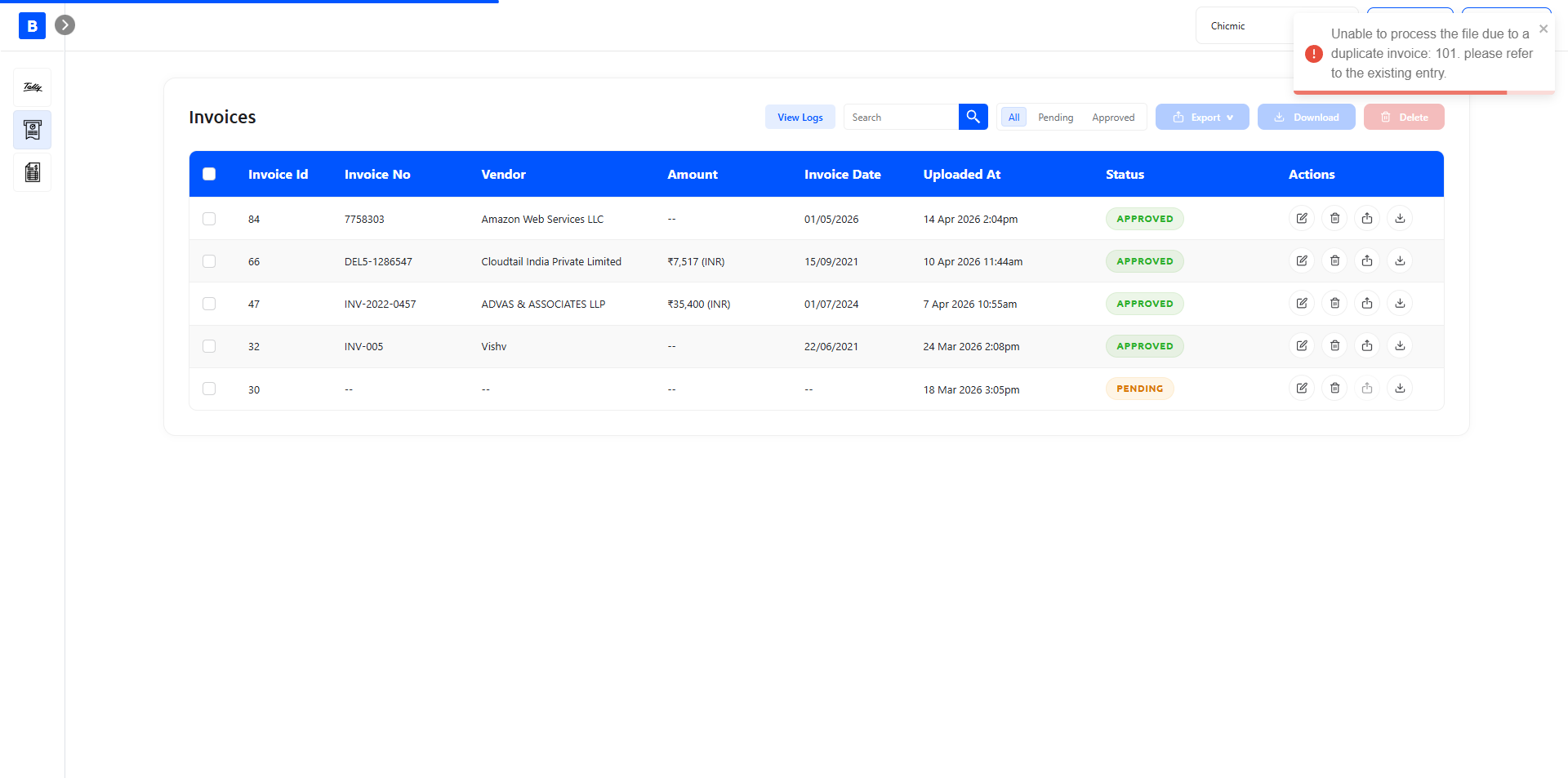
Duplicate Invoice Detection
The method is to compare vendor name, invoice number and invoice amount to find duplicate invoices. This is good for organizations because it prevents multiple payments and billing issues.
Step 5
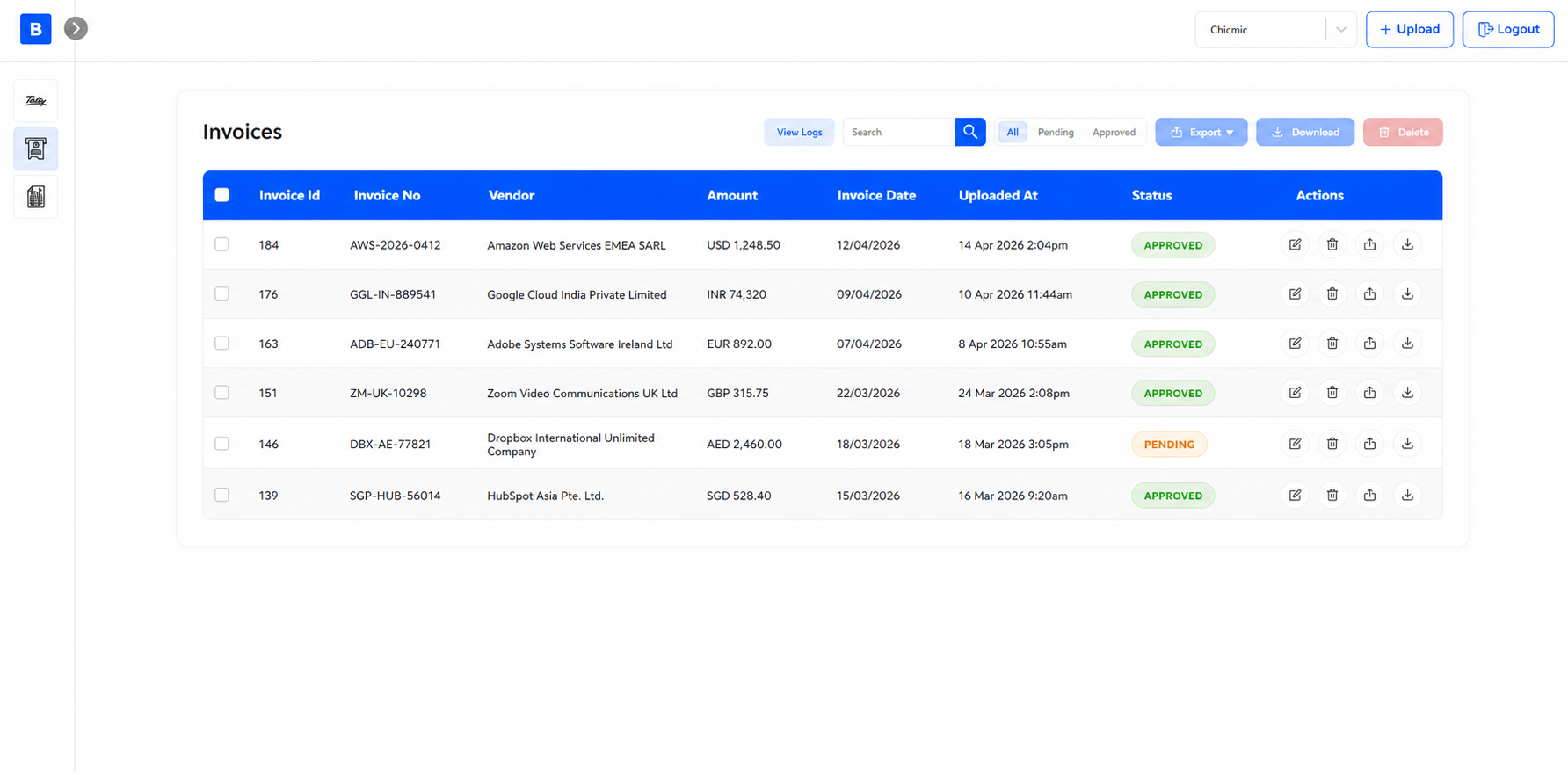
Multi-Currency Invoice Support
Multi-Currency invoicing Bookeep can handle multi-currency invoicing and automatically converts to your local currency, using real-time exchange rates. This is especially important for companies that do business with abroad vendors.
Step 6
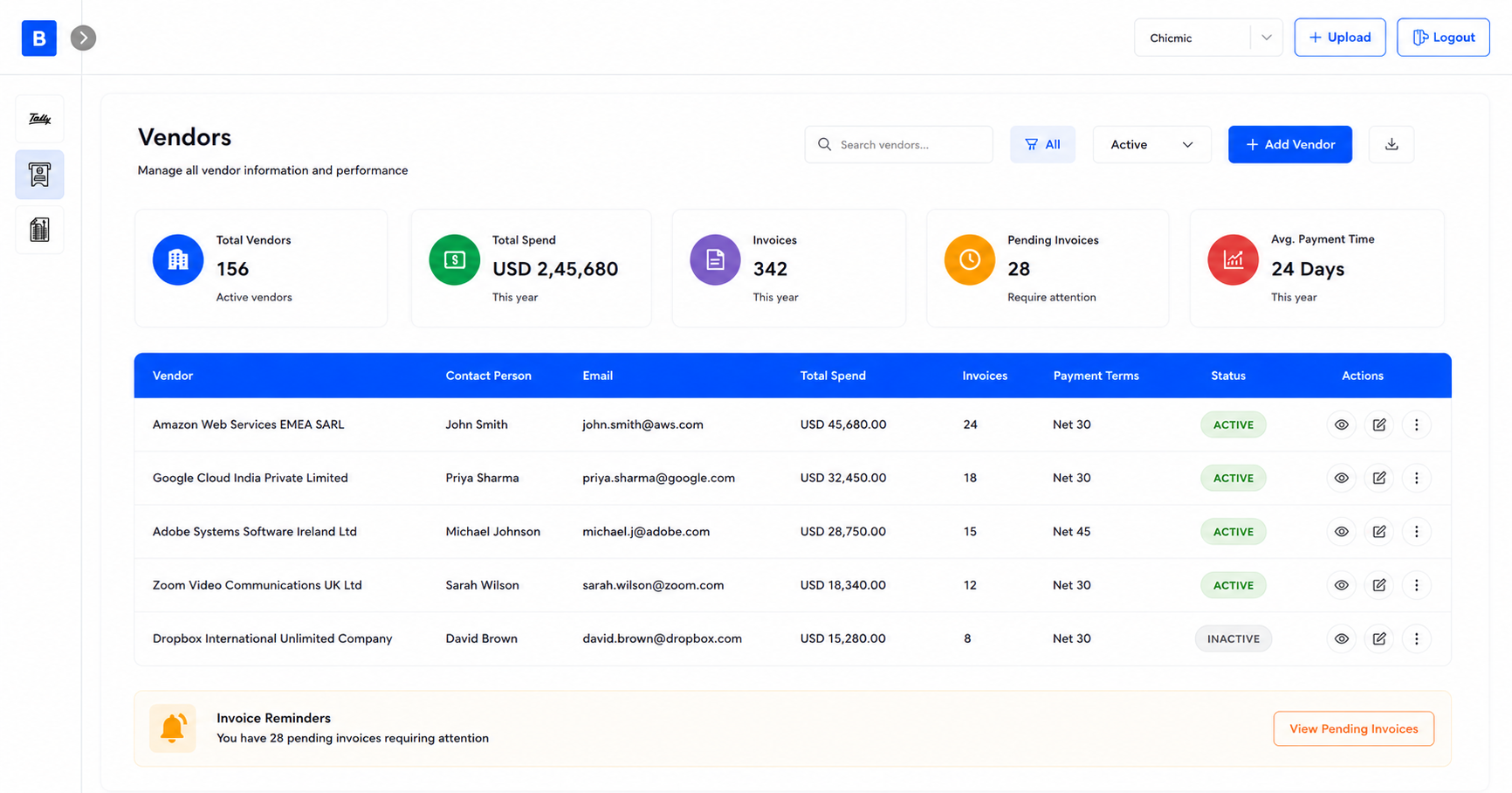
Centralized Vendor Management
It also maintains all vendor information, invoice history, patterns of spending and regular invoice reminders on one platform. It allows finance to better manage their vendors.
Step 7
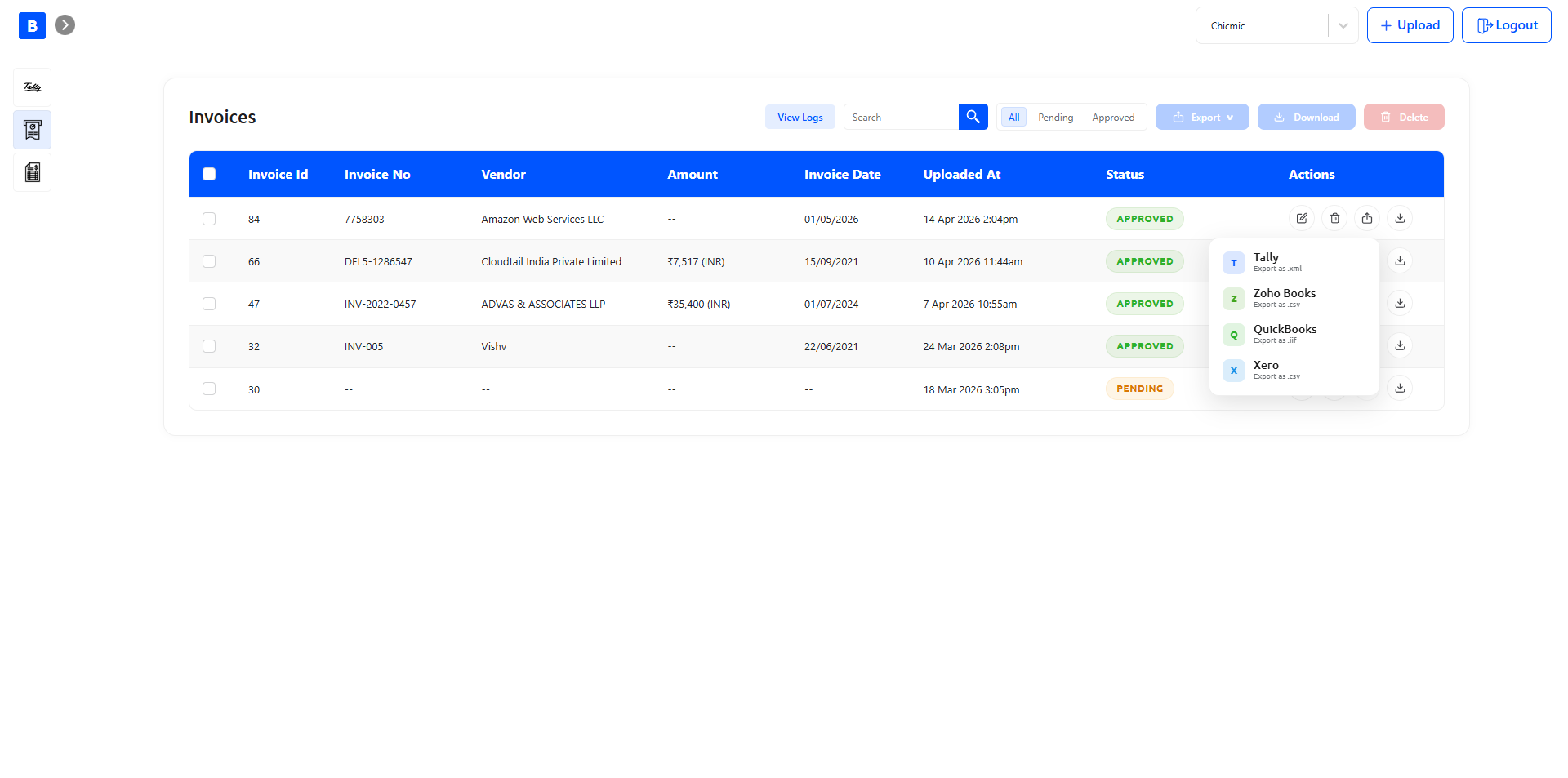
One-Click Accounting Software Export
Bookeep users can export approved invoice data with a click directly to their accounting software, reducing the manual transfer work and increasing the speed of reconciliation.
Step 8
AI Insights & Analytics Dashboard
The dashboard has spend trends, monthly invoice breakdowns, vendor comparisons and AI-driven anomaly detection. This helps firms to have a better understanding of their financial activity.
Architecture & Development Framework
Bookeep was built using a modern and scalable technology stack that supports AI-powered invoice processing, secure data handling, responsive user experience, and accounting software integration.

Figma
UI/UX Design

ReactJS
Frontend

Python
Backend

MySQL
Database

Smart OCR and AI models
AI & OCR

Selenium
QA Tools
Measurable Improvements Across the Invoice Management Lifecycle
Techfyte evaluated the impact of Bookeep by comparing the traditional manual invoice workflow with the automated AI-powered workflow after implementation.
The Business Benefits of Automated Invoice Management
Bookeep is designed to provide real value to businesses, finance departments, accountants and decision makers. It eliminates duplicate work, enhances the precision of your finances and makes invoice administration easier to manage.
Less Manual Work. More Accuracy.
Finance teams can process invoices faster, reduce errors, and avoid spending hours on repetitive entry and verification tasks.
Better Visibility. Smarter Decisions.
Business owners get clear insights into spending, vendors, invoice trends, and financial anomalies through a centralized dashboard.
Faster Reconciliation. Cleaner Records.
Accountants can work on the verified invoice data and export it directly to accounting software, eliminating mismatch and reconciliation delays.
Scalable Invoice Operations.
Bookeep helps firms manage the increase in invoice numbers without adding to manual burden.
Closing Thoughts
Powered by AI, features include real-time verification, duplication identification, multi-currency support, vendor management, accounting software connection and analytics Bookeep helps organizations to:
-
 Save hours of manual invoice processing time.
-
Improve invoice data accuracy and reduce human errors.
-
Detect duplicate invoices before they create payment issues.
-
Export verified data directly into accounting systems.
-
Track vendor spending and invoice trends from one dashboard.