Arbitrum Orbit Development
Launch your own customizable L2 or L3 chain on Arbitrum Nitro technology, built for enterprise scalability.
- Custom L2 or L3 Deployment
- Nitro Technology Stack
- Custom Gas Tokens & DA










Arbitrum Orbit Development: Custom Chain Infrastructure for Enterprise Scale
Arbitrum Orbit is a permissionless framework to launch custom Ethereum-scaling chains with Arbitrum’s Nitro stack. It enables teams to deploy dedicated L2 chains that settle directly to Ethereum, as well as L3 chains that settle to Arbitrum One or Nova, inheriting Ethereum-level security. Orbit chains can be configured as full Rollups or cheap AnyTrust chains, and any ERC-20 token can be used as a native gas token. It’s fully EVM-compatible, lets developers write contracts in Rust and C++ with Stylus, and offers full control over governance, throughput, privacy, and data availability.
- Nitro Technology Stack
- L2 or L3 Architecture
- Rollup or AnyTrust Modes
- Full Customization
Complete Arbitrum Orbit Development, Built Your Way
Our Arbitrum Orbit development combines smart contract development and smart contract audit to create safe, production ready chains.

Custom L2 or L3 Deployment
We develop customized chains that can be settled to Ethereum or Arbitrum One based on your particular workload needs.

Nitro Stack Implementation
Employs battle-tested optimistic rollup technology with EVM equivalency to enable migration of existing Solidity contracts without requiring them to be rewritten.

Custom Gas Token Configuration
Configure native ERC-20 gas tokens for your application ecosystem to control fees, incentives and user experience.

Data Availability Options
Choose Rollup, AnyTrust or Celestia data availability to balance cost-efficiency with the security guaranties your app requires.

Validator & Sequencer Setup
We run and support secure validator and sequencer nodes so that your chain is fast, reliable and always on.

Ongoing Chain Maintenance
Continuous monitoring, periodic upgrades, and continuous optimization ensures your chain continues to run smoothly well beyond launch.
Why Enterprises Need Arbitrum Orbit for Custom Blockchain Infrastructure
Shared networks force each program to fight for blockspace, which reduces performance and limits control. Custom blockchain infrastructure eliminates this contention, agentic process automation that simplifies chain processes, and a smart contract audit to keep them safe. Enterprises are demanding dedicated execution environments that offer predictable throughput, consistent fees and governance that reflects business interests, not the views of an unconnected majority. Arbitrum Orbit solves this by allowing teams to build their own chain with their own gas tokens, data availability, and settlement targets, but still leveraging Ethereum security and Arbitrum’s liquidity, infrastructure, and users. The result is infrastructure that scales on your schedule, not theirs.
Mainnet Congestion
Shared networks result in variable gas fees and bottlenecks in performance, which may affect user satisfaction whenever unrelated traffic spikes.
Limited Customization
Public chains limit gas tokens, governance, and execution environments, requiring companies to modify their products to fit the network constraints, not the needs of their business.
Ecosystem Isolation
Standalone chains lack access to Arbitrum’s liquidity and infrastructure, compelling teams to develop bridges, integrations, and user bases from the ground up.
High Operating Costs
High volume apps posting all data to the Ethereum mainnet are expensive, and profit becomes difficult as transaction traffic increases.
Scalability Constraints
As one workload grows, it can reduce the throughput of other workloads, as applications share access to networks of blockspace.
Types of Arbitrum Orbit Chains
Build Arbitrum Orbit chain configurations shaped by smart contract development and AI development services, from L2 rollups to app-specific L3s.
Rollup L2 on Ethereum
Submits data to the Ethereum mainnet for full security, with a 7-day withdrawal window that matches the optimistic rollup challenge period.

L3 Settling to Arbitrum One
Cost-effective chains that inherit the security of Arbitrum, but at a lower cost. Good for high-volume applications that don’t need to settle directly on Ethereum.

AnyTrust L3 with DAC
A data availability committee reduces costs for high-throughput applications by substituting a committee-based trust assumption for full on-chain data posting.
Custom Gas Token Chain
AnyTrust chains can also use ERC-20 tokens as native gas payments, enabling apps to bridge network economics to their token ecosystem.

App-Specific Chain
A dedicated blockspace for one application, with specific governance and throughput that isn’t affected by shared network congestion.
Core Capabilities of Arbitrum Orbit L3 Blockchain
The technological offerings of Arbitrum Orbit span from EVM equivalence to bespoke precompiles with the support of smart contract auditing and agentic process automation.

Full EVM Equivalence
Deploy Solidity contracts without modification, and use Stylus to write contracts in Rust or C++ alongside your existing EVM code.

Custom Gas Tokens
AnyTrust chains can use any ERC-20 token as native gas, so your network costs are in line with your application’s token economy.

Modular Data Availability
Select Rollup, AnyTrust or Celestia data availability and combine cost efficiency with the security guaranties your chain needs.

Configurable Governance
Pick your governance model for chain upgrades and settings, separate from the Arbitrum DAO.

Fraud Proof Security
Interactive fraud proofs, battle-tested to protect transaction integrity, enable validators to challenge invalid state transitions.

Custom Precompiles
Add application-specific functionality and performance optimizations to ArbOS at the chain level.
Our Arbitrum Orbit Blockchain Services at a Glance
Our Arbitrum Orbit blockchain services cover production-ready custom chains from initial design through live operation and ongoing optimization.
Custom Orbit Chain Development
We build and launch custom L2 or L3 chains for your throughput, security and business needs.

Rollup as a Service
Managed deployment and operation of Orbit rollup infrastructure, allowing your team to focus on the product, not on chain operations.

Orbit Appchain Development
Build chains for your application with custom governance and gas tokens. Give your product its own blockspace and total economic sovereignty.

Smart Contract Development
Build efficient, safe and portable EVM-compatible contracts using Stylus for Rust and C++.

Node Infrastructure Setup
Deploy and run sequencer and validator nodes to make your chain fast, secure and available at scale.
Cross-Chain Integration
Build a bridge to connect Orbit chains with parent and other networks for asset transfer and cross-chain messaging.
Orbit Consulting Services
Architecture planning and RaaS supplier selection support. Help you select the appropriate chain architecture and deployment strategy.

Chain Monitoring & Performance Optimization
Continuous monitoring of throughput, gas costs, and validator health, with ongoing tuning to keep your Orbit chain performing as usage scales.
How Arbitrum Orbit Works: Arbitrum Orbit Architecture Explained
Arbitrum Orbit architecture explained: chains progress from configuration to finality through five technical stages, combining smart contract development and smart contract audit for security.
Chain Configuration & Deployment
Before deployment, configure the chain by setting parameters like the gas token, data availability mode, and governance model. This ensures that the chain starts with the settings required by your application.
Nitro Node Setup
Run sequencer and validator nodes using the Nitro software stack to process, manage, and validate chain transactions 24/7.
Transaction Execution
Users send transactions to the sequencer which runs them on the Orbit chain via EVM equivalency. It means existing Solidity contracts and tooling will continue to work as before.
Data Posting & Settlement
Transaction data is posted to the parent chain (either Ethereum or Arbitrum One) depending on the data availability option you chose for your chain.
Fraud Proof & Finality
During the challenge window, any observer can challenge invalid state changes using interactive fraud proofs. When the period is closed without dispute, it is final.
Who We Serve: Industries & Use Cases for Enterprise Arbitrum Orbit Solutions
Enterprise Arbitrum Orbit solutions are applicable to all industries, from AI agent infrastructure for autonomous systems to smart contract auditing for secure DeFi.

DeFi & Trading Platforms
Dedicated chains for DEXs, lending and derivatives customized for specific cost structures with a focus on performance. Trading activity never competes with unrelated apps for throughput or fee priority since teams have predictable latency, separated blockspace, and adjustable gas tokens.
- DEX deployment
- Lending protocols
- Derivatives platforms

Gaming & Metaverse
High throughput chains for in-game assets, NFT objects and player economics at scale. Dedicated blockspace reduces latency at peak concurrency, and unique gas tokens enable studios to subsidize player transactions without exposure to mainnet cost volatility.
- Game economies
- NFT assets
- Player transactions

Tokenization & RWA
Institutional-grade controls allow compliant chains for real estate, funds and commodities tokenization. Issuers will benefit from a regulated environment that meets regulatory requirements without the need to build proprietary infrastructure from scratch, via chain-level enforcement of transfer restrictions, investor whitelisting and audit trails.
- Asset tokenization
- Investor management
- Compliance controls

AI & DePIN Applications
Chains for autonomous agents, compute networks, and decentralized infrastructure that need dedicated capacity. Agent-to-agent transactions, inference logging, and device coordination generate continuous high-volume activity that would be costly and congested on a shared network.
- AI agent chains
- DePIN networks
- Compute coordination
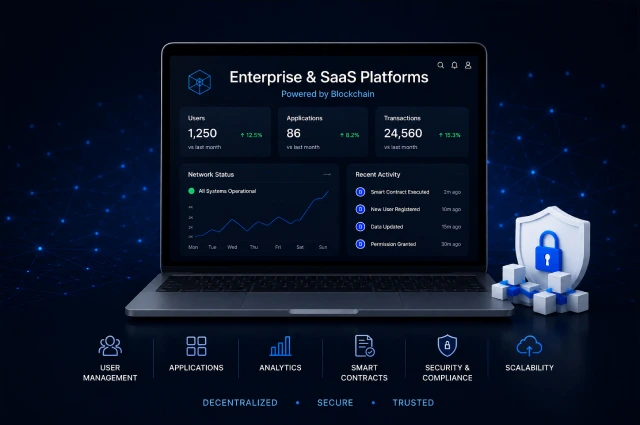
Enterprise & Consortium
Limited access permissioned chains for supply chain, healthcare and internal systems. Organizations can set the validator membership, limit participation to approved partners and keep data privacy while sending proofs to Ethereum or Arbitrum for external verification.
- Supply chain tracking
- Healthcare data
- Internal systems

Social & Consumer Apps
Scalable chains for social platforms, creator economies, and consumer apps at predictable cost. Uniform fees and not sharing throughput with unrelated tasks make microtransactions, tipping and content interactions economically viable.
- Social platforms
- Creator payments
- Consumer apps
DeFi & Trading Platforms
Dedicated chains for DEXs, lending and derivatives customized for specific cost structures with a focus on performance. Trading activity never competes with unrelated apps for throughput or fee priority since teams have predictable latency, separated blockspace, and adjustable gas tokens.
- DEX deployment
- Lending protocols
- Derivatives platforms
Gaming & Metaverse
High throughput chains for in-game assets, NFT objects and player economics at scale. Dedicated blockspace reduces latency at peak concurrency, and unique gas tokens enable studios to subsidize player transactions without exposure to mainnet cost volatility.
- Game economies
- NFT assets
- Player transactions
Tokenization & RWA
Institutional-grade controls allow compliant chains for real estate, funds and commodities tokenization. Issuers will benefit from a regulated environment that meets regulatory requirements without the need to build proprietary infrastructure from scratch, via chain-level enforcement of transfer restrictions, investor whitelisting and audit trails.
- Asset tokenization
- Investor management
- Compliance controls
AI & DePIN Applications
Chains for autonomous agents, compute networks, and decentralized infrastructure that need dedicated capacity. Agent-to-agent transactions, inference logging, and device coordination generate continuous high-volume activity that would be costly and congested on a shared network.
- AI agent chains
- DePIN networks
- Compute coordination
Enterprise & Consortium
Limited access permissioned chains for supply chain, healthcare and internal systems. Organizations can set the validator membership, limit participation to approved partners and keep data privacy while sending proofs to Ethereum or Arbitrum for external verification.
- Supply chain tracking
- Healthcare data
- Internal systems
Social & Consumer Apps
Scalable chains for social platforms, creator economies, and consumer apps at predictable cost. Uniform fees and not sharing throughput with unrelated tasks make microtransactions, tipping and content interactions economically viable.
- Social platforms
- Creator payments
- Consumer apps
Our Arbitrum Orbit Development Process Explained: How to Build Arbitrum Orbit Chain
We take every engagement through 6 transparent steps integrating smart contract development and smart contract security audits from strategy to launch.

Consultation & Strategy
Define chain needs including governance, tokenomics, data availability mode, and settlement aim so that future decisions align with your business objectives.
Architecture & Configuration
Set the parameters for Nitro stack, custom gas tokens and precompiles for your application. Document every change to keep the chain architecture visible and auditable.


Development & Integration
Use chain infrastructure, intelligent contracts, bridges to parent networks, and assemble the pieces to make the entire system work.
Testing & Security Audit
Performance testing, fraud proof validation, and a smart contract security audit to find and fix bottlenecks and vulnerabilities before real user funds are put at risk.


Deployment & Launch
Deploy the chain in mainnet with working validator and sequencer nodes. Test settlement, bridge connectivity and cross-chain communication in production.
Ongoing Support & Optimization
Post-launch, provide ongoing monitoring, upgrades and optimization to ensure speed and security keep pace with increasing transaction volume and usage.

Our Arbitrum Orbit Engineering Expertise
Work with the Arbitrum Orbit developers with the blockchain expertise to make sure your business can rely on them to build secure, scalable custom chains.

Nitro Stack Specialists
In-depth knowledge of Arbitrum Nitro configurations, custom ArbOS tweaks, and fraud prevention mechanisms.

Smart Contract Excellence
100+ production contracts deployed on Ethereum, Arbitrum and EVM compatible networks.

Security-First Approach
Third-party audits, fraud proof validation and exhaustive testing are performed before the mainnet is launched.
Arbitrum Orbit Development:
Pricing & Engagement Models
Arbitrum Orbit blockchain development costs depend on chain configuration and complexity. The costs will typically include a security validation (i.e. a smart contract audit) before the deployment on mainnet.